


Blockchain in IoT Security: Overview
Connected devices are everywhere. From smart thermostats to industrial sensors, the IoT is expanding rapidly. But convenience comes with risks. Hackers can exploit weak security and compromise critical systems quickly. Here is a surprising fact: by 2025, experts predict that over 75 billion IoT devices will be in use. That means more targets for cyberattacks if we do not act now. This is where blockchain in IoT security becomes essential. In this article, we will explore common IoT security challenges and how blockchain strengthens device protection.
Key IoT Security Challenges
Securing IoT devices is more challenging than it appears. Weak spots in these systems can leave businesses exposed to cyber threats.
1. Device Authentication and Access Control
Strong device authentication stops unauthorized access at the door. Assigning unique digital identities to devices verifies each gadget in your network before it interacts with other devices. Imagine it like a security guard checking IDs before granting entrance. Without this safeguard, attackers can sneak into systems unnoticed, causing chaos. Multi-factor authentication (MFA) provides extra security by combining passwords with tokens or biometric verification.
Access control limits what each connected device can do based on permissions set by administrators. For instance, a thermostat should not send sensitive business data, nor should a CCTV camera access confidential files. Blocked pathways reduce risks from compromised devices spreading damage across networks.
2. Data Encryption and Privacy Concerns
Without strong encryption, sensitive data traveling through IoT networks stays exposed. Cybercriminals can intercept unprotected information, risking personal user details or confidential business data. Encrypting this data shields it from prying eyes, turning readable text into indecipherable code that only authorized parties can decode. Advanced protocols, such as AES-256, secure transmissions and make breaches much harder. Some organizations strengthen this further by working with dedicated Cincinnati cybersecurity or similar experts who specialize in protecting sensitive data across connected devices.
Privacy concerns grow as connected devices collect vast amounts of personal information. Mismanagement or leaks can compromise digital identity and trust among customers. Businesses must adopt strict policies for handling collected data securely. Limiting access rights based on roles further ensures tighter security and reduces risks associated with insider threats or accidental exposure of private information across networks.
3. Firmware Vulnerabilities and Updates
Hackers often target outdated firmware to exploit connected devices. Weaknesses in firmware create backdoors, allowing attackers to control or disrupt systems. Businesses face increased security risks if they lag in updating against emerging threats. Regularly update device firmware to patch vulnerabilities and strengthen cybersecurity.
Automated solutions can simplify this process for managed IT services, reducing human error and delays. Businesses that partner with trusted providers for technology services in Albany gain confidence because proactive monitoring applies updates without disrupting operations. These proactive measures prevent breaches and protect sensitive data, leading smoothly into the role of blockchain in IoT security.
Role of Blockchain in IoT Security
Blockchain strengthens IoT security by decentralizing data control. It also creates tamper-proof systems for safer device interactions.
1. Decentralized Data Management
Traditional data storage relies on central servers, making them prime targets for hackers. A distributed approach spreads data across multiple nodes in a blockchain network, reducing the risk of single points of failure. Each connected device contributes to this web-like structure, creating stronger resilience against cyberattacks.
Decentralization enables businesses to minimize reliance on external systems. Increased clarity and control over stored information also enhance privacy protection for IoT devices. Companies can verify transactions directly without needing intermediaries, saving both time and resources.
2. Immutable Ledger for Device Communication
Blockchain provides a secure, tamper-proof record of device interactions. Systems record each communication or transaction in a permanent ledger. This ensures no malicious actor can change, erase, or falsify data between connected devices. Such transparency builds trust and prevents fraud in IoT networks.
This setup lowers risks associated with centralized systems that hackers often target. Devices can confirm messages using cryptographic proofs stored on the blockchain. With this approach, businesses achieve improved network security and more efficient operations.
Blockchain-Based Solutions for IoT Security
Blockchain paves the way for smarter, safer connected devices. It simplifies complex security challenges with precision and reliability.
1. Smart Contracts for Automated Security Protocols
Smart contracts enforce security rules automatically. These digital agreements automate tasks such as granting access or revoking permissions, eliminating the need for manual intervention. In the IoT, this means that connected devices follow strict protocols, thereby reducing human errors and delays.
By automating processes, smart contracts can instantly block unauthorized actions, ensuring higher security and efficiency. A reliable Smart contract development company can help businesses implement these solutions seamlessly. For example, they can immediately stop data exchanges with unverified devices. This enhances network security while ensuring more efficient operations in device networks.
2. Blockchain-Powered Device Authentication
Smart contracts simplify processes, but securing individual devices in IoT requires additional protection measures. Blockchain ensures connected devices verify their identity without depending on centralized servers.
Each device receives a unique digital identity stored on an unchangeable ledger. This method prevents unauthorized access and minimizes spoofing risks. Businesses can have confidence that only authenticated devices communicate within their networks, improving cybersecurity while sustaining operational efficiency.
3. Secure Data Sharing Using Blockchain
Blockchain ensures data security by storing information across decentralized networks. It eliminates reliance on a central server, reducing the risk of a single point of failure. Each transaction is recorded in a permanent ledger, preventing tampering or unauthorized changes. This makes the exchange of sensitive IoT data more reliable and secure.
Businesses can implement blockchain to create clear communication between connected devices. For example, supply chain managers can monitor shipments securely without revealing private details to third parties. The technology also supports encryption during transfers, ensuring only authorized entities have access to vital information. This method enhances both privacy and network security for organizations managing extensive device networks daily.
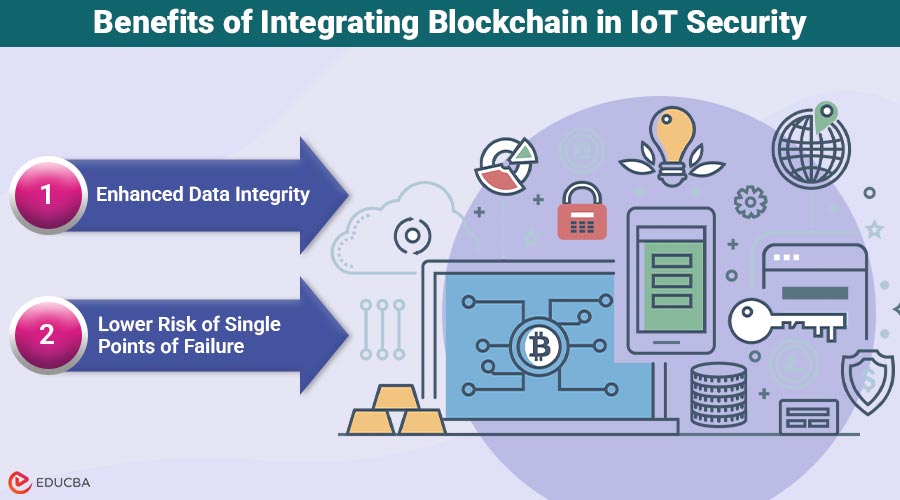
Benefits of Integrating Blockchain in IoT Security
Integrating Blockchain in IoT security adds trust and reliability to how devices interact—learn how it tackles the weakest links.
1. Enhanced Data Integrity
Secure records minimize the risk of tampering in IoT systems. Each transaction gets recorded onto an unchangeable ledger, making unauthorized changes nearly impossible. This level of openness adds a protective layer to your data.
Decentralization stops hackers from altering sensitive information at a single central point. Distributed ledgers ensure every device shares the same validated data, keeping it consistent and dependable across networks.
2. Lower Risk of Single Points of Failure
Decentralized systems spread data and control across multiple nodes. This structure prevents the entire network from failing if one node encounters an issue. Blockchain improves IoT security by lowering these risks through its distributed ledger technology.
Businesses with connected devices gain from this reliability. For example, in a smart factory, blockchain can sustain operations even if one server goes offline. This method provides uninterrupted functionality and a stronger defense against cyberattacks that target individual vulnerabilities.
Final Thoughts
Blockchain in IoT security strengthens device protection. It fights data breaches, protects privacy, and keeps devices in check. By closing gaps with decentralized trust, it keeps systems running smoothly. Business owners can sleep easier knowing their connected devices stay safe from growing cyber threats. The future of IoT looks brighter with blockchain leading the charge!
Recommended Articles
We hope this comprehensive guide on blockchain in IoT security helps you enhance the protection of your connected devices. Check out these recommended articles for more insights and strategies to strengthen your network security and operational efficiency.

