
What is Asset Disposal?
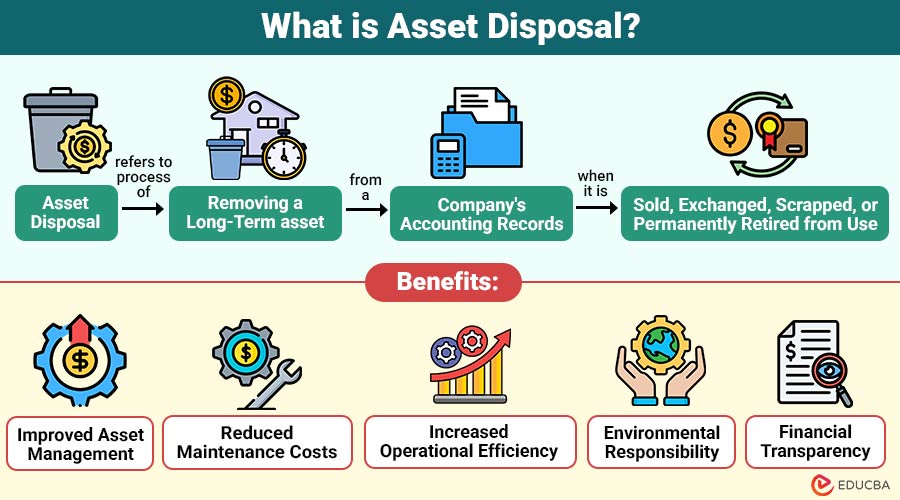
Asset disposal refers to the process of removing a long-term asset from a company’s accounting records when it is sold, exchanged, scrapped, or permanently retired from use. It involves determining the asset’s current book value, calculating any gain or loss from the disposal, and updating financial records to reflect the change.
Table of Contents:
- Meaning
- Importance
- Types
- Methods
- Process
- Accounting Treatment
- Real-World Example
- Benefits
- Challenges
Key Takeaways:
- Asset disposal ensures accurate financial records by removing unused assets and recording gains or losses correctly in accounts.
- Businesses dispose of assets through selling, scrapping, donating, trading, recycling, or abandoning, depending on condition, value, and operational needs.
- Proper asset disposal reduces maintenance expenses, improves efficiency, frees up space, and effectively supports regulatory and environmental compliance requirements.
- The correct accounting treatment of asset disposal requires calculating book value, comparing the sale price, and recording the gain or loss.
Why is Asset Disposal Important?
Asset disposal plays a critical role in maintaining efficient business operations and accurate financial reporting. Some key reasons why asset disposal is important include:
1. Accurate Financial Records
When assets are disposed of, they must be removed from the balance sheet. This ensures the company’s financial statements accurately reflect its current assets.
2. Cost Management
Unused or obsolete assets may still incur maintenance, storage, or insurance costs. Disposing of them helps reduce unnecessary expenses.
3. Space Optimization
By removing unused equipment or machinery, you can free up valuable storage or operational space for more effective use.
4. Compliance with Regulations
5. Recovery of Asset Value
Organizations can recover some value by selling or trading assets, which they can then reinvest in new equipment or business activities.
6. Technological Upgrades
Many businesses regularly replace old equipment with newer technology. Asset disposal helps organizations upgrade efficiently without cluttering operations with outdated assets.
Types of Assets that Can Be Disposed
Organizations dispose of different types of assets depending on their operational needs. Common categories include:
1. Fixed Assets
Fixed assets are long-term tangible resources used in business operations, such as machinery, buildings, vehicles, and equipment, disposed of when obsolete, damaged, or replaced.
Examples:
- Machinery
- Vehicles
- Office equipment
2. Intangible Assets
Intangible assets are non-physical resources such as patents, trademarks, copyrights, and software licenses that are removed from records when they expire, are sold, are transferred, or are no longer useful.
Examples:
- Software licenses
- Patents
- Copyrights
3. Financial Assets
Financial assets are investment instruments such as shares, bonds, or mutual funds that companies dispose of when selling, reallocating investments, or managing financial risk.
Examples:
- Shares
- Bonds
- Mutual fund investments
4. IT and Electronic Assets
IT and electronic assets include computers, servers, storage devices, and networking equipment that are disposed of when outdated, damaged, replaced, or require secure and responsible recycling procedures.
Examples:
- Computers
- Servers
- Networking equipment
Methods of Asset Disposal
Businesses can dispose of assets through several methods, depending on their condition and value.
1. Selling the Asset
Selling is one of the most common methods of asset disposal. If the asset still has value and functionality, companies may sell it to recover part of its original cost.
2. Trade-In
Some organizations exchange old equipment when purchasing new equipment. The seller provides a discount on the new asset in exchange for the old one.
3. Scrapping
If the asset is no longer useful or repairable, it may be scrapped. In this case, the asset may be dismantled and sold as raw materials or simply discarded.
4. Donation
Companies sometimes donate assets to charitable organizations, schools, or non-profit institutions. This method may also provide tax benefits.
5. Abandonment
In some cases, assets are abandoned when they no longer have resale value or useful functionality, and no benefit can be recovered.
6. Recycling
We use recycling when we must dispose of assets safely to reduce environmental impact, especially electronic or hazardous materials.
Asset Disposal Process
The asset disposal process usually follows several structured steps to ensure proper documentation and financial reporting.
1. Identify the Asset
The first step is identifying which asset needs to be disposed of. This may occur due to damage, obsolescence, or replacement.
2. Evaluate the Asset Condition
The organization evaluates the asset’s condition to determine whether it can be sold, repaired, reused, recycled, or safely scrapped.
3. Determine the Asset’s Book Value
The book value is calculated by subtracting accumulated depreciation from the asset’s original cost.
4. Decide the Disposal Method
Management selects the most appropriate disposal method based on value, condition, and business needs.
5. Record the Disposal in Accounting Records
Accountants remove the asset from the balance sheet and record any gain or loss resulting from the disposal.
6. Update Asset Registers
Companies maintain fixed asset registers that track all assets. These records must be updated to reflect the disposal.
Accounting Treatment of Asset Disposal
Proper accounting treatment is crucial when disposing of assets. The main goal is to determine whether the company experienced a gain or loss from the disposal.
1. Gain on Disposal
Gain on disposal occurs when an asset is sold for more than its book value, resulting in profit, which is recorded in the income statement.
Example:
- Original cost: ₹100,000
- Accumulated depreciation: ₹70,000
- Book value: ₹30,000
- Sale price: ₹40,000
Gain on disposal = ₹10,000
2. Loss on Disposal
Loss on disposal occurs when an asset is sold for less than its book value, resulting in a financial loss, recorded in the income statement.
Example:
- Original cost: ₹100,000
- Accumulated depreciation: ₹60,000
- Book value: ₹40,000
- Sale price: ₹25,000
Loss on Disposal = ₹15,000
The company records these gains or losses in its income statement.
Real-World Example of Asset Disposal
Consider a manufacturing company that owns a machine used for producing components.
- Purchase cost: ₹500,000
- Useful life: 10 years
- Accumulated depreciation after 8 years: ₹400,000
The book value of the machine becomes ₹100,000.
If the company sells the machine for ₹120,000, it records a gain of ₹20,000.
However, if the machine is sold for ₹80,000, the company records a loss of ₹20,000.
Accountants must record this transaction in accounting records and reflect it in financial statements.
Benefits of Asset Disposal
Effective asset disposal provides several operational and financial advantages.
1. Improved Asset Management
Proper asset disposal helps organizations maintain accurate asset records, monitor asset usage, and ensure only useful and active assets remain in inventory.
2. Reduced Maintenance Costs
Disposing of outdated or damaged assets reduces repair, maintenance, storage, and insurance expenses, helping companies save money and allocate resources more efficiently.
3. Increased Operational Efficiency
Replacing old assets with modern equipment improves productivity, reduces downtime, enhances performance, and allows employees to work more efficiently using updated technology.
4. Environmental Responsibility
Proper disposal and recycling of assets help organizations comply with environmental regulations, reduce waste, prevent pollution, and support sustainable, eco-friendly business practices.
5. Financial Transparency
Recording asset disposal correctly ensures financial statements remain accurate, helps auditors verify records, and allows management to make better financial and investment decisions.
Challenges in Asset Disposal
Despite its benefits, asset disposal also presents certain challenges.
1. Determining Fair Market Value
Estimating the correct market value of used assets is difficult because prices depend on condition, demand, age, and current market trends.
2. Regulatory Compliance
Organizations must follow environmental, legal, and safety regulations when disposing of certain assets, which may require approvals, documentation, and special handling procedures.
3. Data Security Risks
Disposing of IT equipment without properly deleting data may expose confidential information, creating security risks, legal issues, and potential financial losses for organizations.
4. Asset Tracking Issues
Poor asset tracking systems make it difficult to identify unused or obsolete assets, leading to delays, inaccurate records, and inefficient disposal decisions.
5. Documentation Requirements
Asset disposal requires proper documentation for accounting, auditing, and legal purposes, and missing records can lead to compliance issues and reporting errors later.
Final Thoughts
Asset disposal is a key part of the asset lifecycle that helps businesses manage resources efficiently and maintain accurate financial records. As assets age or become obsolete, organizations may sell, recycle, donate, or scrap them. Proper disposal improves financial transparency, reduces costs, supports environmental responsibility, and ensures better asset management, helping companies maintain efficiency and long-term sustainability.
Frequently Asked Questions (FAQs)
Q1. What causes asset disposal?
Answer: Assets are usually disposed of due to obsolescence, damage, replacement, technological upgrades, or changes in business operations.
Q2. What is the book value of an asset?
Answer: Book value is the original cost of an asset minus its accumulated depreciation.
Q3. Why is asset disposal important for businesses?
Answer: It helps maintain accurate financial records, reduce maintenance costs, and improve operational efficiency.
Q4. What documents are required for asset disposal?
Answer: Asset disposal requires documents such as asset register updates, approvals, invoices, depreciation records, and accounting entries for accurate reporting.
Recommended Articles
We hope that this EDUCBA information on “Asset Disposal” was beneficial to you. You can view EDUCBA’s recommended articles for more information.


