


Updated October 19, 2026
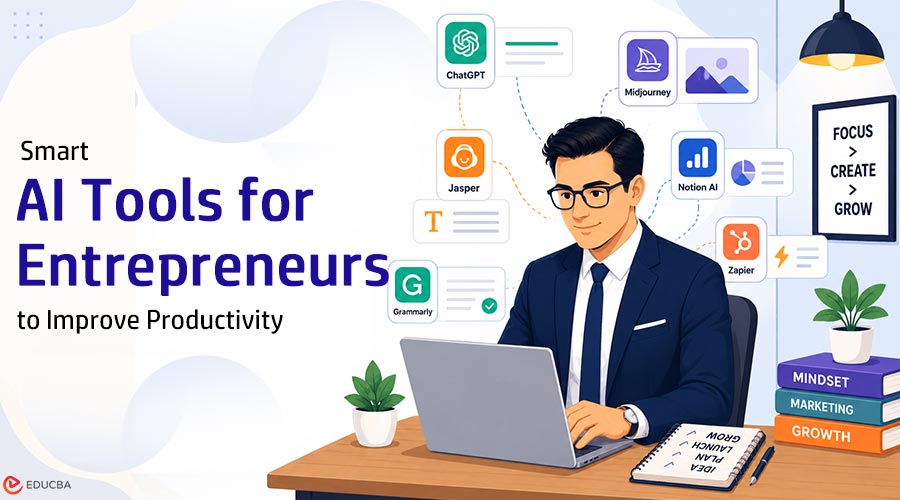
Running a business has its challenges, but it can be rewarding, especially with AI tech designed to help business owners automate operations, connect with their audience, and make data-driven decisions, all while keeping their team small and their budget under control. Regardless of whether you operate as a solo consultant, a growing eCommerce store, or your own registered LLC, the right AI tools for entrepreneurs can be as useful as a diligent business partner. This guide will point you toward the best AI tools and teach you how to integrate them into your business, so you can make the most of them while maintaining realistic expectations.
Why AI Tools for Entrepreneurs are No Longer Optional?
In the past, artificial intelligence was viewed mostly as a tech reserved for the deep pockets of Silicon Valley. However, that is no longer the case. In today’s world, a freelancer in Kathmandu or a small business owner in Austin can use the same advanced tools as large companies for everything from support to planning and market research. According to a 2024 McKinsey & Company report, around 65% of businesses have incorporated some form of generative AI into their business models, a significant increase compared with previous years. To entrepreneurs, that is both a caution and an opportunity. Businesses that adopt AI will gain an edge over competitors who sit back. The benefits of AI for entrepreneurs stem from its ability to handle repetitive, time-consuming, and unproductive tasks, allowing business owners and founders to spend their time on higher-value, high-leverage work such as strategy, relationship building, and innovation.
Top AI Tools for Entrepreneurs by Business Function
There are many different AI tools to choose from. The following provides the best options depending on the most common needs of an entrepreneur.
1. Content Creation and Marketing
One of the cheapest and most effective ways for small businesses to grow is by utilizing content marketing. AI writing tools allow a single small business owner to produce content at the level of a full writing and marketing team. Content creation tools enable users to create a wide range of marketing and communications content, including blog posts, social media captions, product descriptions, and newsletters. Instead of replacing the user, the tools allow users to write faster and create drafts to edit.
| Tool | Best For | Pricing (Starting) |
| ChatGPT (OpenAI) | Long-form writing, brainstorming, and email drafts | Free / $20 per month |
| Claude (Anthropic) | Nuanced writing, research summarization | Free / $20 per month |
| Jasper AI | Brand-voice content at scale | $39 per month |
| Copy.ai | Sales copy, landing pages | Free / $36 per month |
When content is created, the tools allow users to maintain compliance with brand guidelines and tone. For example, both Claude and ChatGPT allow users to apply guidelines and instructions to craft outputs aligned with the user’s voice.
2. Business Formation and Legal Compliance
Most first-time entrepreneurs are surprised by how much administrative work is required to set up and launch a business. Several tools can help draft business structures and operating agreements and track compliance deadlines. Platforms such as EasyFiling combine AI-assisted guidance with professional filing services, helping entrepreneurs register their LLCs, S-Corps, or C-Corps without having to navigate state-specific paperwork on their own. This is especially helpful for entrepreneurs who are filing across multiple states or forming a business in the United States while residing in other countries. AI can assist with options and generate starter drafts, but a licensed professional should always review documents before submission. Pairing the two provides maximum efficiency for fast document preparation.
3. Customer Support and Communication
Answering customer questions can be time-consuming. AI-powered chatbots and support tools have made it practical for even solo founders to offer near-instant customer service. Intercom, Tidio, and Freshdesk are all great answers to your support requests. If you are selling a digital product or providing a SaaS application, the AI chat capabilities can help you respond to support questions for 60% to 80% of your support volume. If Intercom’s per-seat pricing feels steep for a small team, an Intercom alternative with flat pricing can cover the same live chat and AI support. AI chat options are not the only game in town. Loom AI and Otter.ai can help with asynchronous communication and reduce the need for in-person meetings. Otter transcribes meetings and generates summaries, while Loom AI enhances async video updates.
4. Financial Management and Forecasting
Many founders with limited financial experience may struggle with financial management and forecasting. AI tools for entrepreneurs in the financial space range from bookkeeping automation to predictive cash flow modeling.
- QuickBooks with AI features automates the bookkeeping tasks you need to manage your finances, such as categorizing, invoicing, and expense tracking. It learns from your behavior over time, reducing the need for manual data entry.
- Fathom integrates with accounting software to generate financial narratives and help you better understand your finances without decoding spreadsheets.
- Domo is helpful for mid-stage companies needing dashboards with predictive analytics and real-time reporting.
Business owners seeking to manage US taxation will still need to hire an accountant for tax guidance. AI does a great job of finding patterns and identifying oddities in data, but it does not replace professional tax advice.
5. Sales and Lead Generation
Getting customers is vital for a business to thrive. AI-powered tools can support various stages of the sales funnel, from lead generation through to follow-up.
| Tool | Primary Function |
| Apollo.io | Lead discovery, outreach automation |
| HubSpot Sales Hub | CRM with AI scoring and email sequencing |
| Seamless.ai | Real-time lead data enrichment |
| Lavender | AI email coaching for cold outreach |
Outbound sales without a dedicated sales team is one of the primary uses for Apollo.io. The tool uses an AI search function to help you create lists of potential clients based on what you need in a customer, like their company size or revenue range.
6. Operations and Productivity
AI tools for entrepreneurs in the productivity category are among the fastest-growing, and for good reason. Daily operations take up a disproportionate amount of time for a company’s founders. Notion AI and Zapier are popular among non-technical founders for automating workflows across various applications. Notion AI helps you draft SOPs, meeting notes, and project briefs, while Zapier’s AI features allow founders to connect hundreds of apps and automate workflows without writing a single line of code. Inventory Planner is also an AI-based tool that helps product-based businesses curate and forecast their selling inventory. For some context, WorkflowFiesta is an AI orchestration platform that helps teams build non-technical AI agents for their entire business, from sales and operations to HR and finance. Every department describes what they need in plain language. AI agents handle the rest — no developers, no training, no vendor lock-in. Works with Anthropic, OpenAI, and AWS Bedrock, and any model that teams want to bring in.
How to Choose the Right AI Tools for Your Business?
With hundreds of options on the market, selection paralysis is real. Here is a workable strategy:
- Focus on the biggest areas of concern: The areas where you seem to have a perpetual backlog of work are the areas where automation and AI can offer a great return on your investment.
- Trial version testing for each option is well worth it: With a one-year subscription looming, it is important to test a few options in your actual workflows before you foot the bill. Most tools worth their salt offer a free trial.
- Prioritize simplicity and integration: If the tool does not integrate with your current systems, it may create more friction than it removes.
Requirements to accomplish certain goals may vary greatly depending on available options, and ease of use and speed of completion should not be overlooked, particularly for micro businesses juggling many responsibilities at once.
Common Mistakes Entrepreneurs Make with AI Tools
Getting excited about new AI tools and diving right in often leads to significant spending with little improvement. Some common mistakes include:
- Using AI-generated output without quality control can damage brand credibility
- Spending money on tools that do not help the business or improve productivity
- Skipping critical setup steps, such as training the AI on your brand voice or business context
- Buying multiple overlapping AI tools that create redundancy
- Using AI for important decisions that should have human verification, such as legal advice or tax strategy
- Omitting the human element when interacting with customers results in poor experiences
The Outlook for AI Tools for Entrepreneurs in 2026 and Beyond
AI tools are likely to improve quickly. They will become even more capable with multilingual, multimodal, and agentic AI. Learning to use AI tools now will give entrepreneurs a competitive advantage that compounds over time. What will be even more important than access to tools is the judgment behind using them. For example, using AI for early-stage research and drafts, while relying on a trusted service like EasyFiling for business formation, reflects the kind of strategic thinking that leads to sustainable growth rather than costly mistakes.
Final Thoughts
For entrepreneurs, AI tools have the potential to make small businesses more productive than ever. If used properly, AI tools for entrepreneurs can help a small team accomplish more in nearly any business area, including content, customer service, compliance, and cash flow. While AI can take over most tasks, the goal should be to automate only to the point of freeing up time for the most important decisions and relationships in your business. Take intentional steps and be thoughtful about integrating AI tools into your workflow. The most competitive business owner is not the one who uses the most tools, but the one who uses the right ones well.
Recommended Articles
We hope this comprehensive guide to AI Tools for Entrepreneurs helps you streamline operations, improve productivity, and scale your business more efficiently. Check out these recommended articles for more insights, strategies, and tools to support your entrepreneurial growth.


