


Building the Core AI Skills for Content Creators
Content creation has evolved more in the last three years than in the previous decade. AI now integrates seamlessly with writing apps, CMS platforms, analytics dashboards, and brainstorming sessions. While this is exciting, it can also feel overwhelming. For modern content professionals, understanding the AI skills for content creators is crucial. With the right skillset, you can streamline workflows, increase efficiency, and maintain the human creativity that makes content truly engaging. This article explores the core skills content creators need to thrive in an AI-enabled content landscape.
Understanding the Use of AI for Content Creation
AI simulates human intelligence, allowing computers to learn from data and accomplish activities that would normally need human judgment. In content creation, AI can help with:
- Drafting and editing with natural language processing (NLP)
- Recommending and personalizing through a machine learning (ML) model
- Generating various transcripts via speech-to-text
- Ideation, researching, outlining, and generating images via Generative AI (GenAI)
The rise of AI has been fast. The numbers do not lie:
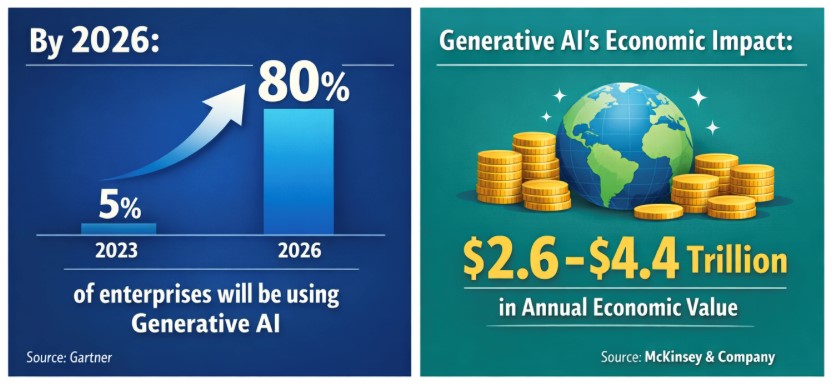
- By 2026, 80% of enterprises will have used generative AI APIs or models, up from just 5% in 2023.
- The potential economic benefit of generative AI across businesses is between $2.6 to $4.4 trillion per year.
Those numbers are big, but what matters for your day-to-day life is simpler:
- Faster drafts
- Tighter QA
- Better personalization at scale
- More time to think
By leveraging AI, content creators can surface insights from large datasets, personalize content variations, and improve accessibility through captions, translations, and alt text suggestions.
Mastering Core AI Skills for Content Creators
AI is not replacing fundamental content skills it is transforming them. To succeed, content professionals need a mix of data literacy, adaptability, creativity, and technical fluency. These skills allow you to leverage AI effectively while keeping strategy and storytelling in human hands.
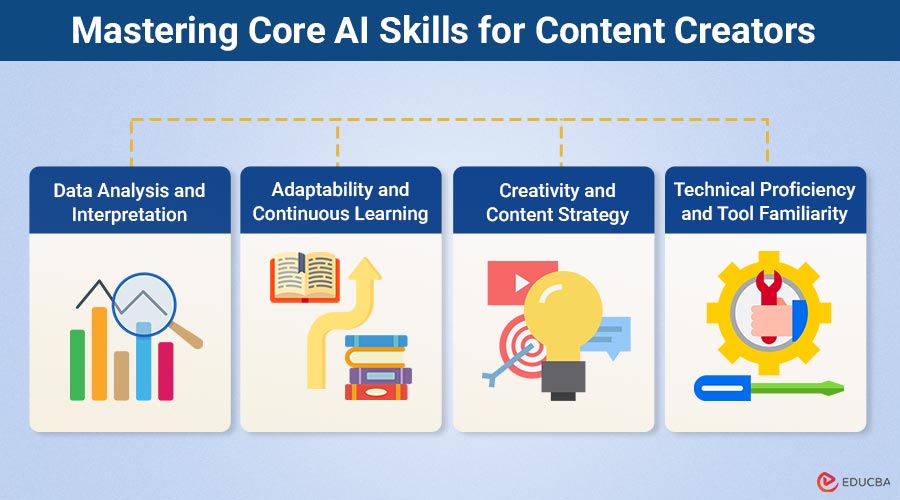
As a content creator, here are the four skills you need to build in using AI:
1. Data Analysis and Interpretation
Data is the ground truth that keeps AI honest. If you are going to bring AI into your content workflow, you need to understand what the numbers are saying and what they are not. For example, if you are creating a service page for online doctors in Ontario, start with market research to understand what prospective patients are searching for and how they choose Canadian providers.
Powered by AI, analytics tools help you check your target clients’ demographics and the keywords that resonate with them. With those data insights, you can create quality content that attracts the right visitors, engages prospects, and ultimately drives conversions. However, you need comfort with analytics dashboards, such as GA4 events, cohorts, attribution, and funnel visualization. Here is what you need to know and do:
- Data visualization basics help you turn messy tables into clear charts that drive decisions.
- Interpreting AI outputs means understanding confidence scores and limitations, even when to ignore a suggestion.
- Good experiment design requires A/B and multivariate tests with clear hypotheses and guardrails.
- Measuring content quality goes beyond clicks to include depth, retention, conversions, and sentiment.
Helpful resources to level up:
- Google Analytics 4 courses on Skillshop and Looker Studio tutorials for building dashboards give you the basics.
- Tableau offers free training, and Microsoft has solid Power BI courses.
- Coursera’s Google Data Analytics Professional Certificate is a good, structured path.
- The Content Marketing Institute (CMI) research provides useful benchmarks.
2. Adaptability and continuous learning
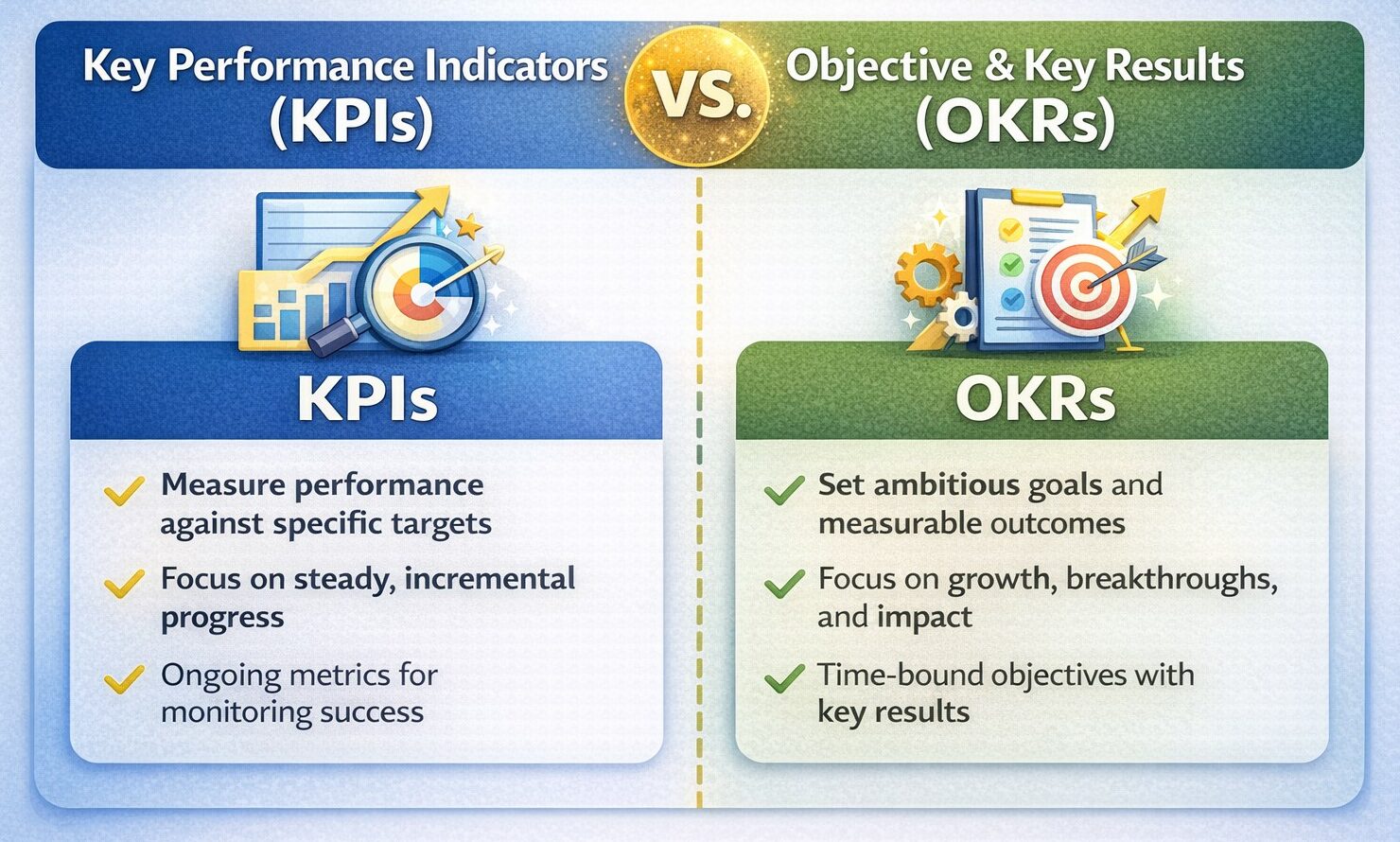
To begin, it is best to set KPIs vs. OKRs for your content creation implementation with the use of AI. What are your goals? How do you measure them? How can AI help? What do you hope to achieve in the end?
The speed at which AI evolves with each new model, each new tool, each new rule creates a need for adaptability to develop skills around using it. So, here are simple methods to remain current:
- Spend a weekly “Learning Hour” to explore a developing tool and/or review a “Deep Dive” article.
- Rotate reporting responsibilities regularly among your team members as to recent project updates and “Lessons Learned.”
- Keep a log of all your experiment attempts, prompts, successes, and failures.
For structured learning:
- AI offers practical AI courses.
- Elements of AI is a free intro by the University of Helsinki.
- edX and Coursera have tracks on AI and data analytics.
- Conferences like Content Marketing World and MozCon keep you connected to what is happening now.
- Communities on r/marketing and the Marketing AI Institute help you learn from peers.
Remember, curiosity compounds. Ten minutes a day beats a crash course once a year.
3. Creativity and Content Strategy
Creativity is still the heart of the job. It is how you shape a messy brief into a crisp narrative people actually want to read. In an AI-enabled world, your judgment and storytelling become even more important. Why? That is because AI can scale patterns, but you decide which patterns matter. For example, when launching a custom t-shirt collection, AI can help generate multiple campaign angles based on audience segments (Think streetwear fans, corporate buyers, event organizers, etc.). On the flip side, you can define the brand story that ties them together.
You can utilize AI as a content developer to test different headlines and come up with phrases. You can also summarize customer feedback from past launches, then apply your judgment to select ideas that align with your voice and positioning. The result is faster exploration without sacrificing originality or strategic intent.
Practical ways AI can boost creativity without flattening your voice:
- Use models for divergent ideation: Think 20 angles, 10 metaphors, 5 counterarguments.
- Stress-test your outline: Ask a model to poke holes in the logic or find missing sources.
- Generate audience-specific variations: Do this while you hold the core message steady.
- Turn qualitative research into themes: Summarize interviews and cluster feedback.
- Build a “tone board.”: Use a few golden examples that the model can mimic.
There is evidence that AI, when used thoughtfully, can lift quality and speed.
In a randomized field experiment, knowledge workers using generative AI completed tasks faster and produced higher-rated outputs on average. The catch is obvious: The best results happen when humans stay in the driver’s seat.
4. Technical Proficiency and Tool Familiarity
You do not need to become an engineer. But a little technical fluency goes a long way. It helps you set up better workflows and ask better prompts to avoid basic pitfalls, like pushing private data into public tools. For example, you understand the advantages and disadvantages of WhatsApp in content marketing or the pros and cons of using LinkedIn for professional networking. Not only are you familiar with social media channels for content engagements, but you are also familiar with other digital tools and platforms. That said, consider the following tools/platforms:
- Get comfortable with generative AI tools like GPT-4 class models, Claude, and Gemini, as well as image tools like DALL·E or Midjourney.
- For SEO and optimization, learn Google Search Console, Ahrefs or Semrush, Clearscope or Surfer.
- On the content ops side, know your way around WordPress or Webflow, Notion, or Airtable for planning.
- For analytics and testing, use GA4, Looker Studio, Optimizely, or Google Optimize alternatives.
- Zapier or Make can automate connections between research, drafts, approvals, and publishing.
- For transcription and translation, try Whisper, Otter, or the built-in platform features.
Focused learning paths:
- ChatGPT Prompt Engineering for Developers is useful even for non-developers.
- HubSpot Content Marketing Certification covers strategy fundamentals.
- Google Analytics Certification provides a foundation for your measurement through Google Skillshop.
- Hugging Face free courses demystify NLP.
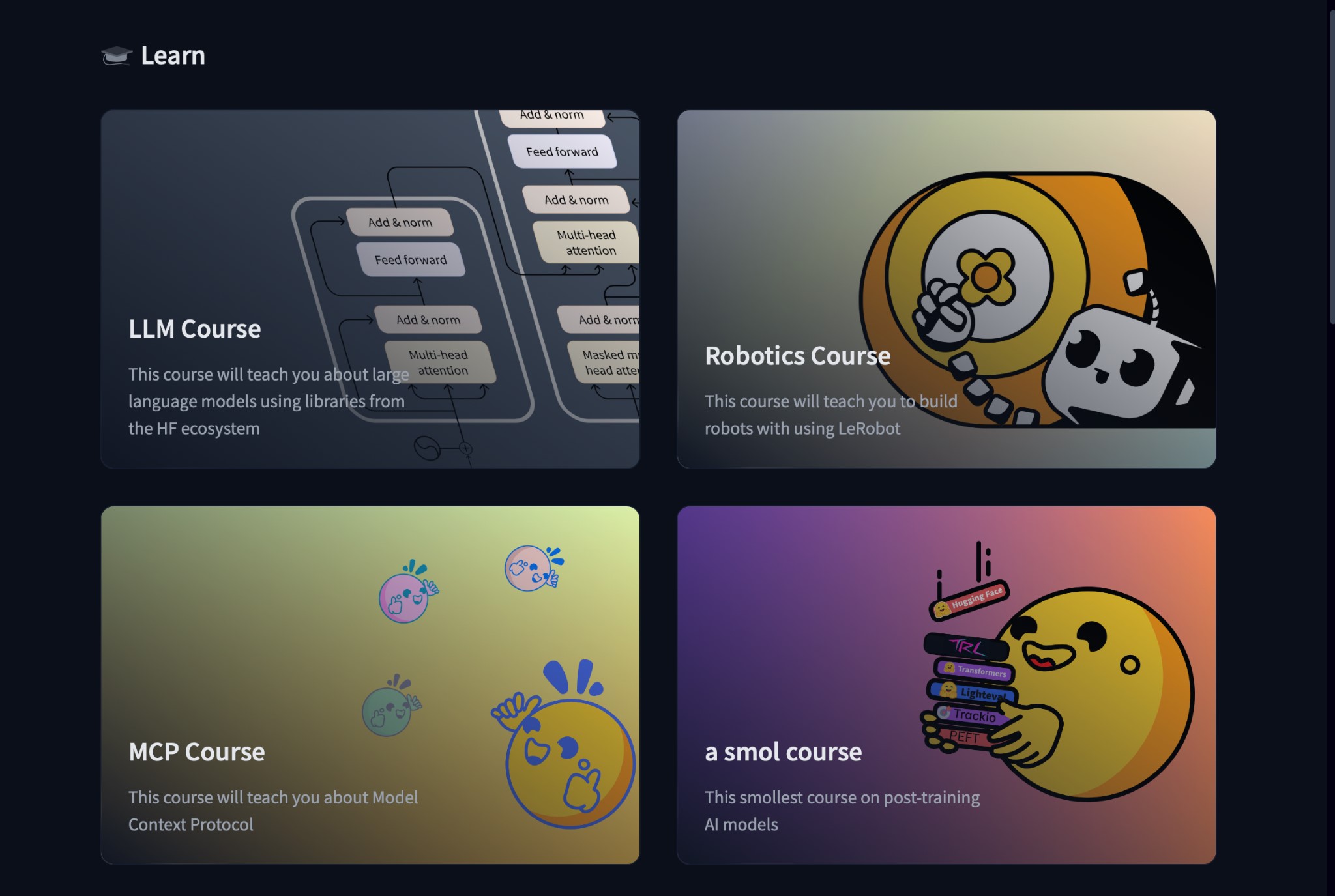
Image source: Hugging Face
Final Thoughts
AI is not here to replace thoughtful content work it is here to remove drudge work and give you time back for strategy and creativity. By developing AI skills for content creators including data literacy, adaptability, creativity, and technical proficiency you become a stronger partner with AI tools and a more resilient professional in a changing world. Use AI to expand your options, not limit your voice. Keep your standards high, your curiosity active, and your audience front and center.
Recommended Articles
We hope this guide on AI skills for content creators helps you enhance your content strategy. Check out these recommended articles for more tips and insights to boost your AI-powered content success.


