


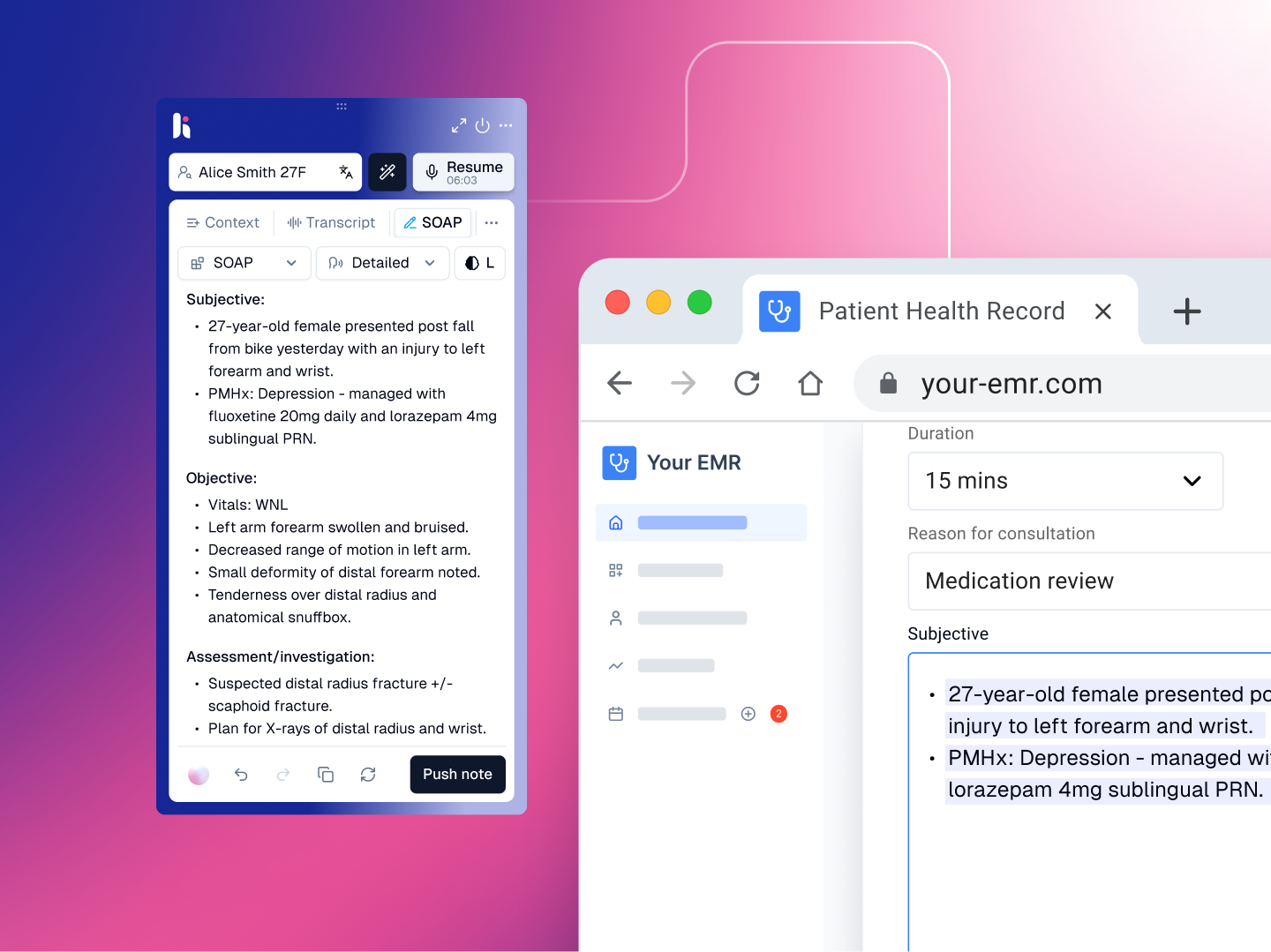
(Image Source: Heidi)
Introduction to AI Scribe Technology in Healthcare
The healthcare industry has undergone one of the most rapid digital transformations ever. Technology has been a key element in delivering high-quality and efficient patient care, from electronic health records to telemedicine. AI medical scribes are one of these innovations that have gained rapid adoption.
AI scribes automate the documentation of clinical notes by listening to interactions between doctors and patients, transcribing them in real time, and converting them into structured medical records. This allows doctors to spend less time on paperwork and more time with their patients.
Why is AI scribe technology in healthcare such an important part of modern medicine today?
Top 5 Drivers in Learning AI Scribe Technology for Healthcare
Let us explore the five top drivers behind its adoption and learning within the medical field.
1. The Growing Demand for Efficient Medical Documentation
Documentation overload is a major challenge for healthcare providers. Doctors often spend hours updating EHRs, adding notes to appointments, and coding. Researchers have found that physicians spend almost 2 hours documenting for every 1 hour they provide direct patient care.
AI scribes tackle this issue by:
- Reducing manual data entry and typing.
- Automatically generating accurate and structured medical notes.
- Completing documentation during or after a patient visit.
Due to rising efficiency demands, AI scribes offer an ideal solution for providers who want to reduce their workload while maintaining accuracy.
2. Rising Physician Burnout
Physician burnout has become a global problem. One of the main causes is excessive administrative work, which leaves doctors exhausted and unable to spend quality time with patients.
AI scribe technology in healthcare targets this issue by:
- Allowing doctors to spend more face-to-face time with patients.
- Reducing the amount of time spent charting after hours (often referred to as “pajama time”).
- Relieving physicians of repetitive administrative tasks.
AI scribes reduce stress and restore balance to improve the well-being of doctors and enhance the patient’s experience. This human factor is a major driver in the adoption of AI scribes.
3. Integrating Advanced Healthcare Systems
Integration and interoperability are another major driver. Modern health systems are heavily reliant on EHRs, and any new technology needs to work seamlessly with these systems.
AI scribe technology in healthcare is a significant advancement in this field.
- They integrate seamlessly with leading EHR platforms.
- Systems sync data in real time.
- They support compliance with standards and regulations in healthcare.
Healthcare providers do not view AI scribes as disruptive, but rather as complementary technologies that enhance existing workflows rather than replace them.
4. Increased Focus on Data Accuracy & Compliance
Medical documentation is about accuracy, compliance, and efficiency. Incorrect records can lead to misdiagnosis, incorrect treatment, or legal liability.
AI scribe technology in healthcare helps by:
- Record conversations with minimal errors in real time.
- Use medical terminology common across all specialties.
- Ensure compliance with HIPAA and other regulatory requirements.
Being fast and accurate is a big advantage for healthcare organizations. Leading solutions like Anchor stand out as among the best AI scribes, helping reduce human error, producing high-quality documents that pass compliance audits, and allowing providers to focus more on patient care.
5. AI Models That Continuously Learn and Adapt
Custom models and machine learning power AI Scribe Technology in Healthcare, unlike traditional transcription services. The technology continuously improves over time.
The following are the key features that encourage adoption:
- Adjusting to each doctor’s way of speaking and preferences.
- Learning medical terminology across specialties.
- Updating with the latest medical facts and rules.
AI scribes are a good investment because they remain relevant over time and become more effective.
AI Scribe Technology in Healthcare: The Future of Patient Care
With new technology, we will see:
- AI scribes with advanced capabilities that generate billing codes, clinical summaries, and predictive insights.
- Integration with telemedicine platforms.
- Adoption is expanding beyond large hospitals to smaller clinics.
The future of AI scribe technology in healthcare lies in its ability to make medicine more human again. These tools free doctors to spend more time treating patients, reducing the risk of burnout.
Final Thoughts
Five powerful forces are driving the adoption and learning of AI scribe technology in healthcare: the need for efficiency, the fight to prevent physician burnout, seamless integration with advanced systems, a focus on compliance, and the continuous learning of AI models.
This innovation is not just about documentation; it is about transforming patient care and creating a sustainable future for healthcare professionals.
Recommended Articles
We hope this guide to AI scribe technology in healthcare gave you valuable insights. Explore our related articles on digital health tools, EHR integration, and the future of medical AI to stay ahead in healthcare innovation.


