


Updated August 11, 2026
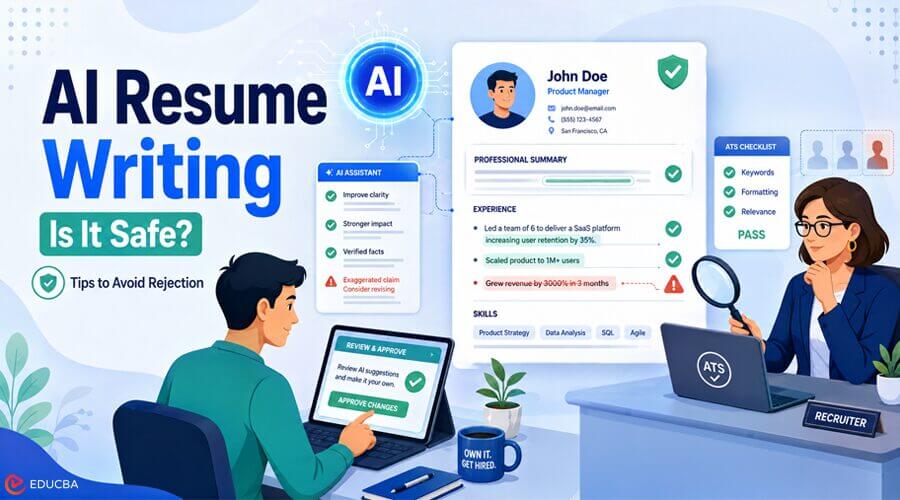
A recruiter once rejected a candidate over a single follow-up question. The resume stated that the candidate had “led a cross-functional initiative that improved delivery timelines by 30 percent.” During the interview, when asked what the initiative actually was, the candidate paused and admitted they were not sure where the 30 percent figure came from. They had asked ChatGPT to “make this sound more impressive,” and it had. The number was not theirs. Neither, really, was the sentence.
The pattern is increasingly familiar to hiring managers and recruitment professionals, as well as to founders of tools designed to help candidates write their resumes. AI-generated claims and overly polished statements are becoming common enough that HR teams are reworking their screening processes to account for them.
In a Robert Half survey of more than 2,000 US hiring managers, 67 percent said reviewing AI-generated applications has slowed hiring, while 84 percent reported heavier workloads as a result. Among the steps hiring teams have added to validate candidates, 38 percent are conducting more interviews per candidate.
So, is it okay to use AI to write a resume? Yes, mostly. The important condition is that candidates carefully check what the tool produces before submitting it. Responsible AI resume writing can help candidates improve their resumes, but the final content should always accurately reflect their experience.
The Two Ways AI Resume Writing Goes Wrong
The two failure modes affect different people in different ways.
Invention of Experience or Achievements
AI tools do not just rewrite clumsy sentences; they sometimes change what a sentence claims. Attending a conference becomes presenting at one. Contributing to a project becomes leading it. A vague result becomes a specific, impressive-sounding percentage the tool made up on the spot. This is the failure mode that catches out candidates with real experience to describe, since there is something substantial there for the AI to embellish.
Generic and Forgettable Content
If you paste a thin resume, one internship, a couple of college projects, into a general chatbot and ask it to “make this sound professional,” the model fills the gaps with confident, forgettable, corporate-sounding language. Recruiters can tell instantly. A Resume Now survey of hiring professionals found that 62 percent say AI-generated resumes without personalization often lead directly to rejection, and 94 percent say they have personally encountered misleading or inaccurate AI-generated content in applications.
If you are a student or recent graduate with limited work history, the second failure mode is probably the bigger risk to you. You have less to fabricate, but a lot more blank space for a chatbot to fill with generic phrasing that makes your resume indistinguishable from a hundred others. This is why effective AI resume writing should improve the way you present genuine experience rather than create experience that is not there.
Why AI Resume Writing Fills in the Blanks?
Most AI tools produce a fluent, complete-looking resume no matter how much or how little you give them. A language model does not have a concept of “I do not have enough information to answer this honestly.” When you ask it to expand three bullet points into a polished, professional summary, it will fill any factual gaps with plausible-sounding detail rather than flagging what it does not know.
This is a known behavior of generative AI in general, sometimes called “hallucination,” and it shows up whenever a model is asked to produce more content than the input supports.
The practical result: a resume that reads as complete and confident can still contain claims that neither you nor the AI can fully stand behind.
That is why AI resume writing works best when the candidate provides detailed, factual information first. The more clearly you describe what you actually did, the less room there is for an AI tool to fill gaps with assumptions.
Four Questions to Ask Before You Trust an AI Resume Writing Tool
Not every AI resume tool carries the same risk. Before using one, ask:
Q1. Does it show you what changed, or just hand you a finished document?
A tool that highlights each edit next to your original wording gives you a chance to catch an invented detail before it goes out. One that only outputs a polished result gives you nothing to check against.
Q2. Does it explain why it made a change, or just make it?
An explanation teaches you something you can reuse next time you write a resume yourself. A silent edit teaches you nothing and keeps you dependent on the tool.
Q3. Can you keep a copy of what you actually submitted?
This one is easy to overlook. If a tool overwrites your original resume with no version history, you lose the ability to compare later, right before an interview when you need to remember what you claimed.
Q4. What happens to your resume data after you upload it?
Worth checking before you paste in your full work history and contact details. Some tools are vague or silent on this. A tool with a clear, specific data policy tells you something about how seriously it takes the rest of its process, too.
The best AI resume writing workflow gives you visibility and control rather than simply generating a finished resume and asking you to trust it.
What a Responsible AI-Assisted Resume Writing Workflow Looks Like?
One of the more interesting real-world examples of this comes from an unlikely place: an AI company’s own hiring policy.
In early 2025, Anthropic, the company behind the Claude AI models, asked job applicants not to use AI assistants during its hiring process. By July of that year, it had reversed that policy. The company’s current guidance tells candidates: “Please create your first draft yourself, then use Claude to refine it.” Using AI to articulate real experience better is fine. Using it to generate answers about experience you do not have is not.
That approach is worth paying attention to, not simply because Anthropic changed its guidance, but because of where it landed. A company that builds AI tools for a living recommends keeping the candidate’s experience at the center while using AI to refine it. That makes a useful standard for AI resume writing more broadly: let the person provide the substance, and let AI help improve how that substance is communicated.
That is a reasonable standard to apply to your own resume, regardless of what tool you use. Write down what you did first, even roughly. Then bring in AI resume writing tools to help sharpen the language, match keywords to a specific job description, or catch things you undersold. Review every suggested change before it goes into your final resume. Tools built around this, like Upplai’s AI resume optimizer, show each proposed edit alongside its reason, so reviewing is a scan rather than a reread.
The strongest AI resume writing process is therefore collaborative rather than automatic. You provide the facts, achievements, responsibilities, skills, and results. The AI helps organize, clarify, and polish that information. You remain responsible for deciding whether every statement is accurate.
If you are worried that reviewing everything defeats the point of saving time, it does not. Reviewing a proposed edit against your own memory of what happened is fast. Writing polished professional language from a blank page is the hard part, and that is the part AI is good at. Staying involved does not cost you time. It just makes sure the finished resume still describes your actual life.
Final Thoughts
AI can help you create a better resume. It is good at finding sharper language, catching keyword gaps against a job description, and getting you past a blank page. AI resume writing is most useful when it improves how you communicate your genuine experience, rather than deciding what that experience should be.
Keep AI out of the decisions about what your resume says, and check every change before it reaches a recruiter.
If you are early in your career with a thin work history, watch for generic, forgettable output more than outright fabrication. If you have more experience, watch the opposite: claims that sound a little too polished to explain in an interview. Either way, the fix is the same. Write your own first draft, use AI resume writing to refine it, and read every change before it goes out under your name.
Frequently Asked Questions (FAQs)
Q1. Is it okay to use AI to write your resume?
Answer: Yes, as long as you write the first draft yourself and use AI to refine wording rather than invent content. Most hiring experts, and even AI companies hiring for their own roles, draw the line between polishing real experience and generating experience you do not have.
Q2. What are common AI resume red flags recruiters notice?
Answer: Achievement claims built on suspiciously round percentages with nothing behind them, generic phrasing that could apply to almost any candidate, and an inability to explain a specific number or claim when asked about it directly in an interview.
Q3. Can an AI resume get rejected even if nothing on it is false?
Answer: Yes. A resume can be entirely accurate and still get rejected for reading as generic or interchangeable, which is a common outcome when AI fills in thin work history with vague, forgettable corporate language instead of specific detail. Good AI resume writing should preserve your individual experience and voice rather than making your application sound identical to everyone else’s.
Q4. Is it different for freshers compared to experienced candidates?
Answer: Somewhat. Early-career candidates with less work history are more exposed to the genericness problem, since there is more blank space for AI to fill. Experienced candidates have more real accomplishments an AI tool could exaggerate or misstate, which raises the stakes of not reviewing what it produces.
Q5. How can I tell if an AI resume tool is trustworthy?
Answer: Check whether it shows you specific changes with explanations, lets you keep a copy of earlier versions, and is clear about what happens to your data after you upload it. A tool that only hands you a finished document with no visibility into what it changed deserves extra scrutiny before you trust its output. These checks are especially important when choosing an AI resume writing tool because you are providing personal career information as well as relying on its suggestions.
Recommended Articles
We hope this guide helps you understand how to use AI resume writing tools effectively and create an accurate, professional resume. Explore these recommended articles for more insights into resume writing, job applications, career development, interview preparation, and workplace success.


