


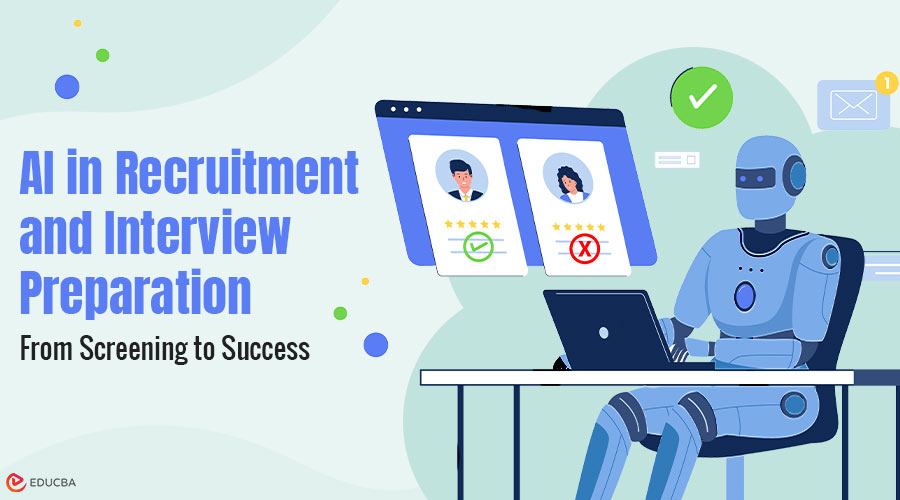
AI in Recruitment and Interview Preparation: Overview
The job market is evolving rapidly as companies strive to hire better and faster, evaluate talent fairly, and manage large numbers of applicants without compromising on quality. While traditional interviews remain effective, they often break down at scale, especially when dealing with hundreds or even thousands of candidates. This is common in campus recruitment, workforce development programs, graduate hiring, and large-enterprise talent pipelines. AI in recruitment and interview preparation is becoming increasingly central to tackling these challenges. AI is transforming interviews by introducing adaptive simulations, automatic pre-screening, and standardized evaluation tools. Companies are shifting from manual scheduling and mock interviews to systems that simulate real-time voice and video conversations. The result is an interview process that is more accessible, repeatable, and efficient for both candidates and recruiters.
From Static Questions to Adaptive Conversations
In the large-scale shift in interview tech, there is a move away from set-in-stone question sets toward a more conversational flow. In the past, interview prep often consisted of memorizing responses to popular questions or practicing with a friend or mentor. This may have its place, but it does not prepare one for the real randomness of live interviews. Modern AI in the role of an interviewer tailors questions to a candidate’s past answers, tone, confidence level, and communication style. This, in turn, creates a more real-time replica of the actual interview experience.
Instead of presenting the same set of questions each time, the system can go in-depth into technical skills, behavioral examples, or problem-solving. This dynamic approach is evident in live human interactions. Thus, candidates can prepare for the real challenge of thinking on their feet rather than memorizing set responses.
A Better Practice Environment for Job Seekers
Interview anxiety is a large issue for what is termed “otherwise capable” candidates. Many people do well in these interviews not because they lack knowledge, but because they lack sufficient opportunity to practice in a real setting. AI-powered interview tools offer a low-stress setting that users can access as many times as they like. Also, the fact that the interaction is available at any time of day or night breaks the dependency on having coaches, mentors, or peers available. This round-the-clock access makes preparation more convenient for students, working professionals, and career switchers.
These sessions’ repeatability is a great value. Candidates provide different answers, improve their body language, fine-tune their delivery pace, and build confidence over multiple attempts. Also, immediate feedback on speaking clarity, response relevance, and delivery style fast-tracks improvement. This approach is more flexible and consistent than traditional mock interviews, letting you track progress over time in a structured way.
Solving the High-Volume Recruitment Bottleneck
In large-scale hiring, which many recruiters deal with, the primary issue is the initial screening stage. Evaluating résumés alone is not enough to assess communication skills, critical thinking, or role fit. Also, assigning human interviewers to every early-stage candidate is very time- and resource-intensive. AI-based interview systems perform very well in this role. For campus hires, seasonal recruitment, or large-scale workforce programs, it is seen that AI interviewer do large-volume first-round screenings of thousands of candidates at the same time.
Also, candidates will complete their assessments via voice and video, which the system will then evaluate against predefined competency criteria. This, in turn, reduces schedule delays and encourages recruitment teams to focus their efforts on shortlisted candidates who have already passed the standard screening. The hiring process becomes faster without sacrificing quality. In large-scale hiring, efficiency can be the difference between securing top talent and losing them to competitors.
Standardization and Bias Reduction
Human judgment in interviews may introduce variability. Different interviewers may highlight different aspects of a candidate’s skill set, interpret responses differently, or bring unconscious biases to the table. Also, even highly trained hiring panels may differ in what they score, how in-depth they are with follow-up questions, and their overall assessment. AI-based interview frameworks have been put in place to reduce inconsistencies by using the same set of criteria for each candidate. Response quality, communication clarity, confidence levels, and competency-based answers are all put through the same evaluation process.
In large-scale recruitment, this level of standardization provides great value. By applying the same base process to each applicant, organizations can create a more objective screening system. AI can assist early hiring stages, improving consistency, but should not replace human decision-making.
The Rise of Real-Time Voice and Video Interviews
Text-based chatbot interviews were very important in the growth of interview automation at the time, but they also had their issues; they did not do a great job at capturing the full picture of real human interaction. Communication is a multi-layered analysis that goes beyond words, including tone, pace, breaks, eye contact, and facial expressions, all of which play a role in how responses are interpreted. Real-time voice and video tech is the next step. In highly natural simulated interview settings, AI systems perform that analysis. They, in turn, will evaluate not only what the candidate says but also how they say it.
This makes the experience much more real, particularly for roles that require strong communication skills, presence, and confidence in interpersonal interactions. For recruiters and training teams, there is a more in-depth interaction, which, in turn, provides better insights into candidate preparedness. For job seekers, a real-time practice setting provides a much better representation of the in-person interview than text-only tools.
Final Thoughts
AI in recruitment and interview preparation is transforming the hiring landscape. Adaptive question sets and instant feedback demonstrate this, and they are also integrated into standardized evaluation tools and voice/video simulations to tackle large-scale challenges in interview coaching and candidate screening. As businesses expand their talent pools, AI-based interview systems play a key role in today’s recruitment. Also, job seekers will benefit from a more accessible, repeatable, and confidence-boosting way to prepare for competitive roles. The future of interviews will be more conversational, data-driven, and scalable. AI is at the forefront of that change.
Recommended Articles
We hope this guide on AI in recruitment and interview preparation helps improve your hiring and interview strategies. Check out these recommended articles for more insights.


