


Updated May 26, 2026
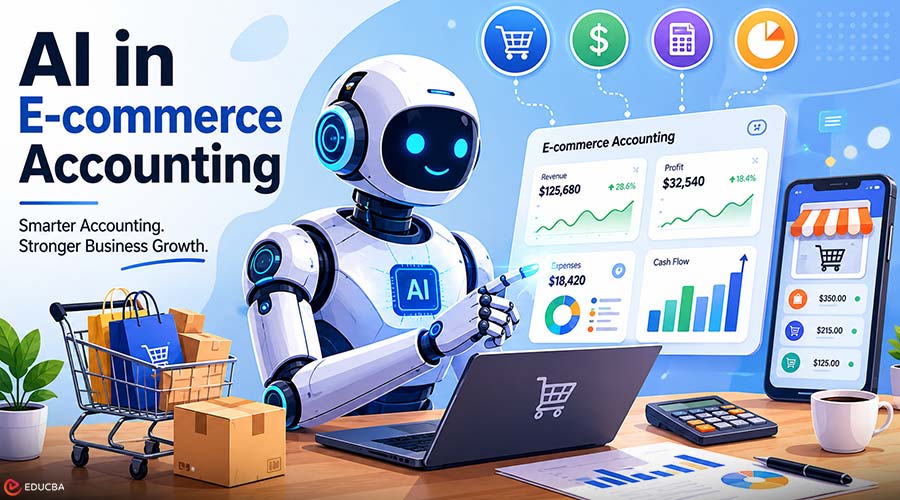
E-commerce accounting is changing fast, and AI is driving that shift. What once took hours of manual work can now be done in minutes with better accuracy. As a business owner, you are expected to move faster, make smarter decisions, and stay competitive. Understanding how AI in e-commerce accounting is shaping the industry can help you stay ahead and avoid costly mistakes. This guide explains how AI is transforming e-commerce small business accounting, and why it has become essential for modern online businesses.
What AI in E-commerce Accounting Means Today?
AI is changing what e-commerce accounting looks like for you today. You no longer have to depend on slow, manual processes to manage your finances effectively. AI can automate tasks like data entry, expense tracking, and transaction matching with high accuracy. This gives you faster access to clear financial data, so you can make better decisions for your business. You can also monitor cash flow, profits, and costs in real time without waiting for reports. AI tools help reduce errors, flag unusual activity, and keep your records organized. As e-commerce moves quickly, you need systems that keep up. Using AI in your accounting helps you stay efficient, informed, and ready to grow.
Key Accounting Tasks AI Can Automate in E-commerce
You no longer need to spend hours on manual data entry, as AI can record and organize transactions for you. It can match payments to invoices, reconcile bank accounts, and categorize expenses with strong accuracy. You can also automate sales tracking across multiple platforms, which keeps your records consistent and up to date. AI helps manage invoices, send reminders, and track payments without constant follow-up. It can even assist with basic financial reports, giving you a clear view of your numbers.
How AI Improves Accuracy and Reduces Human Error?
AI improves accuracy in your e-commerce accounting by reducing the need for manual input. When you enter data by hand, small mistakes can lead to larger financial issues over time. AI systems process data quickly and reduce errors. They can also detect duplicates, missing entries, and unusual transactions that may go unnoticed. This helps you maintain clean, reliable financial records. You also get more consistent reports, which makes it easier to understand your business performance. By relying on AI, you reduce human error and build a stronger financial foundation.
AI-Powered Expense Tracking and Categorization
AI makes expense tracking and categorization much easier for your e-commerce business. You no longer need to sort every transaction by hand or worry about missing details. AI tools can read transaction data, assign the correct category, and learn from your past behavior. This means your expenses stay organized without your constant input. You can quickly see where your money is going and identify areas to reduce costs. AI also helps keep your records consistent, which is important for reporting and taxes. It can flag unusual expenses and prevent misclassification before it becomes a problem.
Smarter Inventory and Cost of Goods Management with AI
AI helps you manage inventory and the cost of goods with more accuracy and control. You can monitor stock levels in real time across all sales channels, reducing the risk of overselling or running out of important products. AI can also predict demand based on past sales, helping you plan your inventory more effectively. When it comes to the cost of goods, AI automatically tracks purchase costs, shipping, and related expenses. This gives you a clearer view of your true product margins. You no longer need to rely on rough estimates or outdated data.
Fraud Detection and Risk Management Using AI
AI helps you detect fraud and manage financial risk in your e-commerce business. It can scan large volumes of transactions and spot unusual patterns in real time. This allows you to catch issues early, before they become costly problems. AI can flag duplicate payments, suspicious refunds, or unexpected changes in spending. You do not need to review every transaction manually to find these risks. It also learns from past data, becoming better at identifying threats over time. This gives you stronger protection for your revenue and financial data. By using AI for fraud detection, you reduce risk, improve control, and enhance the security of your business operations.
AI Tools and Software Used in E-commerce Accounting
There are many AI tools and software options you can use in e-commerce accounting today. Platforms like QuickBooks and Xero use AI to automate bookkeeping, categorize expenses, and generate reports. Tools like A2X help you accurately sync e-commerce sales data with your accounting system. You can also use Expensify for automated receipt tracking and expense management. These tools reduce manual work and keep your financial data organized. You get faster insights into your numbers without waiting for manual updates. Using the right AI software helps improve accuracy, save time, and support better financial decisions for your business.
Why AI in E-commerce Accounting is a Smart Move for the Future?
AI is becoming a key part of how you manage your e-commerce accounting, and its value will only grow. You can streamline routine tasks, minimize errors, and access accurate financial data more quickly. This helps you make better decisions and stay in control of your business performance. AI also improves how you track expenses, manage inventory, and understand your true costs. It provides real-time insights and helps identify risks before they turn into major issues.
As your business grows, these advantages become even more important. By using this e-commerce small business accounting guide, you can combine strong fundamentals with AI tools for better results. This allows you to work more efficiently, stay organized, and focus on growth. Using AI is more than a trend; it is a practical way to build a stronger and more scalable e-commerce business.
Final Thoughts
AI is no longer just a trend in digital commerce. It is becoming an essential part of modern financial management. From automated bookkeeping to fraud detection and inventory management, AI in e-commerce accounting helps businesses operate more efficiently and accurately. For e-commerce business owners, adopting AI-powered accounting solutions can lead to better financial control, reduced operational stress, and improved long-term growth opportunities. As technology evolves, businesses that adopt AI-driven accounting will be better equipped for the future of e-commerce.
Recommended Articles
We hope this guide on AI in e-commerce accounting helps you improve financial management, automate accounting tasks, and streamline your online business operations. Check out these recommended articles for more insights and strategies to grow your e-commerce business successfully.


