


Updated September 30, 2026
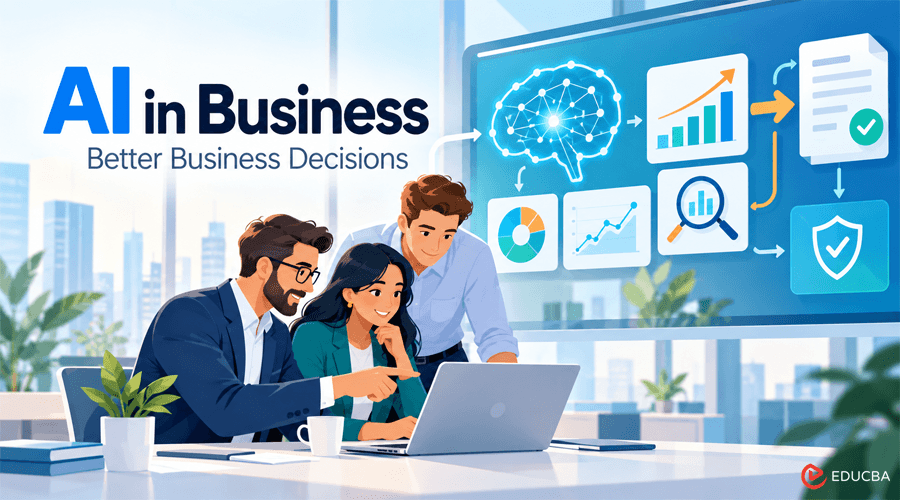
Many professionals can produce a fluent draft, a chart, or a short analysis with current tools. Fewer can turn that output into a case a manager will accept. The difficulty is not speed. It is knowing what the result is for, what it cannot prove, and who will own the outcome if it is wrong. This is where AI in Business requires more than simply knowing how to use AI tools.
That gap appears in ordinary work. A file may look complete and still fail a basic test: what should the organization start, stop, or continue if it trusts this answer? Until someone can answer that test, the tools remain a display of activity rather than a basis for action. AI in Business becomes valuable when AI-generated outputs support clear decisions and measurable business outcomes.
The Skill Most Short Courses Do Not Practice
Informal learning usually begins with the interface. You learn how to ask a model, how to clean a table, and how to present a finding. Those steps are useful. They do not teach you to judge the work itself.
Judgment here means something specific. You have to state the business question before you use a tool. You have to ask whether the process is stable enough to automate. You have to decide whether a person should remain in the loop. You have to refuse a use case that only looks current. People who skip that work can operate software they cannot defend when the discussion turns to risk, cost, or accountability.
This judgment is central to AI in Business because successful implementation depends on connecting technology with business objectives rather than treating AI as an isolated technical skill.
How a Structured Program Trains That Judgment?
Deliberate study helps when it forces the full sequence rather than a set of disconnected techniques. You define the problem, test a narrow method, and then explain the trade-off in language a non-technical colleague can challenge. An online AI in Business bachelor’s degree is one route that treats that sequence as the work, not as an afterthought.
Nexford University offers the degree online. Learners build a foundation in management, finance, marketing, and operations, then apply Python, SQL, cloud services, machine learning, and intelligent process automation to cases drawn from how organizations actually operate. Electives can lean into supply chain, financial services, or product work. The program ends with an AI in Business capstone that has to stand as a single argument. The value of that structure is rehearsal. You move from a messy operational question to a recommendation that can survive scrutiny.
Once that loop is familiar, the model is no longer the product. The product is a decision, with the method offered as evidence. That distinction is one of the most important principles of AI in Business: technology should strengthen business decisions rather than become the decision itself.
What Remains Useful When AI in Business Methods Change?
Vendors and interfaces will change. A particular prompt pattern will age. What remains useful is the habit of starting from the constraint. What decision is on the table? What data is reliable enough to support it? What process would have to change if the output were trusted? What level of error can the organization accept?
Those questions outlast a library or a dashboard. So does the discipline of showing your working: the assumption you made, the limit of the method, and the option you rejected. People who can do that stay useful after the current toolkit looks dated.
This is why AI in Business is ultimately about more than learning individual AI applications. Tools may evolve quickly, but the ability to evaluate outputs, manage risk, understand business processes, and communicate recommendations remains valuable.
Study does not replace that discipline. It only gives you a place to practice it before the meeting is live. The reader who can name the decision, test a modest answer, and explain the cost of error will still be needed, whatever the next tool is called.
Recommended Articles
We hope this guide helps you understand how AI in Business can turn AI tools into practical business decisions, strengthen analysis, and support better outcomes. Explore our recommended articles for more insights on business AI, , AI strategy, decision-making, and emerging workplace technologies.


