


How AI-Driven Rapid Prototyping is Reshaping Innovation?
Innovation is no longer a slow, step-by-step process. AI is changing the design and production process, connecting theory with actual engineering. It is this combination that has brought about smarter, rapid prototyping services and more efficient methods of machining advanced materials like CNC metal components. From microelectronics to large-scale industrial automation, AI is transforming how ideas become a reality. This article explores five areas where AI-driven rapid prototyping and CNC machining are transforming industries.
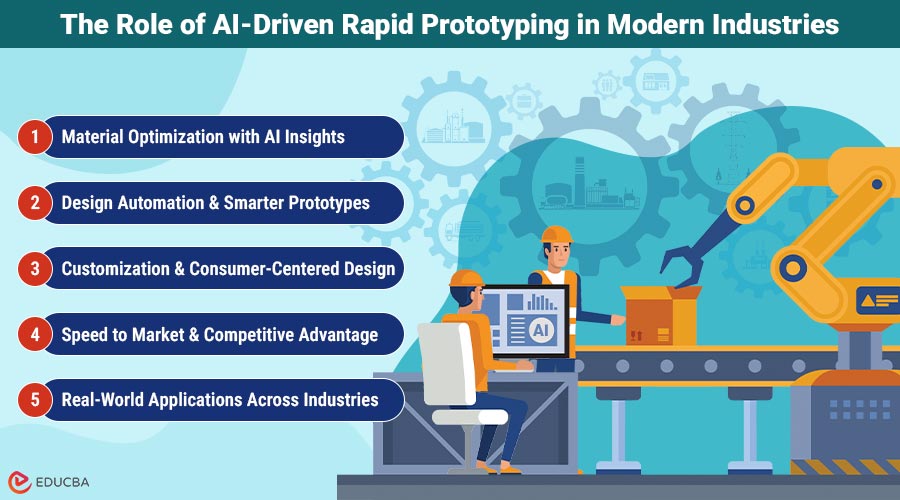
The Role of AI-Driven Rapid Prototyping in Modern Industries
AI-driven rapid prototyping is transforming every stage of product development, from material selection to final testing. The following sections highlight five key ways this technology is reshaping modern industries.
1. Material Optimization with AI Insights
The choice of material determines the product’s strength, weight, and cost-effectiveness. In the past, designers relied on trial-and-error to find the right match. Today, AI speeds up this process by testing thousands of material combinations in minutes. This data-driven approach helps engineers identify the best alloys, polymers, or composites before producing a single prototype.
In this process, rapid prototyping services play a crucial role. Once AI suggests the best options, engineers can quickly move them into physical testing. Components may be molded, fabricated, or printed for real-world evaluation. For example, engineers can produce a bicycle component in both carbon composites and CNC metal alloys to compare performance under real loads. AI predictions combined with rapid prototyping help reduce waste and save costs. Instead of investing in mass production immediately, manufacturers can test a few AI-validated prototypes and then decide on the most effective production methods and materials.
2. Design Automation and Smarter Prototypes
Creative industries thrive on innovation, but a major challenge is turning ideas into practical models. Generative AI applications now create thousands of design variations based on image inputs, automatically optimizing them for weight reduction, structural strength, and cost-effectiveness.
Engineers quickly turn these AI-generated models into physical prototypes using rapid prototyping services. Whether through additive printing or subtractive machining, they validate the designs under real-world conditions. For metal prototypes, CNC machining is essential, as it delivers the tight tolerances and smooth surface finishes that plastics and composites cannot always achieve. This flexible production process integrates AI creativity with machine precision. Developers create prototypes faster, detect errors earlier, and streamline the path from sketch to working component.
3. Customization and Consumer-Centered Design
The 20th century emphasized mass production, but the market demands personalization. AI makes it possible to customize products for individual users while maintaining large-scale production. Algorithms analyze consumer data, preferences, and ergonomics to generate unique product designs.
For example, in the wearable technology market, AI systems can recommend strap patterns or case sizes based on wrist measurements. Rapid prototyping services then produce test models in both polymers and CNC metal housings, allowing designers to evaluate comfort, durability, and style. This adaptable workflow between AI personalization and physical prototyping shortens the gap between production and consumer needs. Whether in luxury goods, sportswear, or medical devices, manufacturers can now deliver personalized experiences at an industrial scale.
4. Speed to Market and Competitive Advantage
The speed at which a company launches a product often determines its success. AI accelerates design, while rapid prototyping services reduce fabrication time—together removing bottlenecks in product development.
For example, a startup designing drones can use AI to generate aerodynamic shapes. Within hours, prototypes such as lightweight composite arms and CNC metal motor mounts can be fabricated and tested. Engineers quickly create new iterations after flight tests, refining designs within days based on performance results. This approach enables companies to launch products in weeks rather than months. Speed to market is especially crucial in industries like consumer electronics, automotive, and healthcare, where rapid innovation drives competitiveness.
5. Real-World Applications Across Industries
AI-powered prototyping is transforming multiple sectors at once:
- Automotive: AI-generated lightweight chassis components validated through CNC machining for crashworthiness.
- Healthcare: Customized surgical tools and implants produced via rapid prototyping services, giving doctors patient-specific solutions.
- Aerospace: AI-optimized wing brackets manufactured in titanium alloys using advanced CNC methods.
- Consumer Electronics: Rapid prototyping services enable testing of multiple device form factors before mass production.
- Industrial Machinery: Heavy-duty gears and housings, created through CNC machining and validated using AI-assisted stress analysis, ensure a long operational life.
These examples demonstrate a shared principle across industries: innovation thrives when AI creativity meets precise manufacturing.
Final Thoughts
The integration of AI-driven rapid prototyping with CNC machining is reshaping how industries design, test, and manufacture products. From material optimization to personalized customization, the entire product lifecycle has become faster, more efficient, and highly adaptable. By merging AI innovation with machining precision, businesses can deliver reliable prototypes that inspire confidence and accelerate progress. The future of innovation lies in this synergy—where speed, accuracy, and adaptability define the next generation of product development.
Recommended Articles
We hope this guide on AI-driven rapid prototyping helps you understand its impact on innovation. Check out these recommended articles for more insights and strategies in advanced product development.


