


AI Detectors for Recruiters: Overview
Recruiting has always involved a level of interpretation. Recruiters review cover letters, writing samples, and personal statements to evaluate a candidate’s communication ability and professional presentation. While candidates naturally present their best selves, hiring teams traditionally relied on experience and structured processes to assess authenticity. Today, however, recruiters face a new challenge: AI-generated content. Many applicants now use AI tools to draft cover letters, portfolio summaries, and personal statements. Unlike exaggerations on a resume, AI-generated writing can be difficult to detect without specialized tools. This is where AI detectors for recruiters become valuable. These tools help hiring teams flag submissions that may contain AI-generated content, enabling them to review them more carefully. While they should never replace human judgment, AI detectors for recruiters can serve as an effective screening layer in high-volume hiring workflows.
Ranking Criteria
| Factor | Weight |
| Detection accuracy on professional writing | 30% |
| False positive rate | 25% |
| Batch processing capability | 20% |
| Data privacy and security | 15% |
| Ease of use for non-technical teams | 10% |
Professional recruiting teams do not have time to learn complex interfaces. Accessibility and clean output were weighted accordingly.
Best AI Detectors for Recruiters to Screen Candidate Writing
Here are the top tools and key features to help recruiters efficiently screen candidate writing for AI-generated content.
1. Proofademic
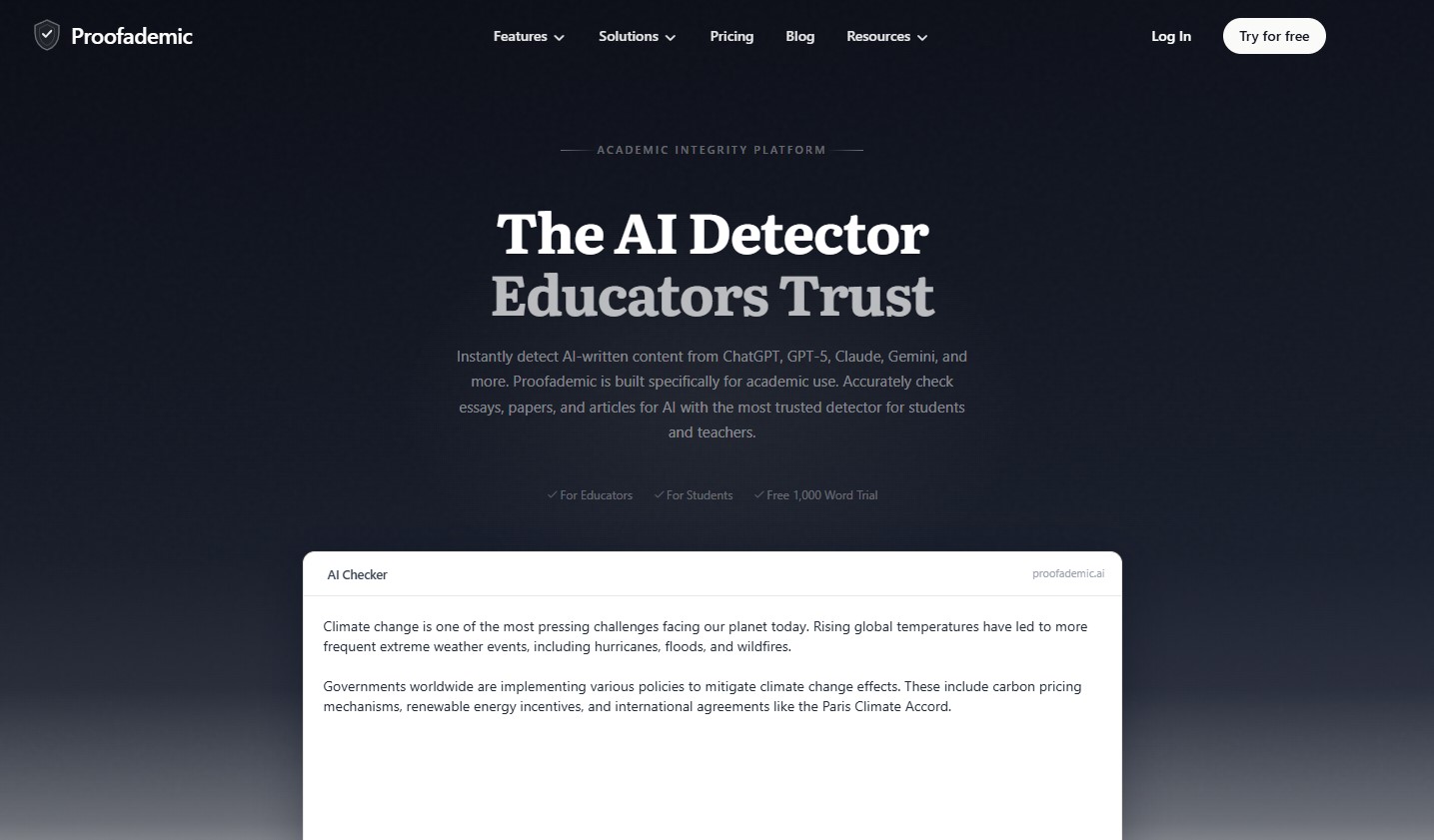
Image Source: Proofademic
Proofademic is the strongest choice for recruiters who review written materials at volume. Developers built it for institutional review, which aligns well with structured recruiting workflows that process applications in cohort batches rather than one at a time. The batch processing feature is the headline for recruiting use. When 150 cover letters arrive for a communications manager role, Proofademic lets you run the full set and review the scored results in one pass. That is a fundamentally different workflow than opening each application individually and copy-pasting text into a detector. The probability scoring is granular enough to be useful without being confusing. You get a score that tells you how AI-generated the content appears not a binary verdict. That matters in recruiting, where a 92% AI score and a 55% score are very different situations requiring very different follow-up.
- Best for: Talent acquisition teams, in-house recruiters, recruiting coordinators
- Standout feature: Batch processing for application review at scale
- Free plan: Yes
2. AI Text Detector
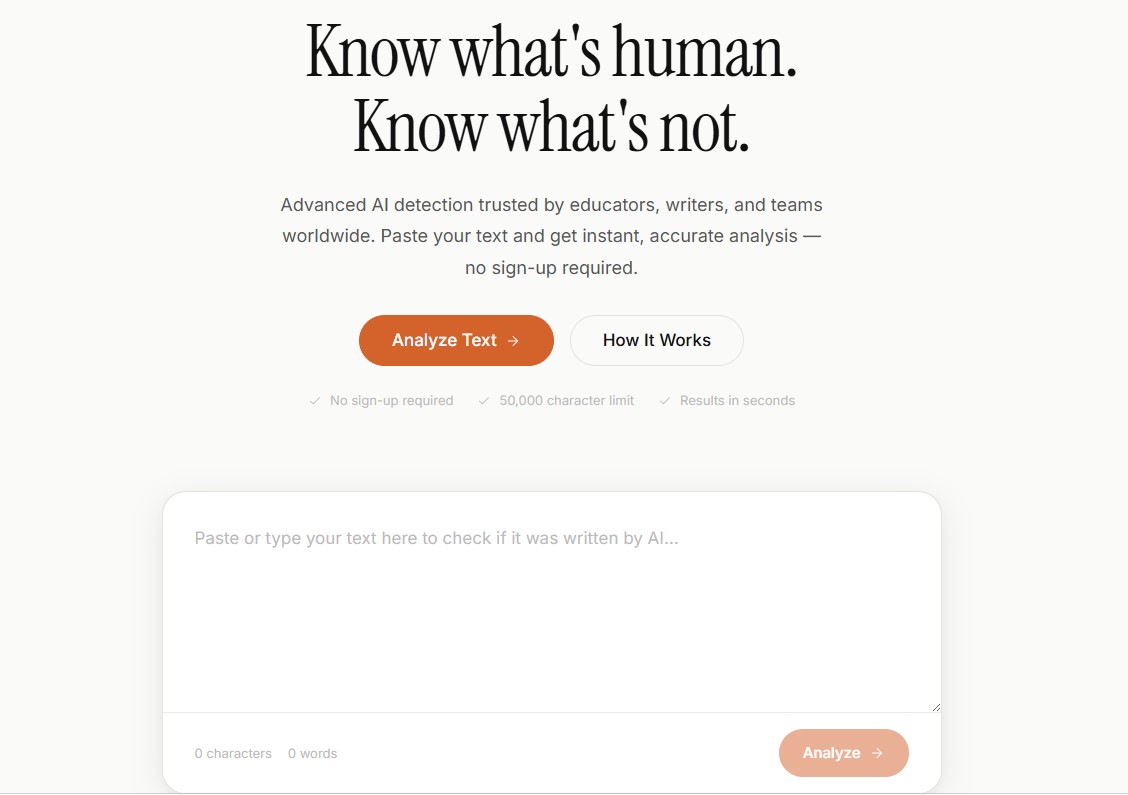
Image Source: AI Text Detector
AI Text Detector is free, requires no account, and handles up to 50,000 characters per submission. A cover letter and professional summary fit well within that limit. For independent recruiters, small agencies, or hiring managers reviewing applications directly, this is a credible, free option that delivers real results. The no-account requirement reduces friction you can hand it to a hiring manager, and they can use it the same day.
- Best for: Independent recruiters, hiring managers, small teams
- Free plan: Yes, no account required
3. Grammarly AI Detector
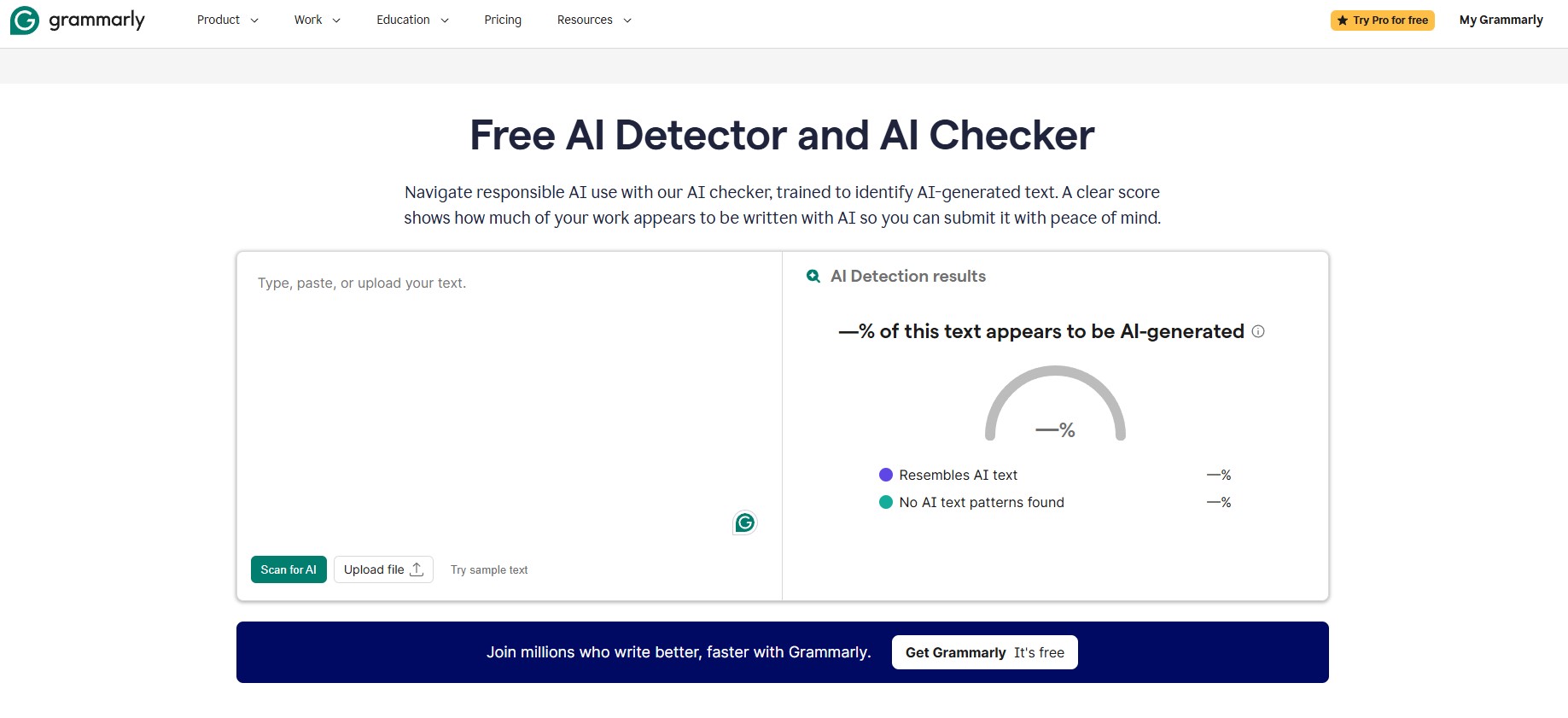
Image Source: Grammarly AI Detector
Grammarly’s AI Detector is the natural choice for recruiting teams that already use Grammarly Business for job description drafting, offer letter editing, or candidate communications. The tool fits into the existing interface without adding new logins, dashboards, or onboarding. Grammarly’s detection performs particularly well on professional business writing — exactly the register you are reviewing in cover letters and executive summaries. Results are easy to interpret, and the visual presentation is clean.
- Best for: Talent teams with active Grammarly subscriptions
- Free plan: Limited
4. Turnitin
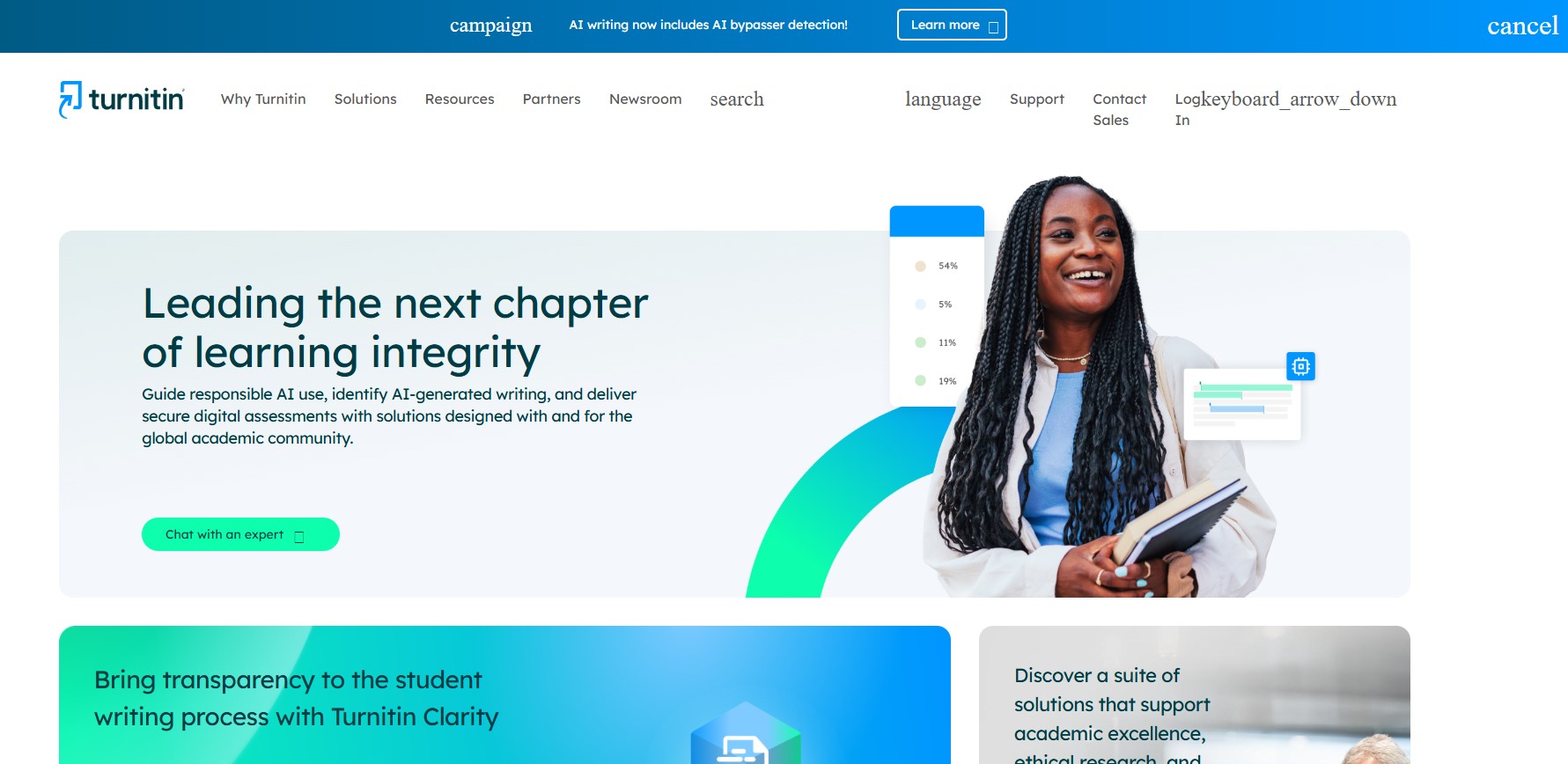
Image Source: Turnitin
Turnitin is more relevant for recruiting processes that include formal written assessments, a take-home writing exercise, an analytical brief, and a structured case response that is a defined stage in the selection process. For a standard cover letter review, Turnitin is overkill. But for competitive programs, leadership rotations, or roles where the written assessment carries significant selection weight, Turnitin’s institutional credibility and detailed reporting are the right fit.
- Best for: Formal assessment-based hiring programs
- Free plan: No
5. Quillbot AI Detector
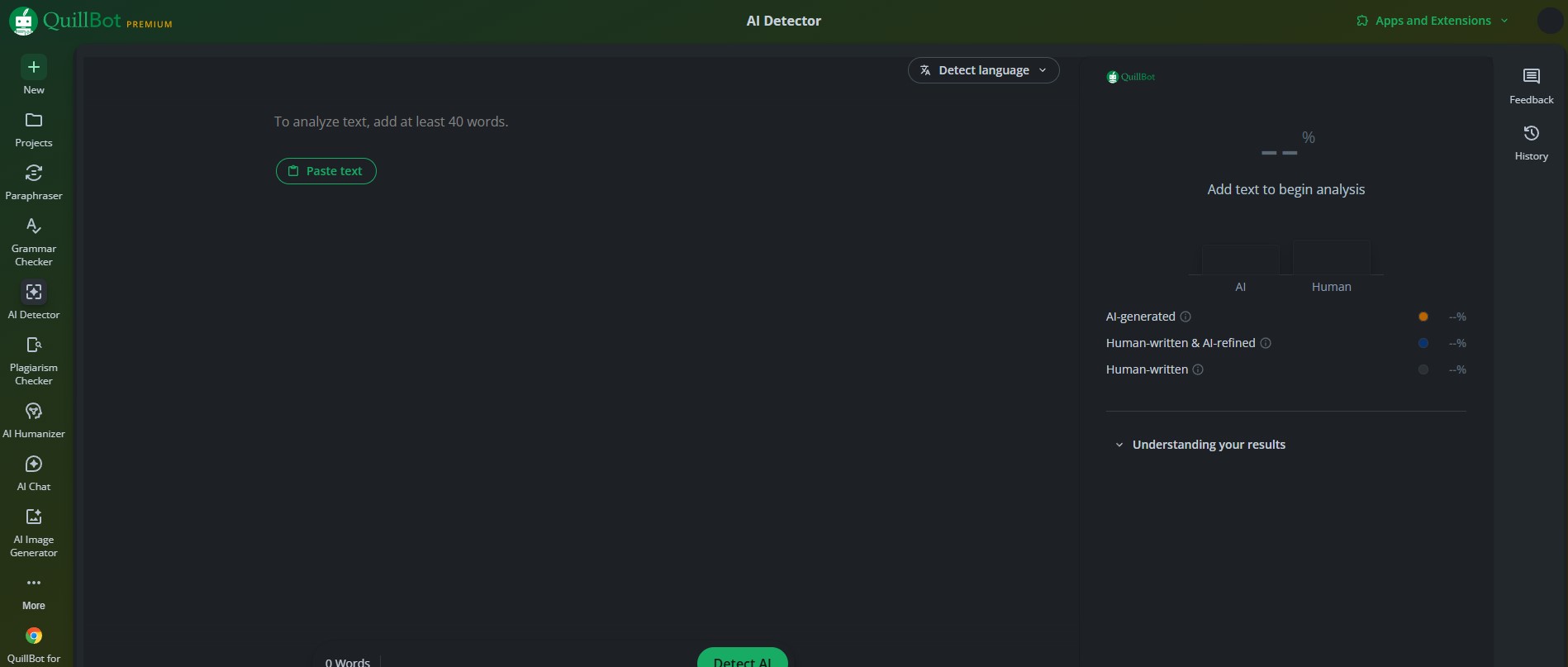
Image Source: Quillbot AI Detector
Quillbot’s AI Content Detector is reliable and affordable for small recruiting teams or individual reviewers. The interface is clean, and the results are straightforward. The paid tier handles cover letters and written samples well because it removes word limits. The free tier works for spot-checking individual applications.
- Best for: Small agencies, individual recruiters, budget-limited teams
- Free plan: Yes (limited by word count)
6. Ahrefs AI Detector
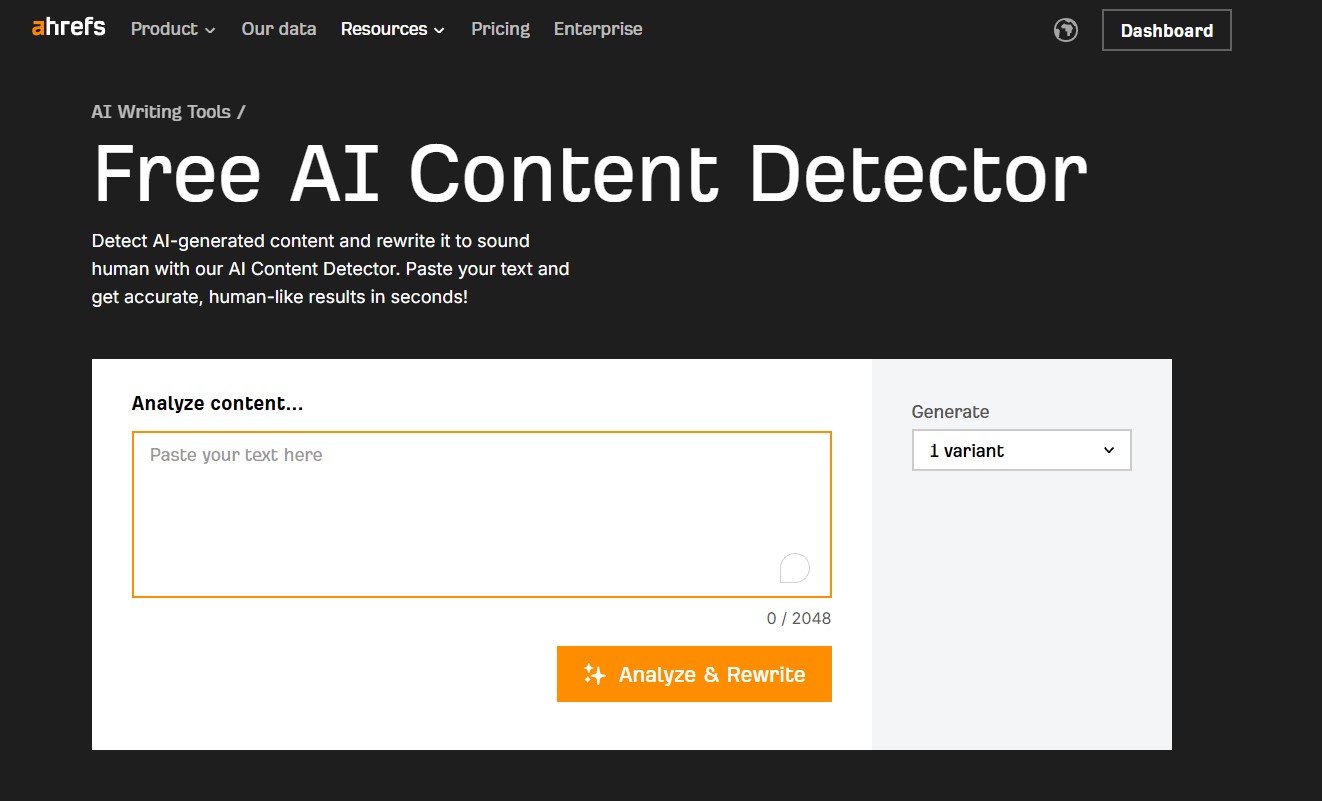
Image Source: Ahrefs’ AI Detector
Ahrefs’ AI Content Detector is a free, consistent option that works well for general professional writing review. For recruiting teams that also use Ahrefs for employer brand content and job marketing, having the detector in the same toolset is a practical convenience.
- Best for: Talent teams managing employer brand and recruiting content together
- Free plan: Yes
7. Writesonic AI Detector
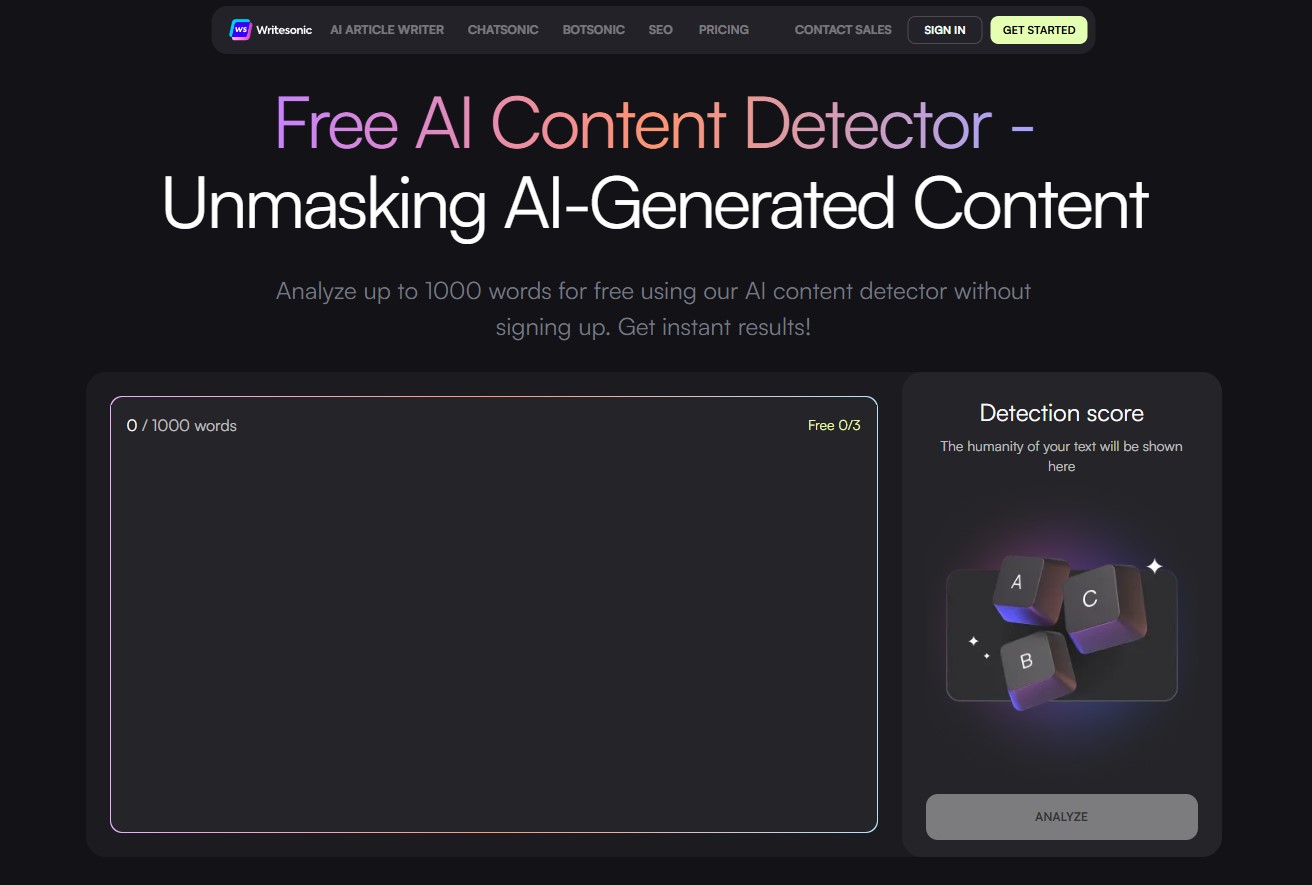
Image Source: Writesonic AI Detector
Writesonic’s detector is a useful option for recruiting teams that use Writesonic for writing job descriptions or candidate outreach content. The detector sits alongside other writing tools on the same platform.
- Best for: Recruiting teams using Writesonic for content production
- Free plan: Yes (within Writesonic’s free tier)
8. Small SEO Tools AI Detector
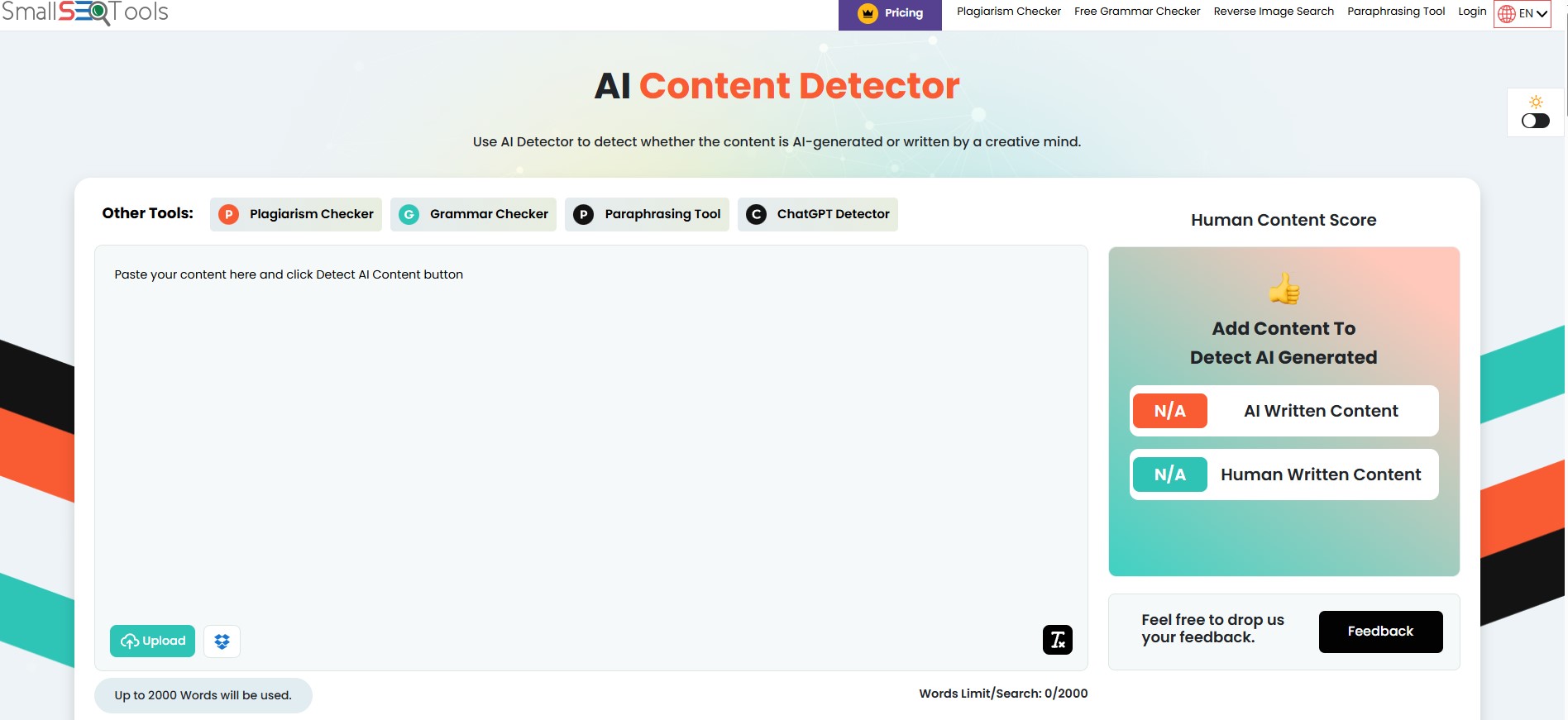
Image Source: Small SEO Tools AI Detector
Small SEO Tools’ AI Content Detector is a free, low-barrier tool that works well as a secondary check. For occasional spot-checking without any tool commitment, it is a functional starting point.
- Best for: Occasional use, secondary checks
- Free plan: Yes
How to Choose the Right Tool for Your Recruiting Operation?
A few practical considerations:
- Match the tool to your application volume: For 10 applications, any tool works. For 500, you need batch processing. Proofademic’s batch capability makes it the only serious option for high-volume hiring.
- Prioritize data privacy in candidate materials: Applications may contain personal information subject to GDPR, CCPA, or other applicable data protection rules. Before routing candidate documents through a third-party tool, confirm the vendor’s data retention and training policies with your legal team.
- Test on your actual content type: Run sample cover letters and writing samples through any tool before deploying them in a real workflow. Monitor whether the system flags strong human writers at uncomfortable rates.
- Build a policy before you build a workflow: A detector without a policy creates inconsistency and legal exposure. Decide what a flagged submission means in your process before you start flagging submissions.
What Recruiters Need to Know About Limitations?
These tools are useful. They are also imperfect in ways that matter specifically in a hiring context.
- False positives will happen: Strong, structured writers, especially those who write in a formal professional register, sometimes produce text that scores moderate-to-high on AI detectors. Native English speakers from formal academic backgrounds, professionals who write in their second language, and people with particularly consistent writing styles are all at risk of false positives. A flag is not a verdict.
- Non-native English speakers face higher detection rates: This is documented across multiple detector tools. Structured, grammatically careful prose from non-native speakers is more likely to be flagged than the same quality of writing from a native speaker with more stylistic variation. This is a significant equity concern in recruiting, and any detection process must explicitly account for it.
- Short texts are unreliable: Most detectors require 150 to 300 words to produce meaningful results. Resume bullet points are essentially undetectable. Detection is most useful on cover letters, personal statements, and written work samples.
- Detection can’t tell you why something scored high: A high AI score might mean the candidate submitted AI-generated content. It might mean they are a very structured writer. It might mean they used AI to organize their ideas, then wrote everything themselves. The score does not tell you which it is.
- Do not make a hiring decision based solely on a score: Use it as a prompt for a follow-up question during a phone screen, or as a reason to look more carefully at the rest of the application. Not as grounds for automatic rejection.
Questions to Ask Your Vendor
Before deploying a detector in a formal recruiting workflow, get clear answers to these:
- How is candidate data handled after submission? Is it retained, anonymized, or deleted?
- Is the submitted text used to train the model? Can we opt out?
- What’s the documented false positive rate on professional business writing?
- Does the tool have an API that integrates with our ATS?
- What’s the batch processing limit per session?
Recruiters Want to Know
1. Should we disclose to candidates that we use AI detection?
In most cases, yes. It is good practice, and depending on your jurisdiction and the nature of the tool, it may be legally required. At a minimum, include a note in your application privacy policy.
2. What is the right response when a submission flags as high AI?
Use it as a reason to ask a follow-up question. In a phone screen, ask the candidate to expand on a point from their cover letter. See whether they can speak to it with the same depth. That is a better signal than the score itself.
3. Can we use AI detection for internal mobility programs?
Yes, with the same caveats. Employee submissions in internal programs deserve the same fair treatment and privacy considerations as external applications.
4. How does this work for international recruiting?
Confirm language support with your vendor. Most tools perform best in English. For non-English applications, detection accuracy varies meaningfully.
5. What if a candidate pushes back on being screened?
Have a clear policy response ready. Explain what the tool does, how you use the results, and clarify that no hiring decision relies on a detection score alone. Candidates who push back often have legitimate concerns worth hearing.
6. Does this apply to LinkedIn profiles, too?
Technically, yes, AI writing detectors work on any text. But applying detection to a public LinkedIn profile, which you did not ask the candidate to produce specifically for you, raises different questions than reviewing a cover letter submitted to your process.
Recommended Articles
We hope this guide on AI detectors for recruiters helps you evaluate candidate submissions more effectively and maintain fairness in the hiring process. Check out these recommended articles for more insights and strategies on improving modern recruitment workflows.


