
What is an Adhesion Contract?
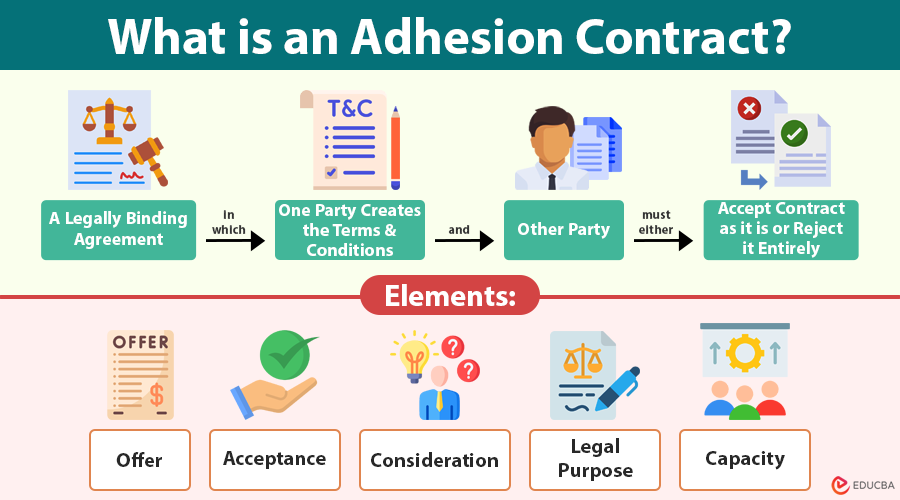
An adhesion contract is legally binding agreement in which one party creates the terms and conditions, and the other party must either accept contract as it is or reject it entirely.
The party receiving the contract has little or no opportunity to negotiate the terms. Therefore, adhesion contracts are often called “take-it-or-leave-it contracts.”
For example, when purchasing insurance online, customers usually click “I Agree” to the policy terms without negotiating any clauses. This agreement is considered an adhesion contract.
Table of Contents:
- Meaning
- Importance
- Key Features
- Elements
- Types
- Examples
- Advantages
- Disadvantages
- Industries that Commonly Use Adhesion Contracts
- How to Protect Yourself Before Signing an Adhesion Contract?
Key Takeaways:
- Adhesion contracts are standardized agreements offered on a take-it-or-leave-it basis, with no opportunity for negotiation.
- Businesses use adhesion contracts to streamline transactions, reduce costs, and improve operational efficiency.
- Consumers should carefully review the terms because unequal bargaining power may lead to unfair contractual provisions.
- Courts generally enforce adhesion contracts but may invalidate unfair, deceptive, or unconscionable clauses.
Why are Adhesion Contracts Important?
Adhesion contracts have become increasingly important because businesses need efficient ways to handle large numbers of transactions.
Their importance includes:
1. Simplifying Commercial Transactions
Adhesion contracts streamline transactions by eliminating lengthy discussions and standardizing terms of agreement.
2. Reducing Negotiation Time
Pre-drafted contracts reduce negotiation effort, enabling faster execution of agreements among the parties involved.
3. Lowering Administrative Costs
Standardized contracts minimize legal and administrative expenses associated with drafting individual agreements.
4. Creating Standardized Agreements
Adhesion contracts ensure uniform terms and conditions across all customer transactions consistently.
5. Supporting Online and Digital Services
Digital platforms rely on adhesion contracts to efficiently manage large-scale online users.
6. Providing Consistent Terms for Customers
Standardized agreements ensure all customers receive equal terms, promoting fairness and transparency.
7. Increasing Business Efficiency
Businesses improve operational efficiency by processing numerous contracts quickly without individual negotiations.
Key Features of an Adhesion Contract
The following features distinguish adhesion contracts from other agreements.
1. Standardized Terms
Standardized terms are prewritten contractual provisions that are uniformly applied to all customers without modification.
2. Unequal Bargaining Power
Unequal bargaining power exists when one party possesses significantly greater influence during contracting.
3. Take-It-or-Leave-It Nature
A take-it-or-leave-it nature requires parties to either accept or reject contract terms entirely.
4. No Negotiation
No negotiation means the weaker party cannot alter, discuss, or customize contractual provisions.
5. Mass Usage
Mass usage refers to the simultaneous use of identical contracts by numerous consumers.
6. Pre-Drafted by One Party
Pre-drafted contracts are prepared by one party before being offered to others.
Elements of an Adhesion Contract
An adhesion contract generally includes the following elements:
1. Offer
One party presents standardized contract terms to another party for acceptance, without the opportunity for negotiation.
2. Acceptance
The other party agrees to the contract terms, creating a legally binding agreement.
3. Consideration
A valuable item, like as cash, products, services, or contractual commitments, is exchanged by both parties.
4. Legal Purpose
The contract must involve lawful activities and cannot promote illegal or prohibited actions.
5. Capacity
Parties must possess legal competence, age, and mental ability to enter into valid contracts.
Types of Adhesion Contracts
Below are some of the most common types of adhesion contracts used across various industries and everyday transactions.
1. Insurance Contracts
Insurance contracts are standardized policy agreements issued by insurers that require customers to accept predetermined coverage terms.
2. Employment Agreements
Employment agreements often contain pre-established workplace terms that employees accept as conditions of employment.
3. Software License Agreements
Software license agreements establish standardized usage terms that users must accept before accessing software.
4. Banking Agreements
Banking agreements contain fixed terms governing financial services, accounts, loans, and related customer obligations.
5. Telecommunications Contracts
Telecommunications contracts specify standardized service terms for internet, mobile, and communication service subscribers.
6. Transportation Contracts
Transportation contracts outline predetermined travel conditions, liabilities, and responsibilities accepted by passengers or shippers.
Examples of Adhesion Contracts
The following examples illustrate how adhesion contracts are commonly used in everyday consumer and business transactions.
1. Insurance Policy
An individual purchases health insurance online and accepts the company’s terms without negotiating any conditions.
2. Mobile Application Terms
Before using a mobile app, users must agree to the terms and privacy policy.
3. Credit Card Agreement
A customer accepts the terms of a credit card issued by a bank.
4. Streaming Subscription
A user subscribes to a streaming platform by agreeing to pre-drafted membership conditions.
Advantages of Adhesion Contracts
Despite criticism, adhesion contracts provide several advantages.
1. Saves Time
Standardized contracts enable businesses and customers to complete transactions quickly without lengthy negotiations or revisions.
2. Reduces Costs
Companies minimize legal expenses and administrative costs by using pre-drafted agreements for multiple transactions.
3. Standardization
Standardized contracts ensure that all customers receive consistent terms, conditions, rights, and obligations.
4. Improves Efficiency
Organizations efficiently handle large transaction volumes by using uniform agreements across customers and services.
5. Supports Online Transactions
Digital businesses rely on standardized contracts to facilitate seamless online purchases, subscriptions, and services.
6. Easy Administration
Managing identical contracts simplifies recordkeeping, compliance monitoring, and overall administrative processes for organizations.
Disadvantages of Adhesion Contracts
Adhesion contracts also have several disadvantages:
1. Unequal Bargaining Power
Consumers often lack negotiating power and must accept predetermined terms established by the stronger party.
2. Unfair Clauses
Some adhesion contracts contain one-sided provisions that primarily benefit businesses rather than fairly benefit consumers.
3. Lack of Understanding
Many individuals accept standardized agreements without fully reading or understanding their legal implications and obligations.
4. Hidden Conditions
Important terms and restrictions may be concealed within lengthy documents, making them difficult to identify.
5. Limited Consumer Protection
Consumers may accept unfavorable contractual terms because essential products or services are otherwise unavailable.
6. Potential for Abuse
Businesses may exploit standardized contracts by including unfair provisions that customers fail to notice.
Industries that Commonly Use Adhesion Contracts
Adhesion contracts are widely used across industries that serve large numbers of customers through standardized agreements.
1. Banking
Banks use standardized agreements for accounts, loans, credit cards, and other financial services transactions.
2. Insurance
Insurance companies issue pre-drafted policies containing uniform coverage terms for policyholders and beneficiaries.
3. Telecommunications
Telecommunications providers use standard contracts for mobile, internet, and communication service subscriptions nationwide.
4. Transportation
Transportation companies rely on standardized agreements governing passenger travel, shipping, and related service conditions.
5. Software Companies
Software companies require users to accept predefined license agreements before accessing applications or platforms.
6. E-commerce Businesses
E-commerce businesses utilize standard terms governing purchases, returns, payments, and customer responsibilities online.
7. Streaming Platforms
Streaming platforms provide entertainment services through standardized subscription agreements that all users accept.
How to Protect Yourself Before Signing an Adhesion Contract?
Consumers can take several steps to reduce risks.
1. Read the Entire Agreement
Carefully read the complete agreement to understand all terms, obligations, and potential consequences.
2. Check Important Clauses
Carefully review crucial clauses, including fees, cancellations, liabilities, arbitration, and privacy provisions.
3. Ask Questions
Request clarification from the provider whenever contract terms, conditions, or provisions appear unclear.
4. Compare Alternatives
Compare agreements from different providers to identify more favorable terms and conditions available.
5. Keep a Copy
For future reference and dispute resolution, save a copy of the signed contract.
Final Thoughts
An adhesion contract is a standardized, take-it-or-leave-it agreement drafted by one party. These contracts streamline transactions, reduce costs, and improve business efficiency. However, unequal bargaining power may create unfair terms. Carefully reviewing adhesion contracts helps consumers protect their rights and make informed decisions in everyday transactions.
Frequently Asked Questions (FAQs)
Q1. Why is it called a take-it-or-leave-it contract?
Answer: Because the receiving party has no opportunity to negotiate or modify the terms.
Q2. Are adhesion contracts legal?
Answer: Yes, they are generally legal and enforceable if their terms are fair and comply with contract law.
Q3. Can courts reject an adhesion contract?
Answer: Yes. Courts may invalidate unfair, deceptive, or unconscionable clauses.
Q4. What happens if I refuse to sign an adhesion contract?
Answer: If you refuse to accept the contract, you may be unable to obtain the product, service, or benefit offered.
Recommended Articles
We hope that this EDUCBA information on “Adhesion Contract” was beneficial to you. You can view EDUCBA’s recommended articles for more information.


