


Updated November 9, 2026
Understanding Tone and Intent in Video Scriptwriting
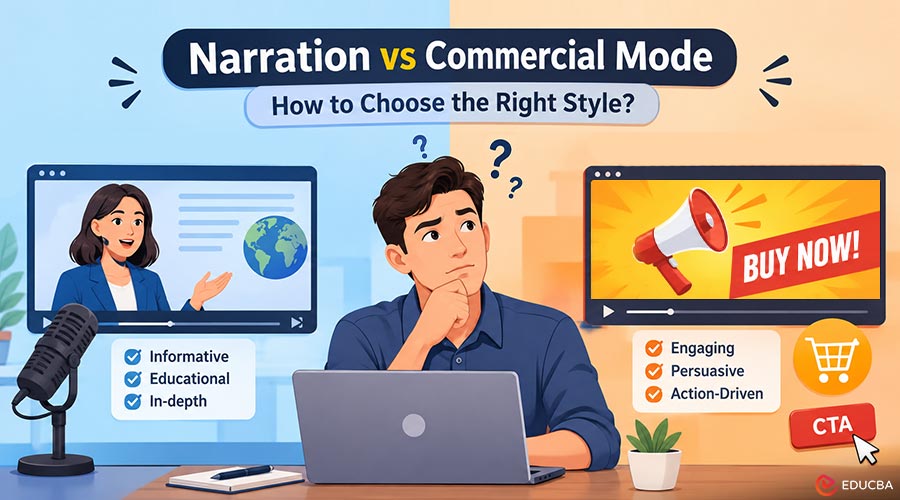
Creating a compelling video starts long before the camera rolls or an editor opens a timeline. It begins with the script. A foundational decision every video creator, marketer, and educator must make is choosing the right delivery mode for the message. Understanding narration vs commercial mode is essential to determining how a video communicates with its audience. Should the script rely on a continuous narrative voice that guides the viewer through complex ideas, or should it adopt a punchy, commercial style designed to drive immediate action?
The choice between narration mode and commercial mode shapes everything from visual pacing to audio design. Choosing the wrong approach can disconnect you from your audience; a deep technical tutorial delivered like a high-energy TV commercial feels jarring and insincere. Conversely, a product launch video that uses a slow, academic voiceover risks losing the viewer’s attention within seconds.
Understanding the core differences between these two modes allows digital creators to craft scripts that align with their project goals. Whether you are building an online course, producing a brand feature, or experimenting with an AI script to video maker to speed up your content workflow, matching script style to viewer intent is essential for high conversion and retention.
What is Narration Mode?
Narration mode relies on a clear, storytelling voiceover that guides the audience through an educational or narrative journey.
This style is predominantly informative, focused on explaining concepts, sharing long-form stories, or demonstrating multi-step processes. It is the gold standard for e-learning platforms, documentary-style videos, software tutorials, and internal corporate training modules.
In a narrated script, the tone is typically conversational, steady, and authoritative. The audio track leads the experience, while the visuals serve to reinforce, clarify, or illustrate what the voiceover describes. The primary goal is retention and understanding, not immediate sales conversion.
Key Characteristics
- Pacing: Measured, steady, and deliberate. Gives the listener time to absorb complex information.
- Structure: Sequential and logical. Often follows a classic beginning, middle, and end structure.
- Audio Focus: High priority on speech clarity, subtle background music, and natural pauses.
- Visual Pairing: Supportive imagery, screen recordings, diagrams, or contextual B-roll.
When to Use Narration Mode?
Narration mode works best when your content requires explanation rather than immediate persuasion. If your audience needs to learn a skill, master a software tool, or understand a concept, narration provides the depth you need.
For example, online training courses benefit immensely from narration. Viewers expect a structured, step-by-step breakdown without high-pressure sales tactics. Corporate onboarding, technical whitepaper summaries, and educational YouTube videos also rely on narration to build trust and authority over time.
What is Commercial Mode?
Commercial mode is fast-paced, high-energy, and goal-oriented. Its primary purpose is to capture immediate attention, evoke emotion, and drive a specific call to action (CTA).
Unlike narration, which takes its time to explain, commercial mode focuses on highlighting key benefits, establishing brand identity, and encouraging viewers to click, buy, or subscribe. Commercial scripts rely on snappy dialogue, rhythmic pacing, and bold visual cues. Sentences are short, visual transitions are rapid, and the soundtrack actively drives the emotional energy of the piece.
Key Characteristics
- Pacing: Rapid, dynamic, and high-energy. Designed to hold short attention spans.
- Structure: Problem-solution dynamic followed by a direct call to action.
- Audio Focus: Upbeat sound design, impactful music tracks, and concise voiceovers.
- Visual Pairing: Dynamic graphics, fast cuts, close-ups, and striking text overlays.
When to Use Commercial Mode?
Commercial mode is ideal for promotional campaigns, product teasers, social media ads, and brand announcements. If your video appears as an in-feed ad on platforms like Instagram or TikTok, commercial mode is essential to stop the scroll.
When launching a new feature or promoting a limited-time offer, viewers do not need a twenty-minute deep dive. They need a quick overview of why the offer matters and what step to take next. Commercial mode delivers that clarity efficiently.
Narration vs Commercial Mode: Comparing Script Structures
To highlight the operational differences between these two modes, consider how each script type handles a simple topic like updating project management software.
Sample Narration Script Structure
- Intro: Managing complex projects requires clear communication. In this tutorial, we will explore three new dashboard features that streamline team collaboration.
- Body Paragraph: First, let us examine the automated tracking board. By navigating to the top-left icon, you can set custom rules that notify team members when a task status changes.
- Outro: By incorporating these steps into your daily workflow, your team can reduce status meeting frequency. Next, we will cover custom reporting tags.
Sample Commercial Script Structure
- Hook: Still spending three hours a day chasing project updates?
- Body: Meet the all-new Automated Workspace. One click, real-time tracking, zero hassle. Keep your team aligned without sending a single follow-up email.
- Call to Action: Upgrade your workflow today. Start your free 14-day trial now.
Notice how the commercial script cuts straight to the pain point and immediate solution, while the narration script systematically guides the learner through execution steps.
Narration vs Commercial Mode: Which Mode Fits Your Video Project?
If you are unsure which direction to take for your next video script, evaluate your project against these core factors:
1. Primary Audience Intent
Are your viewers actively looking to solve a technical problem, learn a new framework, or study for a certification? Choose narration mode. Are they passively scrolling social feeds or landing on a promotional page? Use commercial mode to grab their focus quickly.
2. Platform Distribution
Long-form platforms like YouTube, Vimeo, and dedicated learning management systems (LMS) favor narration scripts. Short-form platforms like TikTok, Instagram Reels, YouTube Shorts, and paid display networks demand commercial modes.
3. Content Complexity
High-complexity topics involving multiple technical steps, code walkthroughs, or data analysis need room to breathe. Narration gives you space for thorough explanation. Low-complexity, high-value visual products benefit from commercial pacing.
4. Desired Viewer Action
If your end goal is comprehension and topic mastery, select narration. If your goal is a link click, app download, or checkout event, choose commercial mode.
The Hybrid Approach: Blending Narration and Commercial Styles
You do not always have to choose one mode exclusively. Modern content strategy often leverages a hybrid model that opens with a commercial hook before transitioning into informative narration. Consider an educational webinar intro.
The first 30 seconds can use a fast-paced commercial script style to hook the audience and sell the value of staying tuned. Once the viewer is engaged, the script shifts smoothly into narration mode for the core teaching module. This hybrid framework keeps completion rates high by combining high-energy motivation with substantive educational value.
Scriptwriting Tips for Narration Mode
Writing effective narration scripts requires a strong focus on clarity, natural language, and pacing.
Keep these guidelines in mind during drafting:
- Write for the ear, not the eye: Read your script out loud. If a sentence causes you to stumble, rewrite it using simpler phrasing.
- Include audio-visual cues: Add explicit notes for footage, on-screen text, and sound effects to help your voice actor or editor visualize the timing.
- Allow natural pauses: Leave room for screen movements or complex visuals to be absorbed without constant vocal presence.
- Maintain consistent tone: Keep the voice professional, warm, and instructional across the entire lesson or series.
Scriptwriting Tips for Commercial Mode
Commercial scripts must deliver maximum value in minimum time.
Every word counts:
- Lead with the hook: Address a direct pain point or show a dramatic visual within the first three seconds.
- Focus on outcomes over features: Tell the viewer what your product or service enables them to achieve, rather than listing technical specs.
- Keep text concise: Limit sentences to short, clear statements that are easy to parse over fast-moving visuals.
- End with a single, clear CTA: Give your audience one clear action to take next, such as visiting a website or starting a trial.
Optimizing Your Script Production Workflow
Creating video scripts efficiently requires testing different script formats and evaluating audience response over time. Digital media creators often draft alternative versions of a script, one narrative and one commercial, to see which format generates higher viewer retention on specific channels.
Modern video generation tools can quickly convert text drafts into full visual rough cuts. Using automated script-to-video tools lets producers quickly preview how a narrated voiceover pairs with dynamic stock footage versus a rapid commercial edit. This workflow saves hours in post-production and helps teams refine their script direction before committing to final voice recording and mastering.
Final Thoughts
Deciding between narration vs commercial mode comes down to aligning your script style with your audience’s intent. Narration mode builds deep understanding, educational authority, and long-term trust. Commercial mode captures attention quickly, drives immediate engagement, and inspires direct action.
By evaluating your audience, distribution channel, topic complexity, and campaign goals, you can select the right script style for every video project. Mastering both modes will make your video content more engaging, versatile, and effective.
Recommended Articles
We hope this comprehensive guide to narration vs commercial mode helps you choose the right video script style for your content goals. Check out these recommended articles for more insights, tips, and strategies to create engaging videos that inform, captivate, and convert your audience.


