

What is Pay Equity Analysis?
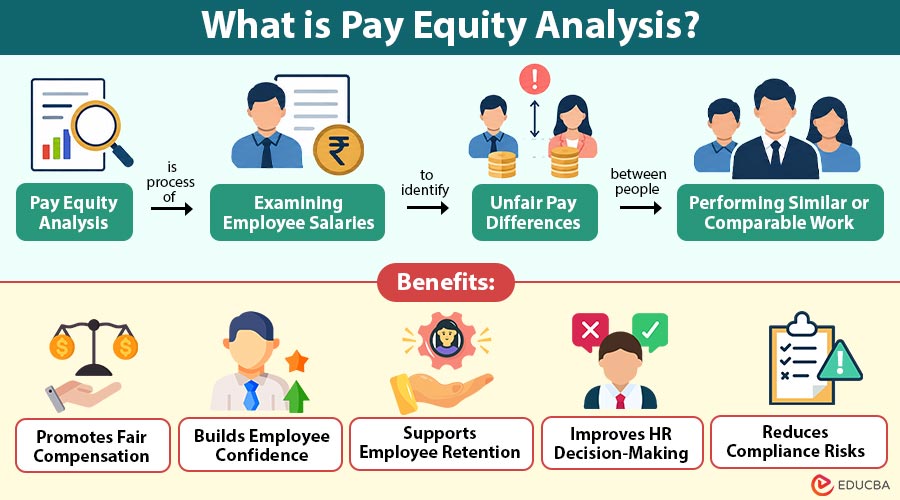
Pay equity analysis is the process of examining employee salaries to identify unfair pay differences between people performing similar or comparable work.
Imagine two employees working in the same company. Both have similar responsibilities, qualifications, and experience. However, one earns ₹50,000 per month, while the other earns ₹60,000.
Why is there a difference?
Perhaps one employee has more experience, stronger performance, or additional responsibilities. But what if there is no clear reason for the difference? This is where pay equity analysis becomes useful.
Companies use pay equity analysis to understand whether employees are paid fairly for their work. It helps identify salary differences that may need further investigation. The goal is not necessarily to pay everyone the same amount. Instead, it is to make sure that pay differences are based on relevant factors rather than unfair treatment.
Table of Contents:
- Meaning
- Importance
- Objectives
- Working
- Types
- Example
- Key Factors
- Benefits
- Challenges
- Difference
- Best Practices
Key Takeaways:
- Pay equity analysis provides valuable insights into compensation patterns, helping organizations recognize potential workforce inequalities.
- Transparent salary policies encourage accountability and help managers communicate compensation decisions more effectively across departments.
- Reliable workforce data enables HR professionals to evaluate compensation trends and develop stronger salary strategies.
- Addressing compensation concerns proactively can strengthen organizational reputation and support a more inclusive working environment.
Why is Pay Equity Analysis Important?
Employees expect fair compensation for work they perform. When people believe they are treated unfairly, it can affect their motivation and trust. Pay equity analysis helps companies examine salary differences and understand whether their compensation practices are consistent. It also helps HR teams identify possible problems before they become serious concerns.
For example, a company may discover that employees performing similar work receive different salaries without a clear explanation. By reviewing these differences, the company can decide whether changes are necessary.
Objectives of Pay Equity Analysis
Companies conduct pay equity analysis for several reasons.
1. Identify Unfair Pay Differences
Pay equity analysis helps companies find salary differences between employees performing comparable work and understand whether those differences have valid explanations.
2. Support Fair Compensation
Companies use pay equity analysis to check whether salaries reflect relevant factors such as experience, responsibilities, qualifications, and individual job performance.
3. Improve Employee Trust
Fair and consistent compensation practices can help employees feel valued, strengthening their confidence in the organization and its salary decisions.
4. Support Legal Compliance
Pay equity analysis helps companies review compensation practices against applicable employment laws and identify potential issues that may require corrective action.
5. Improve Salary Decisions
HR teams can use analysis results to review salary structures, plan compensation adjustments, and make more consistent decisions about employee pay.
How Does Pay Equity Analysis Work?
Pay equity analysis involves reviewing employee compensation information and comparing salaries while considering factors that may explain differences.
Step 1: Collect Employee Information
HR teams gather information about employee salaries, job roles, experience, qualifications, responsibilities, and other factors that may influence compensation decisions.
Step 2: Identify Comparable Employees
Employees are grouped based on similar or comparable work, considering job responsibilities, required skills, working conditions, and organizational job structures.
Step 3: Compare Employee Compensation
The company compares salaries and other relevant compensation components to identify differences between employees or groups performing comparable work.
Step 4: Examine Possible Reasons
HR teams review factors such as experience, job level, location, and performance to understand whether observed salary differences have reasonable explanations.
Step 5: Identify Unexplained Differences
After considering relevant factors, the company examines remaining pay differences to determine whether they require further investigation or corrective action.
Step 6: Take Corrective Action
When unfair differences are identified, companies may adjust salaries, review compensation policies, or improve how future pay decisions are made.
Step 7: Monitor Pay Equity
Companies should review compensation regularly to identify new differences and understand whether previous changes have improved fairness across the organization.
Types of Pay Equity Analysis
Companies can examine pay equity from different perspectives depending on their workforce and compensation practices.
1. Gender Pay Equity Analysis
This analysis examines compensation differences between employees of different genders performing comparable work while considering relevant factors that may influence pay.
2. Internal Pay Equity Analysis
Internal pay equity analysis compares compensation among employees within the same organization to understand whether salary decisions are fair and consistent.
3. External Pay Equity Analysis
External pay equity analysis compares employee compensation with relevant market salary information to understand how an organization’s pay compares with other employers.
4. Group-Based Pay Equity Analysis
This analysis examines compensation differences between selected employee groups to identify patterns that may indicate unequal treatment or inconsistent salary practices.
Example of Pay Equity Analysis
Suppose a company employs three business analysts with similar responsibilities.
Their monthly salaries are:
| Employee | Experience | Monthly Salary |
| Employee A | 5 years | ₹55,000 |
| Employee B | 5 years | ₹48,000 |
| Employee C | 7 years | ₹65,000 |
Employee A and Employee B have the same number of years of experience, but their salaries differ by ₹7,000.
Does this mean the company has an unfair pay gap? Not necessarily.
The HR team must examine other factors, such as job responsibilities, performance, qualifications, and relevant skills. Employee C may earn more because of additional experience or responsibilities. However, if Employee A and Employee B perform comparable work and no relevant factors explain the difference, further investigation may be necessary.
This example shows why pay equity analysis involves more than simply comparing salary amounts.
Key Factors Considered in Pay Equity Analysis
Several factors help companies understand whether salary differences have reasonable explanations.
1. Job Responsibilities
Employees with different responsibilities may receive different salaries, even when their job titles appear similar within the same organization or department.
2. Work Experience
Relevant experience may influence compensation because employees with greater expertise can sometimes handle more complex responsibilities or specialized business requirements.
3. Education and Qualifications
Certain positions require specific qualifications or professional certifications, which may influence salary decisions when they are relevant to job requirements.
4. Employee Performance
Companies may consider documented performance results when reviewing compensation, provided their evaluation methods are consistent and applied fairly across employees.
5. Job Location
Salary levels may vary across locations because of differences in local labor markets, business requirements, and company compensation policies.
6. Skills and Expertise
Employees with specialized skills may receive higher compensation when those skills are relevant to their responsibilities and valued by the organization.
Benefits of Pay Equity Analysis
Pay equity analysis offers several benefits for employees and organizations.
1. Promotes Fair Compensation
Pay equity analysis helps companies identify unexplained salary differences and review whether employees performing comparable work receive fair compensation.
2. Builds Employee Confidence
Employees may develop greater trust in their organization when compensation decisions follow clear policies and are supported by reasonable explanations.
3. Supports Employee Retention
Fair compensation practices can improve employee satisfaction and may reduce the chances of valuable employees leaving because of pay concerns.
4. Improves HR Decision-Making
HR teams can use analysis results to review salary structures, identify inconsistencies, and make more informed decisions about compensation adjustments.
5. Reduces Compliance Risks
Regular pay equity reviews can help companies identify potential legal concerns and take appropriate action under applicable employment regulations.
Challenges of Pay Equity Analysis
Although pay equity analysis is useful, companies may face several challenges during the process.
1. Incomplete Employee Information
Missing or outdated salary, job, or performance records can make it difficult to compare employees accurately and understand compensation differences.
2. Different Job Responsibilities
Employees may have similar job titles but different responsibilities, making direct salary comparisons difficult without carefully examining their actual work.
3. Complex Salary Structures
Bonuses, incentives, allowances, and other compensation components can make pay comparisons more complicated than simply reviewing employees’ basic monthly salaries.
4. Difficulty Identifying Causes
Salary differences may result from several overlapping factors, making it challenging to determine which differences are justified and which need investigation.
5. Employee Data Privacy
Pay equity analysis involves confidential employee information, requiring companies to protect salary records and limit access to authorized individuals.
6. Changing Compensation Practices
Promotions, new hires, salary increases, and organizational changes can create new pay differences, requiring companies to review compensation practices regularly.
Difference Between Pay Equity and Pay Equality
The table below highlights the differences between the two:
| Pay Equity | Pay Equality |
| Focuses on fair compensation for comparable work. | Focuses on equal pay or equal treatment. |
| Considers relevant factors that may explain salary differences. | Emphasizes providing the same compensation under equivalent conditions. |
| Examines whether pay differences are justified. | Examines whether compensation is equal. |
| May allow reasonable differences based on job-related factors. | Generally emphasizes equal compensation for equivalent circumstances. |
| Example: Different salaries based on relevant responsibilities. | Example: Equal salaries for employees under identical pay conditions. |
Best Practices for Pay Equity Analysis
Organizations can follow several practices to make pay equity analysis more useful and reliable.
1. Maintain Accurate Employee Records
Companies should regularly update employee salary, experience, job responsibility, and performance information to support meaningful comparisons and reliable compensation analysis.
2. Use Consistent Comparison Methods
HR teams should apply consistent criteria when comparing employees to avoid misleading results caused by different job classifications or evaluation methods.
3. Review Total Compensation
Companies should examine relevant salary components, including bonuses and incentives, to understand compensation differences beyond employees’ basic salaries.
4. Protect Confidential Information
Employee compensation records should be handled carefully, with appropriate security measures and access limited to people responsible for conducting the analysis.
5. Investigate Unexplained Differences
Companies should examine unexplained pay differences carefully before deciding whether salary adjustments, policy changes, or additional investigation are necessary.
6. Conduct Regular Reviews
Regular pay equity analysis helps organizations monitor compensation changes, identify emerging concerns, and maintain consistent salary practices as their workforce develops.
Final Thoughts
Pay equity analysis helps companies ensure employees receive fair salaries for similar work. It examines pay differences based on experience, skills, responsibilities, and performance. Regular analysis helps businesses identify unfair salary gaps, improve compensation practices, build employee trust, and create a fair workplace where everyone receives appropriate pay for their work.
Frequently Asked Questions (FAQs)
Q1. How often should a company conduct pay equity analysis?
Answer: Many companies conduct pay equity analysis annually. However, businesses experiencing frequent hiring, promotions, or salary changes may need additional reviews throughout the year.
Q2. Can employees request a pay equity review?
Answer: Employees can raise compensation concerns with their HR department or manager. Whether they can formally request a review depends on company policies and applicable laws.
Q3. How long does pay equity analysis take?
Answer: The time required depends on company size, employee records, and salary structures. A small organization may complete its review faster than a large company.
Q4. What happens if a company discovers an unfair salary gap?
Answer: The company may investigate the difference, correct affected salaries, review previous compensation decisions, and introduce measures to prevent similar problems in the future.
Recommended Articles
We hope that this EDUCBA information on “Pay Equity Analysis” was beneficial to you. You can view EDUCBA’s recommended articles for more information.