
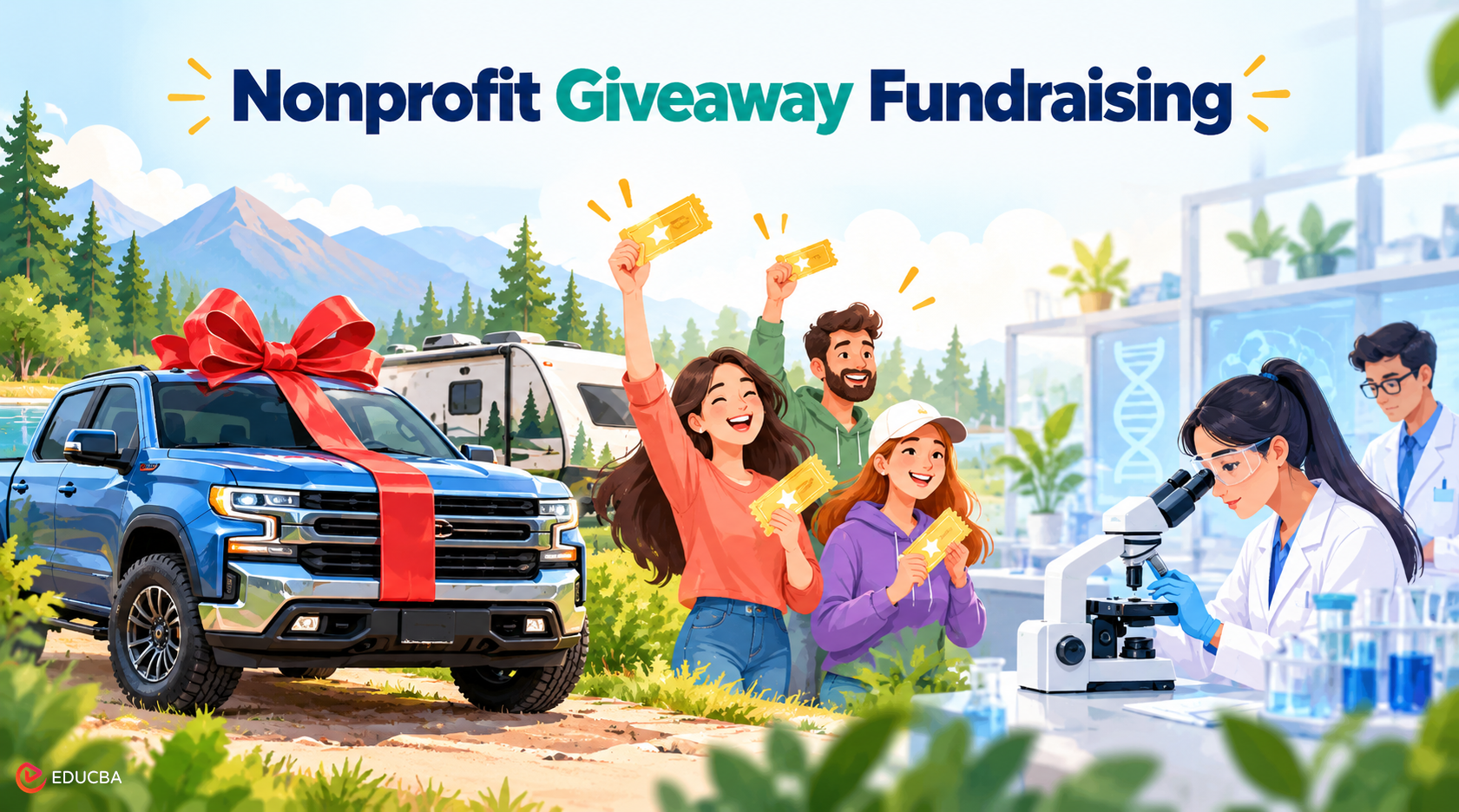
A luxury truck, an adventure van, or a fully equipped RV can attract thousands of people who might otherwise scroll past a charity fundraiser. The prize gets their attention first. The cause often comes a few clicks later.
That is an interesting opportunity for nonprofits funding medical research. Traditional donation campaigns tend to reach people who already care about a particular disease or have some personal connection to it. Nonprofit giveaway fundraising can introduce that same cause to people who were not looking for it.
Of course, getting attention and raising useful money are two different things. A successful campaign needs more than an exciting prize. You also have to manage a budget, meet legal requirements, and ask whether supporters will still care once someone drives away with the vehicle.
How Nonprofit Giveaway Fundraising Introduces Charities to Bigger Audiences?
Rare disease charities often struggle to reach people unfamiliar with the conditions they support. Without a personal connection, many people may never discover these organizations or their research.
A Race Against Blindness uses vehicle giveaways to fund research into inherited retinal diseases, including conditions that cause childhood vision loss. According to its published impact information, the nonprofit has provided $6.1 million in research grants as of October 2026. Its public record of past winners also helps demonstrate the outcomes of previous campaigns.
For example, someone following off-road vehicles on social media might discover a customized truck giveaway and learn that the campaign supports research into a genetic eye condition.
They came for the truck but discovered a cause they might otherwise have overlooked.
This is the potential of nonprofit giveaway fundraising. While some participants may only want to win the prize, others could become interested in the research and its impact.
To encourage that interest, campaign pages should explain the research goals, introduce the scientists involved, and show how funding could help. For example, a simple explanation of a planned gene therapy study can make complex medical research easier for new audiences to understand.
Understanding the Financial Side of Nonprofit Giveaway Fundraising
Imagine a nonprofit announces that its latest vehicle giveaway raised $175,000. That sounds impressive, but how much of that money is actually available for research?
The answer depends on campaign expenses. Prizes may be donated, purchased, or obtained at a discount, with additional costs for transportation, insurance, preparation, and delivery. Advertising, payment processing, and administrative expenses also reduce the final amount.
Consider this hypothetical example. The figures are illustrative and do not represent any particular nonprofit’s finances.
Suppose a campaign receives 5,000 voluntary contributions averaging $35 each, generating $175,000.
| Campaign Expense | Amount |
| Prize acquisition | $45,000 |
| Advertising and promotion | $35,000 |
| Payment processing | $7,000 |
| Legal, administrative, and fulfillment costs | $13,000 |
| Total expenses | $100,000 |
| Remaining funds | $75,000 |
The campaign generates meaningful funding, but only $75,000 remains before additional organizational overhead. Free sweepstakes entries may also be available, so total entries should not be confused with the number of donors.
A break-even calculation helps organizers determine how much income is needed to cover campaign expenses and estimate potential research funding under different scenarios.
Advertising requires particular attention. Spending $20 to generate $50 in contributions may seem effective at first, but rising advertising costs and declining audience interest can reduce returns. Increasing the budget without monitoring performance may leave less money for research.
Timing matters, too. Suppliers and advertisers may require payment before most contributions arrive. A cash-flow forecast helps nonprofits plan these commitments and avoid funding gaps, especially when research grants and laboratory expenses follow fixed schedules.
People Need to Trust the Drawing and the Destination of Their Money
Giveaway fundraising raises questions that ordinary donation campaigns may not face. Who selects the winner? What happens if the advertised prize becomes unavailable? Do people have to contribute to enter, and how is the winner announced?
The Federal Trade Commission’s sweepstakes guidance explains that legitimate sweepstakes are free to enter, and payment cannot be required to participate or improve the chances of winning. Charitable raffles follow different rules and may be subject to state-specific restrictions. Nonprofits should clearly explain eligibility, entry limits, deadlines, and how winners are selected.
Tax treatment also requires attention. According to the IRS guidance on charitable contributions, raffle and lottery ticket purchases are not deductible charitable contributions, even when proceeds support a nonprofit. Organizations should verify the applicable rules before promising tax deductions.
Transparency also helps build trust. Publishing official rules, announcing winners, documenting prize delivery, and reporting research expenditures can reassure supporters that the campaign is conducted fairly and funds are used responsibly.
Nonprofits should explain how they spend research grants, whether on laboratory studies, manufacturing, safety testing, or clinical trial preparation. Medical research can take years and may encounter delays or unexpected results. Clear updates help supporters understand progress without creating unrealistic expectations about a cure.
What Happens to Supporters After the Winner Is Announced?
A giveaway often creates a short period of intense activity. Advertisements circulate, entries arrive, and interest increases as the deadline approaches. Then the winner is announced, and many participants move on.
Some entered only for the prize and have little reason to follow the organization afterward. This creates a challenge for nonprofits using nonprofit giveaway fundraising to build dependable research funding.
If every campaign requires finding an entirely new audience, advertising expenses can become a recurring burden. Organizations need to track whether first-time contributors return, make direct donations, or stay engaged with their work.
This is similar to monitoring marketing performance indicators in a business. Useful measures include the cost of attracting contributors, repeat participation, and remaining funds after campaign expenses. These metrics help nonprofits evaluate the long-term effectiveness of their nonprofit giveaway fundraising efforts.
A large mailing list does not necessarily indicate strong donor support. Thousands of people might subscribe during a giveaway but never open another message.
Follow-up emails can sustain interest by sharing research milestones, explaining how donations helped, and highlighting upcoming scientific goals rather than promoting another prize.
The second message gives supporters a reason to stay connected, even when there is nothing to win.
Nonprofits do not necessarily need complicated communication programs. Regular research updates, occasional financial reports, and straightforward explanations from scientists may be enough to maintain interest.
Participants can stay involved by donating directly or sharing research updates with others affected by the disease.
These actions may not generate the excitement of announcing a prize winner, but they can help build lasting relationships and support research long after the original campaign ends.
Final Thoughts
Nonprofit giveaway fundraising gives charities a way to reach people who might never encounter their cause through traditional donation appeals. The opportunity is particularly valuable for medical research organizations working on conditions that receive limited public attention. Still, an impressive fundraising total tells only part of the story; campaign expenses, clear rules, and transparent reporting determine how useful that money is.
Organizations also need to give supporters reasons to stay interested after the prize is awarded. A giveaway can open the door, but progress in research and trustworthy communication help keep people engaged. Before launching a campaign, build a simple budget showing expected contributions, major expenses, and the amount that will remain available for research.
Recommended Articles
We hope this guide helps you understand how nonprofit giveaway fundraising can generate research funding and build lasting donor relationships. Explore our recommended articles for more insights on nonprofit fundraising strategies, donor engagement, charitable giving, and sustainable funding for research.