

Updated October 16, 2026
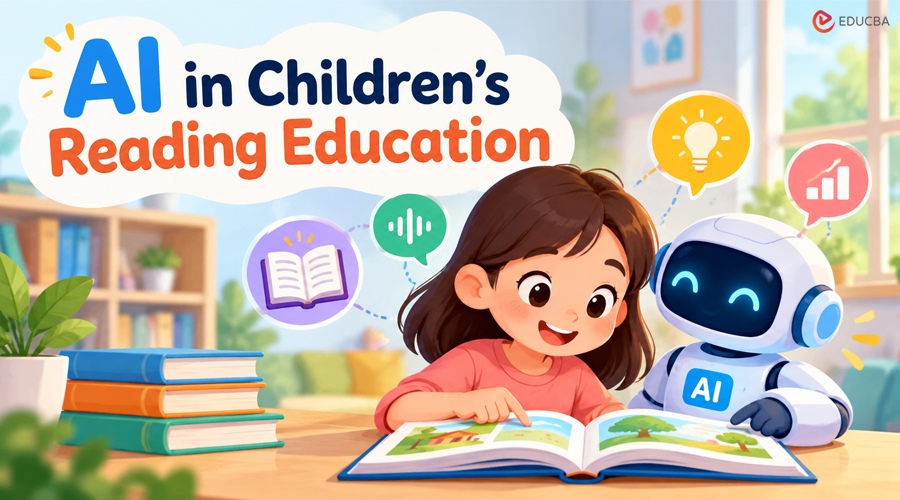
Learning to read is one of the most important milestones in a child’s education. It opens the door to new knowledge, strengthens communication skills, and builds the foundation for learning across nearly every subject. Yet children do not all learn to read at the same pace. Some quickly recognize words and begin reading independently, while others need additional time and support with phonics, fluency, vocabulary, or reading comprehension.
Traditionally, teachers, parents, and reading specialists have provided much of this support. While these relationships remain essential, AI in Children’s Reading Education is introducing new ways to make reading practice more personalized, interactive, and accessible. From reading apps for kids that listen in real time to learning platforms that adjust to individual abilities, AI is changing how young readers practice and develop their skills.
How AI in Children’s Reading Education Supports Personalized Practice?
One of AI’s most promising applications in reading education is personalized learning. In a traditional classroom, teachers work with students with very different reading abilities. Some children are still learning to sound out basic words, while others are ready to explore longer stories and more complex vocabulary. Providing the right level of challenge for every student can be difficult, especially when classroom time and resources are limited.
AI-powered reading tools can help by using a child’s performance data to recommend suitable reading materials and activities. Depending on the platform, these tools may consider reading accuracy, fluency, comprehension, or progress over time.
For example, a child who struggles with longer words may benefit from additional decoding practice, while a more fluent reader may be ready for texts that require deeper comprehension. The goal is not to make reading easier indefinitely, but to provide an appropriate level of challenge so children can continue developing their skills.
Real-Time Feedback During Reading
Learning to read requires practice, but the quality of that practice matters. When children read independently, they may mispronounce words, skip unfamiliar vocabulary, or misunderstand parts of a story without realizing it. Having someone nearby to provide support can make a difference, but parents and teachers are not always available for every reading session.
AI-powered speech recognition is helping address this challenge. Some reading apps can listen as children read aloud, spot potential pronunciation errors, and offer feedback when they hit difficult words. Instead of waiting until the end of a reading session for help, children can get support while they read.
Of course, AI speech recognition is not perfect. Children’s speech patterns, accents, background noise, and developing pronunciation can sometimes affect accuracy. These tools work best as support, not as a replacement for attentive instruction.
Making Reading Comprehension More Interactive
Recognizing words is only one part of becoming a skilled reader. Children also need to understand, remember, and think about what they read. Reading comprehension involves several abilities working together, including vocabulary knowledge, background knowledge, memory, and the ability to make connections between ideas.
AI-powered reading tools can give children more opportunities to engage actively with a text. For example, after reading a story, a child might be asked to recall key details, identify the main idea, explain a character’s actions, or predict what happens next. Some applications allow children to answer questions verbally, making the experience feel more like a conversation than a traditional multiple-choice quiz.
These interactions encourage children to do more than simply finish a page. They give young readers opportunities to reflect on what they have read. However, comprehension is complex, and automated questions are only one part of developing it. Meaningful discussions with parents and teachers remain important for helping children think more deeply about stories and connect reading to their own experiences.
Readability Tutor: AI-Powered Reading Support in Practice
One example is Readability Tutor, an AI-powered reading app that helps children build fluency, vocabulary, and reading comprehension through guided practice. Rather than focusing solely on independent reading or digital books, Readability Tutor brings several reading activities together in one experience.
The app combines several features to support children as they build their reading skills:
- Real-time read-aloud support: Readability Tutor listens as children read aloud and provides pronunciation support when they encounter difficult words, helping them practice reading accuracy and fluency.
- Personalized, leveled books: Children can explore reading materials suited to their abilities, providing opportunities to practice at an appropriate level while building confidence.
- Interactive comprehension questions: After reading, children answer questions about the text, including through spoken responses, to practice recalling information and understanding what they have read.
- Vocabulary development: Children can explore unfamiliar words, hear pronunciations, and learn meanings in context.
- Parent progress tracking: A parent dashboard provides information about reading activity and performance, helping families track their child’s progress and identify areas where additional support may help.
This approach is noteworthy because it brings multiple reading skills together. Instead of treating fluency, vocabulary, and comprehension as completely separate activities, children can practice them during the same reading experience.
For families looking to provide additional reading practice at home, Readability Tutor illustrates how AI in children’s reading education can make guided reading support more accessible without requiring an adult to supervise every moment.
Helping Parents Better Understand Reading Progress
Another important development in AI-powered reading education is the ability to collect and organize information about children’s reading performance. Parents often know when their child enjoys reading or finds it frustrating, but identifying specific areas of difficulty can be harder. For example, a child might read words accurately but struggle to explain what a story means.
Reading platforms that track accuracy, fluency, comprehension, and practice time can give families additional insight into their child’s development. Instead of relying only on whether a child finishes a book, parents can see how their reading skills change over time. This information can also support conversations with teachers and reading specialists, but treat app-generated progress data as one source of information rather than a formal reading assessment or diagnosis.
Encouraging More Independent Reading
As children become more comfortable reading, developing independence becomes an important goal. Young readers need opportunities to choose books, explore their interests, work through challenges, and experience the satisfaction of understanding a story on their own.
AI-powered reading tools can support this process by making certain forms of assistance available during independent practice. For example, a child who encounters an unfamiliar word may be able to hear its pronunciation or explore its meaning without immediately asking an adult for help. This can make reading practice more manageable, especially for children who feel discouraged when they repeatedly get stuck.
At the same time, independence should not mean leaving children to learn entirely on their own. Reading together, visiting libraries, discussing stories, and letting children see adults enjoy books remain valuable parts of building a positive relationship with reading. AI can support these experiences, but it cannot replace the human relationships that help children find meaning and enjoyment in books.
What Parents and Educators Should Look for in AI Reading Tools?
Despite its potential, AI is not a complete solution to reading difficulties. Children learn through interaction, encouragement, explicit instruction, and repeated opportunities to practice. Technology can support some of these experiences, but a reading tool’s effectiveness depends on how it is designed and used.
When evaluating an AI-powered reading app, parents and educators should consider several factors:
- Meaningful reading practice: Look for tools that encourage children to read actively, think about what they have read, and build specific literacy skills rather than just complete digital activities.
- Age-appropriate support: Reading materials, feedback, and activities should match a child’s developmental stage and current abilities without making practice unnecessarily frustrating.
- Accuracy and reliability: AI systems can make mistakes when recognizing speech or evaluating responses, so adults should remain involved and check whether feedback is appropriate.
- Privacy and data protection: Review how the platform collects, stores, and uses children’s information, especially when it involves voice recordings or learning data.
- Balanced learning experiences: Digital reading tools should complement physical books, classroom instruction, and shared reading experiences rather than replace them.
Children with persistent reading difficulties, including those associated with dyslexia, may also need targeted instruction, professional evaluation, or specialized support beyond what an app can provide. For families exploring additional reading tools, a dyslexia app for kids can offer guided practice to help strengthen reading skills alongside appropriate instruction.
The Future of AI in Children’s Reading Education
As AI technology evolves, reading tools may offer more accurate speech recognition, personalized comprehension activities, and clearer insights into children’s progress. These improvements could help make individualized reading support more accessible to families and educators.
Ultimately, AI’s greatest value lies in giving children more opportunities to practice reading with appropriate guidance. The goal is not simply better technology, but helping children become capable, confident, and engaged readers.
Final Thoughts
Artificial intelligence is opening new possibilities for how children learn to read. Through personalized reading materials, real-time feedback, interactive comprehension practice, and progress tracking, AI-powered tools can support children throughout their reading journey. Apps like Readability Tutor demonstrate how these features can work together to make reading practice more interactive and accessible.
However, AI works best when it complements the guidance of teachers, parents, and reading specialists. Technology can provide useful tools and practice opportunities, but meaningful instruction, encouragement, and a love of stories remain at the heart of literacy development. As AI in Children’s Reading Education becomes more common, the greatest opportunity is not to replace traditional reading experiences, but to make quality reading support more accessible to every child.
Recommended Articles
We hope this guide helps you understand how AI in Children’s Reading Education improves reading practice, comprehension, and personalized learning. Explore our recommended articles for more insights on children’s literacy, educational technology, AI-powered learning, and reading development.