
What is Candidate Sourcing?
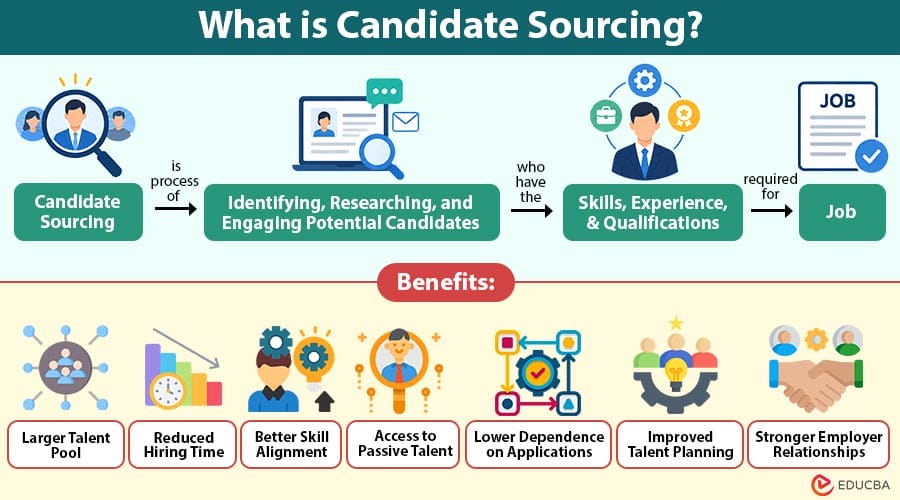
Candidate sourcing is the process of identifying, researching, and engaging potential candidates who have the skills, experience, and qualifications required for a job. It is an important part of recruitment because it helps organizations build a pool of suitable professionals before or during hiring.
Recruiters can source candidates through job boards, professional networking platforms, employee referrals, social media, recruitment agencies, talent databases, career events, and direct outreach. Unlike simply waiting for applications, sourcing involves actively searching for people who may fit a particular role.
For example, a technology company hiring a software developer may search professional platforms and talent databases for candidates with experience in Python, cloud computing, and software development. Recruiters can then contact suitable professionals and invite them to apply or discuss the opportunity.
Table of Contents:
Key Takeaways:
- Candidate sourcing helps recruiters identify qualified professionals through proactive searches across multiple talent channels.
- A structured sourcing process improves candidate matching, outreach, relationship building, and recruitment pipeline development.
- Sourcing metrics help organizations measure response rates, candidate quality, interviews, hires, sourcing time, and costs.
- Candidate sourcing provides access to passive candidates who may not actively apply for advertised job opportunities.
Importance of Candidate Sourcing
Candidate sourcing helps organizations reach qualified professionals and create a stronger recruitment pipeline. Its importance includes:
1. Access to More Candidates
Candidate sourcing helps recruiters reach qualified professionals who may not actively search or apply for advertised job openings.
2. Better Talent Matching
Recruiters can identify candidates based on relevant skills, qualifications, experience, expertise, and the specific requirements of the available position.
3. Faster Hiring
Maintaining an active talent pipeline helps recruiters identify suitable candidates quickly when new positions open.
4. Improved Candidate Quality
Targeted sourcing allows recruiters to focus on professionals whose skills, experience, and backgrounds closely align with position requirements.
5. Support for Difficult Roles
Proactive sourcing helps organizations find qualified professionals for specialized, senior, or highly competitive positions with limited talent availability.
6. Stronger Talent Pipeline
Companies can build relationships with prospective employees and maintain a reliable pool of experts for future hiring needs.
7. Wider Talent Reach
Using multiple sourcing channels enables organizations to connect with candidates from varied professional backgrounds, industries, skill sets, and locations.
Candidate Sourcing Process
A structured sourcing process helps recruiters identify suitable professionals efficiently. The major steps include:
1. Understand the Job Requirements
Recruiters first review the job description and understand the required qualifications, technical skills, experience, responsibilities, and other selection criteria.
2. Define the Candidate Profile
The recruiter creates a candidate profile based on the position. It may include educational qualifications, professional experience, technical abilities, industry knowledge, location, and other relevant characteristics.
3. Select Sourcing Channels
Recruiters determine where suitable candidates are likely to be found. Depending on the role, they may use professional networks, job portals, employee referrals, social media, talent communities, recruitment databases, or industry events.
4. Search for Potential Candidates
Recruiters use keywords, filters, Boolean search techniques, professional profiles, and databases to identify people who meet the defined requirements.
5. Evaluate Candidate Profiles
Potential candidates are reviewed based on their skills, experience, career history, qualifications, and alignment with the position.
6. Contact Suitable Candidates
Recruiters reach out to selected professionals through email, professional networking platforms, phone calls, or other appropriate communication channels.
7. Build Candidate Relationships
Not every sourced candidate will be ready to change jobs immediately. Recruiters can maintain professional relationships with suitable candidates for future opportunities.
8. Track Sourcing Results
Recruiters monitor metrics such as response rates, qualified candidates, source effectiveness, interviews, and hires to understand which sourcing methods produce useful results.
Candidate Sourcing Strategies
Organizations can use several strategies to identify potential candidates effectively.
1. Employee Referrals
Existing employees can recommend professionals from their networks who may fit open positions. Referral programs can help organizations reach candidates through trusted professional connections.
2. Professional Networking
Professional networking platforms provide access to profiles containing information about candidates’ skills, experience, education, and career history. Recruiters can use relevant search terms and filters to identify potential matches.
3. Talent Pools
Companies can create databases of candidates who have previously applied, interviewed, or expressed interest in working for the organization. These talent pools can provide a useful source for future vacancies.
4. Campus Sourcing
Organizations hiring entry-level employees can connect with colleges, universities, career centers, and student organizations. Campus hiring can help employers identify emerging professionals with relevant educational backgrounds.
5. Recruitment Events
Career fairs, industry conferences, networking events, and professional meetups allow recruiters to interact directly with potential candidates and introduce them to employment opportunities.
6. Direct Outreach
Recruiters can contact professionals directly when their skills and experience closely match a specific position. Personalized communication can explain why the opportunity may be relevant to the candidate.
Candidate Sourcing Tools
Technology can make sourcing more organized and efficient. Common tools include:
1. Applicant Tracking Systems (ATS)
ATS platforms help recruiters organize candidate profiles, track applications, manage recruitment stages, and maintain records throughout the hiring process.
2. Candidate Relationship Management Platforms
These platforms help recruiters maintain candidate relationships, organize talent pools, communicate with prospects, and support future recruitment opportunities.
3. Professional Networking Platforms
Professional networking platforms allow recruiters to identify, connect with, and engage qualified professionals based on skills, experience, industry, and career interests.
4. Online Job Boards
Job boards provide access to large candidate pools, allowing recruiters to advertise vacancies and attract professionals actively seeking employment opportunities.
5. Resume Databases
Resume databases enable recruiters to search candidate profiles using specific keywords, qualifications, skills, experience levels, locations, and professional backgrounds.
6. Recruitment Automation Software
Recruitment automation software streamlines repetitive sourcing activities, including candidate searches, outreach, screening, follow-ups, scheduling, and communication throughout recruitment processes.
7. Boolean Search Tools
Boolean search tools help recruiters combine keywords and search operators to identify candidates with specific skills, qualifications, experience, and job titles.
8. Talent Intelligence Platforms
Talent intelligence platforms provide workforce insights that help recruiters understand candidate availability, skills, market trends, compensation patterns, and talent movement.
Difference Between Candidate Sourcing and Recruitment
The table below shows the difference between candidate sourcing and recruitment:
| Basis | Candidate Sourcing | Recruitment |
| Meaning | Identifying and engaging potential candidates | Managing the broader process of filling a position |
| Main Focus | Finding suitable talent | Moving candidates through hiring stages |
| Scope | Primarily focuses on talent identification and outreach | Includes sourcing, screening, interviews, selection, and hiring |
| Candidates | Often includes passive and active candidates | Usually focuses on candidates participating in the hiring process |
| Objective | Build a pool of potential candidates | Select and hire suitable employees |
Benefits of Candidate Sourcing
A well-planned sourcing approach can provide several benefits:
1. Larger Talent Pool
Recruiters can identify more potential candidates by using multiple sourcing channels, professional networks, databases, referrals, and recruitment platforms.
2. Reduced Hiring Time
Pre-identified candidates can shorten early recruitment stages by providing recruiters with suitable professionals when positions open.
3. Better Skill Alignment
Targeted searches help recruiters focus on candidates whose qualifications, skills, experience, and expertise match specific position requirements.
4. Access to Passive Talent
Direct sourcing helps recruiters connect with qualified professionals who are not actively applying for open roles.
5. Lower Dependence on Applications
Organizations can proactively identify suitable professionals instead of relying entirely on candidates to submit applications through traditional recruitment channels.
6. Improved Talent Planning
Candidate databases help organizations maintain talent information and support recruitment planning for current and future workforce requirements.
7. Stronger Employer Relationships
Regular communication with potential candidates helps organizations build professional relationships that may support future recruitment and hiring opportunities.
Challenges of Candidate Sourcing
Despite its benefits, sourcing can involve several challenges.
1. Limited Availability of Specialized Talent
Some positions require rare technical or professional skills, making suitable candidates difficult to identify.
2. High Competition
Multiple employers may target the same qualified professionals, particularly in specialized industries.
3. Low Response Rates
Passive candidates may ignore recruitment messages if the opportunity does not match their career interests.
4. Incomplete Candidate Information
Online profiles and resumes may not always provide enough information to evaluate a candidate accurately.
5. Time-Consuming Research
Manually searching multiple platforms and reviewing numerous profiles can require considerable recruiter effort.
6. Candidate Data Management
Maintaining accurate, up-to-date candidate information becomes challenging when organizations manage large talent pools.
7. Unstructured Sourcing
Without clear criteria and processes, recruiters may spend time contacting candidates who do not match the role.
Candidate Sourcing Metrics
Recruiters can use several metrics to measure sourcing performance:
1. Response Rate
Response rate measures the percentage of contacted candidates who reply, indicating how effective sourcing outreach is.
2. Qualified Candidate Rate
The qualified candidate rate measures the percentage of sourced professionals who meet the defined skills, qualifications, experience, and job requirements.
3. Source-to-Interview Rate
The source-to-interview rate measures the percentage of candidates from a specific sourcing channel who successfully progress to the interview stage.
4. Source-to-Hire Rate
Source-to-hire rate measures the percentage of candidates from a particular sourcing channel who eventually accept offers and become employees.
5. Time to Source
Time to source measures how long recruiters take to identify suitable candidates after beginning the sourcing process for specific vacancies.
6. Cost per Hire
Cost per hire measures the total recruitment expenditure associated with successfully hiring one candidate through sourcing and selection activities.
Final Thoughts
Candidate sourcing is proactive approach to identifying and engaging professionals who may match an organization’s hiring requirements. It uses multiple channels, including professional networks, referrals, job boards, databases, social media, and direct outreach. A structured sourcing process can help recruiters develop stronger talent pipelines, reach passive candidates, improve candidate matching, and support more organized hiring decisions.
Frequently Asked Questions (FAQs)
Q1. Who is responsible for candidate sourcing?
Answer: Recruiters, talent acquisition specialists, HR professionals, and dedicated sourcers may identify and contact potential candidates.
Q2. When does candidate sourcing take place?
Answer: Candidate sourcing can take place before a vacancy is formally advertised or after a position becomes available, depending on the organization’s hiring needs.
Q3. Can small businesses use candidate sourcing?
Answer: Yes, small businesses can use candidate sourcing to identify suitable professionals through referrals, networking, online platforms, local events, and direct communication.
Q4. Is candidate sourcing used for all types of jobs?
Answer: Yes, candidate sourcing can be used for a wide range of job roles, including entry-level, mid-level, senior, technical, managerial, temporary, and highly specialized positions. The sourcing approach may vary depending on the skills, experience, and requirements of the role.
Recommended Articles
We hope that this EDUCBA information on “Candidate Sourcing” was beneficial to you. You can view EDUCBA’s recommended articles for more information.

