
Updated September 18, 2026
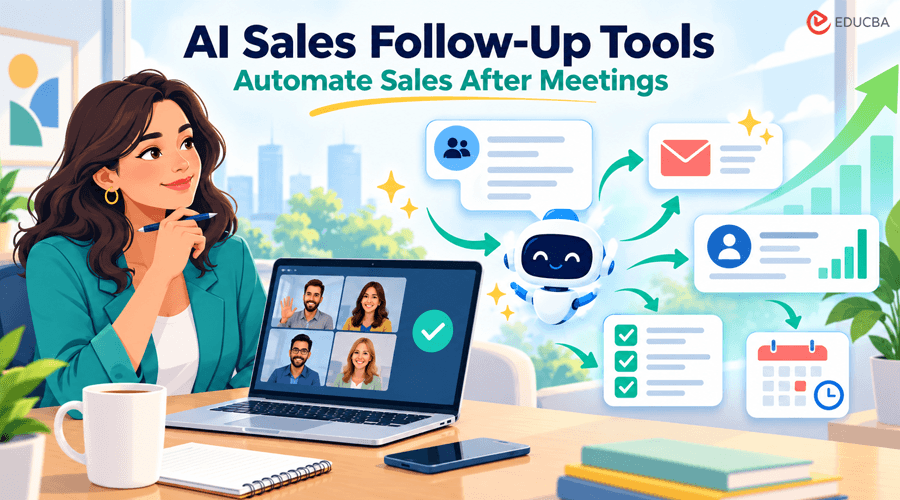
A productive sales meeting does not automatically lead to a productive next step. After a discovery call, demo, or negotiation, a rep may still need to document what happened, update the CRM, identify commitments, prepare a recap, create tasks, and keep the opportunity moving. AI Sales Follow-Up Tools can reduce this post-meeting workload, but the available tools solve different parts of the process. Meeting assistants focus primarily on capturing conversations.
Conversation-intelligence platforms help teams understand what happened. Sales engagement platforms structure subsequent buyer communication. AI sales execution platforms can connect the meeting with the work that follows it. Here are six AI Sales Follow-Up Tools to consider for automating sales follow-ups after meetings in 2026.
Best AI Sales Follow-Up Tools at a Glance
| Tool | Best for | Primary Post-meeting Role |
| Zig | Connected post-meeting execution | Follow-up, CRM activity, next steps, and pipeline context |
| Reevo | AI-native sales workflows | Connects meetings with CRM, tasks, and deal activity |
| Avoma | Meeting-to-CRM workflows | Notes, follow-up drafts, and CRM information |
| Gong | Conversation intelligence | Turns customer conversations into deal context |
| Salesloft | Structured follow-up workflows | Cadences, tasks, and buyer engagement |
| Outreach | Enterprise sales engagement | Structured multi-step follow-up and sales execution |
AI Sales Follow-Up Tools
1. Zig — Best for Connected Post-Meeting Execution
Zig connects sales conversations with the work that follows them. After a meeting, it can capture relevant context, surface next steps, prepare follow-up, and support CRM updates rather than leaving reps to transfer information manually between systems.
Its broader sales execution model also connects post-meeting activity with prospecting, outreach, conversation intelligence, and pipeline hygiene. This differs from dedicated meeting assistants that focus primarily on recording, transcription, and summaries. Important external actions remain subject to rep approval, keeping human oversight in customer-facing workflows.
Best for: Revenue teams that want to connect meetings with follow-up, CRM activity, and subsequent sales execution.
Considerations: Zig covers broader sales workflows beyond meeting follow-up.
2. Reevo — Best for AI-Native Meeting-to-Sales Workflows
Reevo connects meetings to a broader AI-native sales environment. Its capabilities span meeting preparation, call recording and transcription, task logging, CRM activity, deal management, prospecting, and outbound workflows.
Because information from sales interactions can remain connected to contact and opportunity context, meeting outcomes can feed subsequent tasks and deal activity rather than existing as isolated notes. This makes Reevo relevant to organizations considering broader workflow consolidation rather than a dedicated meeting assistant alone.
Best for: Revenue teams that want meetings, CRM activity, tasks, and deal workflows connected in an AI-native sales platform.
Considerations: Teams should evaluate how the broader platform fits with the sales infrastructure they already use.
3. Avoma — Best for Meeting-to-CRM Automation
Avoma focuses heavily on the meeting workflow. It can record and transcribe conversations, create AI-generated notes, identify important topics and action items, draft follow-up emails, and help transfer meeting information into supported CRM workflows.
This makes it particularly useful when reps spend significant time after calls documenting conversations and preparing the next communication. Avoma also extends beyond basic transcription into conversation and revenue intelligence, but meetings remain central to its value proposition.
Best for: Meeting-heavy revenue teams that want to reduce post-call notes, follow-up preparation, and CRM administration.
Considerations: Organizations seeking automation across prospecting, pipeline, and other parts of the sales lifecycle may require additional tools.
4. Gong — Best for Conversation Intelligence and Deal Context
Gong analyzes customer conversations to help sales teams understand what happened and what may matter for the opportunity. That can include buyer concerns, engagement signals, objections, competitive discussions, and other information that can influence the next sales action.
This is particularly useful in complex B2B sales cycles where effective follow-up depends on understanding the context of the conversation rather than simply sending a standard recap. Gong therefore addresses a different part of the post-meeting problem from tools focused primarily on transcription or execution.
Best for: Revenue organizations that want conversation intelligence to inform follow-up and deal strategy.
Considerations: Teams should evaluate how conversation insights connect to the downstream actions they want to automate.
5. Salesloft — Best for Structured Sales Follow-Up Workflows
Salesloft is designed around sales engagement and structured seller workflows. Following a meeting, teams can use engagement workflows, tasks, and cadences to create more consistent processes for continuing buyer communication.
This is particularly relevant in larger sales organizations where follow-up should not depend entirely on each rep remembering when and how to contact a buyer. Salesloft therefore addresses the engagement side of post-meeting execution rather than functioning primarily as a dedicated meeting assistant.
Best for: Sales organizations that want consistent follow-up and engagement workflows across rep teams.
Considerations: Meeting capture, CRM, enrichment, and other functions may involve additional systems depending on the organization’s stack.
6. Outreach — Best for Enterprise Sales Engagement
Outreach is a sales execution and engagement platform that helps revenue organizations structure seller activity across the sales cycle. For post-meeting follow-up, its value lies in connecting buyer engagement with structured workflows rather than leaving subsequent actions entirely to individual rep habits.
Its broader platform also extends into deal management, conversation intelligence, coaching, and other revenue workflows, making it more comparable to a broad sales engagement environment than a standalone AI meeting assistant. This can be useful for enterprise organizations that want consistent sales processes across larger rep teams.
Best for: Enterprise revenue organizations that want structured, multi-step buyer engagement and sales execution.
Considerations: Teams should evaluate whether they need a broad engagement platform or a more specialized post-meeting solution.
What Should Happen After a Sales Meeting?
The appropriate workflow depends on the meeting, but common post-call work includes capturing key discussion points, documenting buyer priorities and objections, recording commitments, identifying next steps, preparing follow-up, updating CRM information, and creating future tasks. AI Sales Follow-Up Tools can automate or assist with many of these steps.
However, the goal should not be to remove human involvement from every action. Automatically producing a summary has different consequences from sending a customer-facing message or changing important opportunity information. For that reason, teams should evaluate both automation coverage and human approval controls when selecting AI Sales Follow-Up Tools.
Meeting Assistants vs. AI Sales Follow-Up Tools
These categories overlap, but they are not identical. A meeting assistant primarily helps capture and process the conversation through recording, transcription, summaries, notes, and action items. AI Sales Follow-Up Tools focus on what happens because of that conversation.
For example, identifying that a buyer requested a technical review is useful. The broader workflow may still require recording the request in the CRM, assigning an owner, preparing a response, and making sure the opportunity has a next step. A meeting can therefore be perfectly documented while the deal itself still fails to progress.
Which Type of AI Sales Tool Should You Choose?
The answer depends on where the post-meeting workflow breaks down. If documentation is the primary burden, Avoma is particularly relevant because of its meeting-to-CRM focus. If the organization needs deeper interpretation of customer conversations, Gong addresses conversation and deal intelligence.
Salesloft and Outreach are better aligned with organizations that want structured sales engagement and follow-up workflows across larger sales teams. Reevo is relevant when the organization is considering a broader AI-native sales environment. Zig fits when meeting follow-up is part of a wider execution problem involving CRM activity, next steps, pipeline hygiene, and other work around the sales process.
Final Thoughts
The best post-meeting AI tool depends on what needs to happen after the conversation. Avoma is particularly relevant for meeting documentation and CRM workflows. Gong provides deeper conversation intelligence. Salesloft and Outreach focus on structured engagement and sales workflows.
Reevo connects meetings with a broader AI-native sales environment, while Zig connects conversation outcomes with CRM activity, follow-up, next steps, and continued sales execution. For revenue teams evaluating AI Sales Follow-Up Tools, a useful question is not only “Can this tool summarize the meeting?” but also “What work is still left for the rep once the summary is complete?”
Frequently Asked Questions (FAQs)
Q1. Can AI Sales Follow-Up Tools Automatically Write Sales Follow-Up Emails After Meetings?
Answer: Yes. AI sales and meeting tools can generate follow-up drafts using information from customer conversations. Teams should evaluate whether the draft uses actual meeting context, what customization is available, and whether customer-facing messages can be reviewed before sending.
Q2. Can AI automatically update the CRM after a meeting?
Answer: Some platforms can extract information from conversations and prepare or apply CRM changes. The exact capabilities vary by platform and integration. Teams should check supported objects and fields, record matching, permissions, and approval controls.
Q3. What is the difference between an AI meeting assistant and an AI sales assistant?
Answer: Meeting assistants primarily capture and process conversations through recordings, transcripts, summaries, and action items. AI sales assistants and execution platforms can use that meeting information as part of a broader workflow involving CRM activity, follow-up, prospecting, tasks, and pipeline management.
Q4. What Are the Best AI Sales Follow-Up Tools for Automating Sales Follow-Up After Meetings?
Answer: There is no universal best option. Avoma is particularly relevant for meeting-to-CRM workflows. Gong focuses on conversation intelligence. Salesloft and Outreach support structured engagement. Reevo provides a broader AI-native sales environment, while Zig connects meeting outcomes with follow-up, CRM activity, next steps, and continued sales execution.
Q5. Can AI automate sales follow-up without automatically sending emails?
Answer: Yes. Automation does not have to mean unsupervised communication. AI can prepare follow-up drafts, extract next steps, organize CRM information, and create tasks while leaving the final customer-facing action to the sales rep.
Q6. Should sales follow-up be completely automated?
Answer: Not necessarily. Repetitive administrative work suits automation, but buyer communication, commitments, pricing discussions, and ambiguous CRM changes can require human judgment. The most appropriate level of automation depends on the organization’s workflow and risk requirements.
About the Author
Mika Kankaras is a B2B SaaS writer with over six years of experience covering marketing automation, AI workflows, customer experience software, and business technology. She specializes in testing and evaluating software and translating complex product features into clear, practical insights for business users.
Recommended Articles
We hope this guide helps you understand AI Sales Follow-Up Tools and streamline post-meeting sales workflows. Explore our recommended articles for more insights on AI sales automation, CRM workflows, sales engagement, and follow-up strategies.


