
What is Inclusive Hiring?
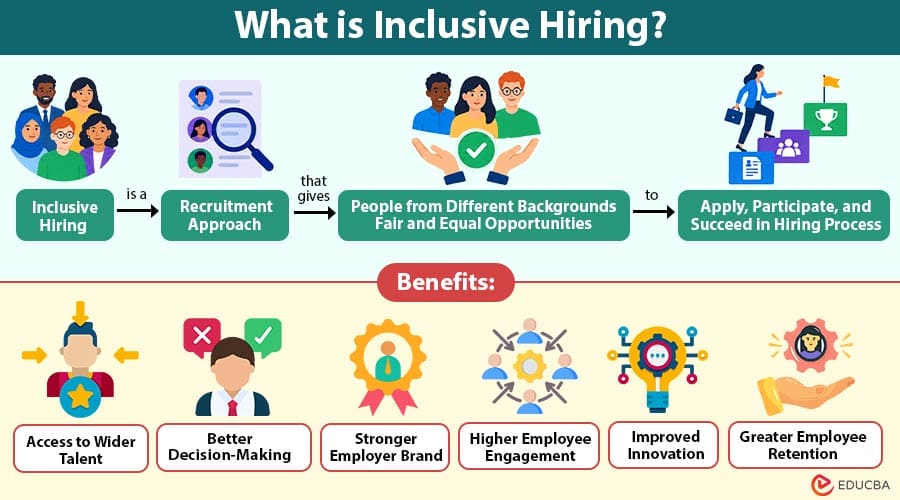
Inclusive hiring is a recruitment approach that gives people from different backgrounds fair and equal opportunities to apply, participate, and succeed in the hiring process. It focuses on eliminating prejudice and pointless obstacles that can keep eligible applicants from being given consideration.
Inclusive hiring encourages organizations to evaluate candidates based on relevant skills, experience, qualifications, and potential rather than personal characteristics. These may include gender, age, disability, ethnicity, socioeconomic background, or other individual differences.
For example, a company may use structured interviews and skill-based assessments to ensure every candidate is evaluated using consistent criteria.
Table of Contents:
- Meaning
- Importance
- Working
- Key Principles
- Benefits
- Examples
- Challenges
- How to Build an Inclusive Hiring Strategy?
- Difference
Key Takeaways:
- Inclusive hiring provides fair opportunities by reducing bias and removing unnecessary recruitment barriers.
- Structured interviews and objective criteria help organizations evaluate candidates consistently based on job-related qualifications.
- Accessible recruitment practices enable organizations to attract talent from diverse backgrounds, experiences, and circumstances.
- Continuous monitoring and candidate feedback help organizations improve inclusion throughout the hiring process.
Why is Inclusive Hiring Important?
Inclusive hiring helps organizations create a fairer recruitment process while improving access to a wider pool of talent. Traditional hiring methods can sometimes contain unconscious biases that influence how candidates are screened or interviewed.
An inclusive approach helps employers identify qualified individuals who may otherwise be overlooked. It also supports a workplace culture where employees feel respected and valued from the beginning of their employment journey.
Below are some key reasons why inclusive hiring is important:
1. Expands the Talent Pool
Inclusive recruitment allows companies to consider candidates with different experiences, perspectives, skills, and backgrounds. This can help employers reach talented people who may not fit traditional hiring profiles.
2. Reduces Hiring Bias
Structured recruitment practices can reduce unconscious bias during candidate selection. Employers can use consistent questions, scoring systems, and job-related criteria to make more objective decisions.
3. Improves Employee Experience
Candidates are more likely to develop positive impression of an organization when they experience a fair and respectful hiring process. This can strengthen the employer’s reputation and support future recruitment efforts.
4. Supports Workplace Diversity
Inclusive hiring can contribute to a workforce with varied perspectives and experiences. A diverse workforce can bring different ideas to discussions, problem-solving, and decision-making.
How Does Inclusive Hiring Work?
Inclusive hiring involves making each stage of recruitment more accessible, consistent, and fair. Organizations should review their hiring process from creating the job description to the final selection decision.
The process generally includes the following steps:
1. Create Inclusive Job Descriptions
Job descriptions should clearly explain the responsibilities, qualifications, and expectations associated with the position. Employers should avoid unnecessary requirements that could discourage qualified applicants. Additionally, a wider spectrum of candidates may find it easier to comprehend job adverts if they use neutral, clear language.
2. Use Multiple Recruitment Channels
Organizations can advertise positions across different platforms and professional networks to reach a broader talent pool. Working with diverse professional communities, educational institutions, and recruitment organizations can also improve candidate reach.
3. Standardize Candidate Screening
Recruiters can use predefined criteria to evaluate applications. Instead of making decisions based on personal impressions, recruiters can assess candidates against skills, experience, education, and other requirements directly related to the position.
4. Conduct Structured Interviews
Structured interviews involve asking candidates similar job-related questions and evaluating their answers using consistent standards. This creates greater consistency between interviews and can reduce the influence of personal preferences.
5. Provide Accessible Interviews
Organizations should consider reasonable accessibility needs during interviews. This may include accessible interview locations, flexible formats, assistive technologies, or alternative communication methods when appropriate.
6. Review Hiring Decisions
Recruitment teams can regularly review hiring data to identify patterns that may indicate barriers or unintended bias. This allows organizations to improve their recruitment practices over time.
Key Principles of Inclusive Hiring
Several principles help organizations develop a more inclusive recruitment strategy.
1. Fairness
During the hiring process, each applicant should have an equal chance to showcase their qualifications, abilities, experience, and potential.
2. Consistency
Candidates should be evaluated using clearly defined, relevant criteria and standardized methods throughout the hiring process.
3. Accessibility
Recruitment processes should remove unnecessary barriers and provide suitable opportunities for candidates with different needs.
4. Objectivity
Hiring decisions should rely on job-related qualifications, demonstrated skills, relevant experience, and supporting evidence.
5. Transparency
Candidates should receive clear information about job expectations, recruitment stages, evaluation methods, and selection decisions.
6. Respect
Every applicant should receive professional, courteous, and considerate treatment throughout the entire recruitment and selection journey.
Benefits of Inclusive Hiring
Inclusive hiring benefits candidates, employees, and organizations.
1. Access to Wider Talent
Organizations can attract candidates with different skills and experiences, increasing the chances of finding strong candidates for open positions.
2. Better Decision-Making
Employees with different perspectives can contribute alternative ideas and approaches to workplace challenges.
3. Stronger Employer Brand
Organizations known for fair and respectful recruitment may become more attractive to job seekers.
4. Higher Employee Engagement
When employees see fairness and inclusion reflected in organizational practices, they may feel a stronger sense of belonging.
5. Improved Innovation
A workforce with varied perspectives can encourage new ideas and approaches to products, services, and business problems.
6. Greater Employee Retention
An inclusive employee experience can contribute to a workplace where people feel valued and supported, potentially reducing unnecessary employee turnover.
Examples of Inclusive Hiring
Inclusive hiring can take different forms depending on the organization’s size, industry, and workforce.
1. Blind Resume Screening
A company removes certain personal information from resumes during initial screening. Recruiters can then focus more closely on qualifications and relevant experience.
2. Structured Interviews
An employer asks all shortlisted candidates the same core questions and uses a predefined scoring system. This creates a more consistent basis for comparison.
3. Skills-Based Assessment
Instead of relying only on educational qualifications, a company evaluates candidates through practical tasks related to the actual job. This helps identify candidates based on demonstrated abilities.
4. Flexible Recruitment
An organization provides different interview formats or scheduling options where practical. This can make the recruitment process more accessible to candidates with different circumstances and needs.
Challenges of Inclusive Hiring
Although inclusive hiring can improve recruitment, organizations may face several challenges when implementing it.
1. Unconscious Bias
Recruiters and hiring managers may have unconscious preferences that influence decisions. Training, structured interviews, and standardized evaluation methods can help reduce these effects.
2. Resistance to Change
Some employees may prefer traditional recruitment methods and may not immediately understand the value of changing established processes.
3. Limited Awareness
Recruitment teams may not recognize barriers within job advertisements, screening methods, interviews, or assessments. Regular reviews and training can help identify areas for improvement.
4. Measuring Progress
Without appropriate data, it can be difficult to determine whether hiring practices are becoming more inclusive. Organizations should monitor relevant recruitment metrics while respecting privacy and applicable laws.
5. Balancing Consistency and Individual Needs
A standardized process provides consistency, but candidates may have different accessibility requirements. Organizations need to evaluate fairly while providing reasonable adjustments where appropriate.
How to Build an Inclusive Hiring Strategy?
Organizations can take several practical steps to develop a stronger inclusive hiring strategy:
1. Review Existing Recruitment Practices
Regularly review recruitment practices to identify potential barriers, biases, and processes that may disadvantage qualified candidates.
2. Write Clear Job Descriptions
Create clear job descriptions using simple, inclusive, and job-related language that accurately communicates responsibilities, qualifications, and expectations.
3. Define Objective Selection Criteria
Establish objective selection criteria before reviewing applications to ensure candidates are assessed consistently according to relevant qualifications.
4. Use Structured Interviews
Conduct structured interviews using consistent questions, evaluation methods, and scoring criteria to create fairer comparisons between candidates.
5. Train Recruiters and Hiring Managers
Educate the hiring managers and recruiters on how to identify unconscious bias and implement impartial, consistent evaluation procedures throughout the employment process.
6. Improve Accessibility
Make applications, interviews, assessments, and recruitment communications accessible to candidates with different needs and circumstances.
7. Use Diverse Recruitment Channels
Advertise vacancies across diverse recruitment channels to reach candidates from different backgrounds, communities, experiences, and professional networks.
8. Monitor Recruitment Data
Regularly monitor recruitment data to identify potential gaps, patterns, disparities, or barriers affecting candidate participation and selection.
9. Collect Candidate Feedback
Gather candidate feedback about their recruitment experience to identify concerns, understand barriers, and improve hiring practices effectively.
10. Continuously Improve the Process
Continuously evaluate and improve recruitment processes using evidence, candidate feedback, hiring outcomes, and changing organizational needs.
Difference Between Inclusive Hiring and Traditional Hiring
The table below highlights the differences between the two:
| Basis | Inclusive Hiring | Traditional Hiring |
| Approach | Focuses on fairness, accessibility, and equal opportunities for qualified candidates. | Often follows established recruitment methods and conventional practices. |
| Candidate Pool | Encourages applicants with a variety of experiences and perspectives. | May depend more on existing networks, referrals, and familiar candidate profiles. |
| Evaluation | Uses objective, job-related criteria to assess candidates. | May involve subjective judgments or personal preferences. |
| Bias | Actively works to identify and reduce unconscious bias. | Bias may unintentionally influence recruitment decisions. |
| Qualifications | Considers relevant skills, capabilities, and potential alongside qualifications. | May place greater emphasis on traditional qualifications and experience. |
| Accessibility | Makes recruitment processes accessible to a wider range of candidates. | May not always address different accessibility needs. |
| Goal | Builds a diverse, fair, and representative workforce. | Primarily focuses on filling positions using established hiring practices. |
Final Thoughts
Inclusive hiring helps organizations create fairer recruitment processes by reducing bias, improving accessibility, and expanding access to qualified talent. By using objective criteria, structured interviews, diverse recruitment channels, and continuous evaluation, businesses can build stronger teams. A consistent commitment to inclusion can also improve employee experience, engagement, innovation, and long-term organizational success.
Frequently Asked Questions (FAQs)
Q1. Who is responsible for inclusive hiring in an organization?
Answer: Recruiters, HR teams, hiring managers, and senior leaders all play a role in creating and maintaining inclusive hiring practices.
Q2. Can small businesses implement inclusive hiring practices?
Answer: Yes. Small businesses can adopt inclusive practices by using clear job requirements, fair evaluation methods, accessible communication, and broader candidate outreach.
Q3. Does inclusive hiring mean hiring candidates based on diversity alone?
Answer: No. Inclusive hiring does not mean lowering job standards. Candidates should still meet the requirements and demonstrate the skills needed for the position.
Q4. How can technology support inclusive hiring?
Answer: Technology can support recruitment through accessible application systems, standardized assessments, interview tools, and recruitment analytics that help organizations review their processes.
Recommended Articles
We hope that this EDUCBA information on “Inclusive Hiring” was beneficial to you. You can view EDUCBA’s recommended articles for more information.

