


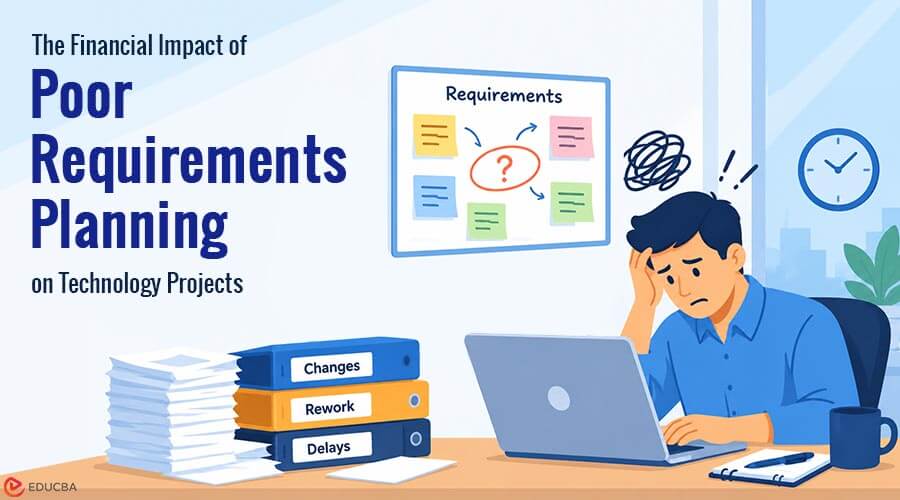
Have you ever seen a tech project go over budget? Nine times out of ten, it starts with unclear needs. Poor requirements planning is not just annoying; it is a silent budget killer that sneaks into projects like termites into a foundation. How you describe your demands up front can make or break your financial success, whether you are launching an app or modernizing your infrastructure. The way poor requirements planning increases technology costs clearly states the focus of the discussion.
It is not about getting everything perfect; it is about avoiding the domino effect of expensive fixes later. In today’s environment, money management is not a choice; it is a matter of life and death. If you miss the target early, you will pay later with change orders, delays, and angry stakeholders.
The Hidden Costs of Poor Requirements Planning
The main idea behind poor requirements planning is not fully figuring out what a system should do before you build it. It is like ordering custom furniture without measuring your room. You could end up with something lovely that would not fit through the door. In tech, this looks like functionality that no one uses, integrations that do not work, or security holes that need a complete redesign. Teams often rush into coding because “They are agile,” only to discover six months later that they built the wrong thing. When supply chain management fails during this pandemonium, people may start pointing fingers instead of solving problems. That is when budgets really begin to suffer.
1. The Scope Creep Domino Effect
When requirements are vague, people will keep asking for “just one more thing.” A client requests “user-friendly reports,” but no one says if that means PDF outputs or dashboards that show data in real time. Three months later, you are starting over with the reporting module. Every unforeseen adjustment costs 2 to 3 times as much as planning for it in advance.
2. Resource Drain From Revisions
Hiring developers is not inexpensive, and their time is not cheap either. When needs change during a project, you have to pay senior engineers to redo work instead of moving on. One financial platform required 427 additional hours because its login security standards were not clearly defined early in the project. This resulted in more than $100,000 in wasted costs.
3. Vendor Lock-In Surprises
Choosing non-scalable tech often comes from rushing. A client chose a “cheap” CMS that could not handle their traffic surges, so they had to move to a new one two years later for $200,000. Management calculators can help here. Making early estimates of total cost of ownership can help you avoid these costly mistakes.
4. Integration Nightmares
Have you ever tried to connect systems that were not meant to work together? Poor APIs or data-flow requirements lead to Frankenstein architectures. A store once spent eight months resolving issues because its new inventory system could not handle SKUs from third-party vendors. This requirement was not included in the original specifications.
5. Testing Black Holes
QA teams can not see what they are doing when requirements are not clear. Without clear pass/fail criteria, testing can go on forever as testers hunt for edge scenarios. 30% of the cash for one mobile app project went to testing cycles that were excessively subjective.
6. Deadline Slippage Penalties
If you miss a milestone, you could face fines under your contract or, even worse, lose business opportunities. A fintech business had to wait nine months to launch because of gaps in their payment-processing requirements. They lost their first-mover advantage to a rival and never got back their market share.
7. Band-Aid Architecture Costs
Temporary remedies turn into permanent problems. When requirements do not address scalability, teams add servers instead of improving code. A cloud cost of $15,000 per month for one organization could have been cut to $4,000 if they had given the right load-balancing parameters up front.
8. Training and Support Blowouts
Systems that are not clear about what they need to do are hard for users to use. Employees need a lot of training, and help desks are flooded with requests. One company spent $83 per user on additional training because the software’s workflow did not align with how the business actually operated.
9. Compliance Fire Drills
Ignoring regulatory obligations can lead to costly audits. Because data-retention regulations were unclear throughout development, a healthcare app had to wait six months to launch and pay $350,000 in fines. When you require emergency compliance fixes, lawyers do not come cheap.
10. Innovation Stagnation
Poor planning leads to budget overruns that starve future programs. One company spent 78% of its yearly IT expenditure fixing last year’s rushed launch. While they were busy fixing old systems, competitors released AI quality-control products.
11. Reputation Damage Costs
Angry users and unhappy stakeholders create costs that are not obvious. A company lost 22% of its users because of a botched public app launch that did not meet all of its performance needs. It took two years of discount promotions and free features to get that trust back.
Final Thoughts
Bad requirements planning does not just push budgets up; it sends them into space. The costs add up faster than credit card debt, from extra labor to missed sales opportunities. In tighter markets, these blunders can kill projects that would have worked. In summary, poor requirements planning increases technology costs. Here is the uncomfortable truth: most of the time, IT budgets go over because people made planning mistakes, not because the technology failed.
But the good news is? Some of the best IT returns on investment come from strong requirements practices. If you invest in clarity up front, you will have more resources to build what is really important later. A comprehensive requirements document is often more valuable than additional funding because it can help prevent costly problems later. Investing in thorough requirements planning can be more cost-effective in the long run.
Frequently Asked Questions (FAQs)
Q1. How early should requirements planning start?
Answer: Before you even look at code repositories. Bring stakeholders together during the idea stage, not after developers have started building. It is like attempting to change a tire while the automobile is moving when you do late requirements reviews.
Q2. What is the biggest red flag of poor requirements?
Answer: When people on the same team talk about the project in different ways. If your UX designer thinks it is a mobile-first app but your backend engineers think it is a desktop app, you will have a requirements problem that will cost you later.
Q3. Can agile methods prevent requirement issues?
Answer: Agile is helpful, but it is not magic. Sprints still need clear goals. Some “agile” teams have wasted $500,000 on the wrong MVP because they failed to break down epics into testable user stories.
Q4. How do you quantify requirements risks?
Answer: Watch how many change requests you get. Your requirements process is not working if more than 25% of features change after sprint planning. Good requirement documents change no more than 10% of their scope after they are signed.
Q5. Who should own requirements quality?
Answer: The complete chain of leadership, not simply project managers. When C-suite executives think requirements reviews are optional, they take shortcuts that cost a lot of money. Involving finance directors in important requirements sessions can help clarify project expectations and improve decision-making.
Recommended Articles
We hope this guide to poor requirements planning helps you understand the hidden costs of unclear project needs. Check out these recommended articles for more insights into effective project planning, technology management, and cost control.

