


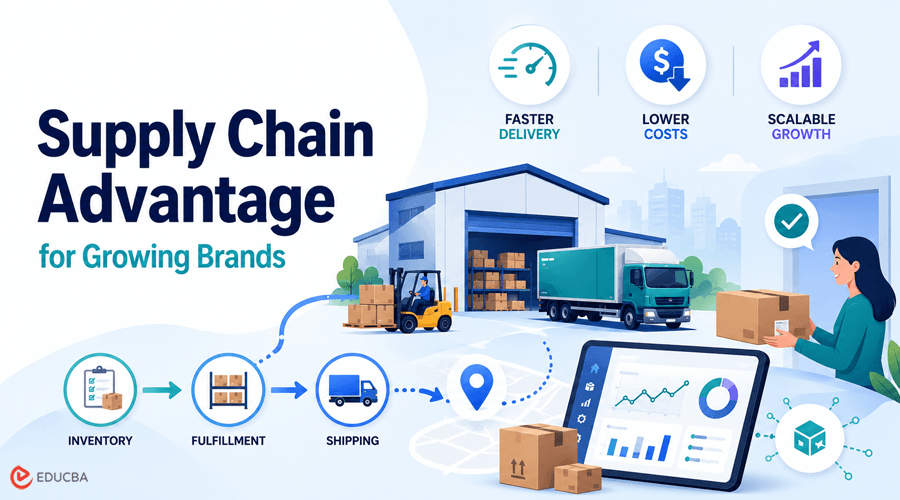
Growing brands often invest heavily in product quality, customer acquisition, and retail exposure. Supply chain management for growing brands receives less attention, even though it impacts profit, repeat purchases, and public perception. Poor fulfillment can lead to late deliveries, misplaced stock, and escalating freight bills, creating pressure customers quickly notice. A disciplined supply chain gives companies room to scale while protecting service standards. It treats logistics as a commercial function, rather than an administrative cost managed after every other decision.
Key Benefits of Supply Chain Management for Growing Brands
Here are some key benefits of supply chain management for growing brands:
Logistics Creates Room for Growth
A capable logistics provider, like Saddle Creek Logistics, equips expanding companies with better supply chain operations without requiring a major property investment. It connects storage, distribution, and omnichannel order management so that a brand can run warehousing, order fulfillment, transportation, and regional facilities hassle-free. That structured procurement can shorten delivery routes, control handling expenses, and support new sales channels, allowing internal teams to spend more time on other key areas, like product development, customer support, and demand forecasting.
Effective supply chain management for growing brands also helps businesses build processes that can adapt as order volumes increase. Instead of repeatedly responding to logistics problems, companies can establish systems that support predictable inventory movement, efficient fulfillment, and consistent customer service.
Margin Protection Starts With Location
Warehouse location influences freight charges, delivery windows, and buyer satisfaction. Facilities located near major customer clusters reduce mileage and may limit expensive shipping zones. Regional coverage also helps companies respond more comfortably to holiday demand, promotions, and local surges. No brand needs a large building network by default. What it really needs is to analyze and optimize for order density, product movement, promised service quality, and carrier pricing.
Besides costs, inventory location decides how quickly it can move. Stock held in one distant facility may look adequate but still produce poor sales numbers. Regional placement moves popular items closer to likely buyers before orders arrive. Delivery times can fall, and split shipments may become less frequent. Companies should examine product demand by area, then position inventory according to sales patterns. This particular strategy improves availability while reducing avoidable transfers.
Omnichannel Operations Reduce Waste
Online purchases, store replenishment, marketplace orders, and wholesale shipments often use separate inventory pools. That arrangement can leave excess units in one channel while another reports shortages. A shared stock model allows available products to follow current demand. Ecommerce and retail teams get access to the same supply, improving utilization and reducing markdown exposure.
Operational consistency across each sales route matters as much as availability. Packaging rules, order priorities, return inspections, and carrier choices should align, as separate routines increase labor expense and make service failures difficult to trace. With unified standards, managers have cleaner performance data, making it easier to evaluate operational changes.
An integrated approach to supply chain management for growing brands can therefore help businesses coordinate inventory across ecommerce, retail, marketplace, and wholesale channels instead of managing each channel in isolation.
Technology Turns Data Into Action
Warehouse and order management systems provide visibility into stock levels, procurement activity, shipment status, and process delays. This lets growing brands access reporting beyond order counts. That means tracking metrics like accuracy, cycle time, freight expense, return frequency, and stockout events, connecting warehouse activity to revenue protection and customer retention.
Automation also plays a key role, absorbing additional volume without requiring extra labor. Scanning tools, improved shelf placement, carton selection, and electronic routing reduce repetitive tasks. Technology cannot repair unclear procedures, however. Managers should first identify recurring delays, then select tools best suited to address them.
Service Quality Shapes Brand Loyalty
Customers may accept a temporary stock shortage or a delayed launch, but not repeated fulfillment mistakes. Correct orders, accurate tracking, protective packaging, and straightforward returns influence future purchasing decisions. Each parcel becomes part of the brand experience.
Reliable operations support also depends on timely communication. Leaders need up-to-date information on inventory, carrier performance, staffing capacity, and seasonal demand. Moreover, early warnings allow teams to adjust promotions, revise forecasts, and protect delivery promises before small issues affect thousands of orders.
Scaling Requires Flexible Capacity
Growth is rarely steady. A successful campaign can double order volume within days. A new retail contract may introduce labeling, routing, and compliance requirements almost immediately. Limited warehouse space or rigid labor plans can hinder these opportunities, for instance by restricting sales during periods of strong demand.
Flexible capacity helps companies handle seasonal peaks without carrying permanent overhead. Shared facilities, adjustable staffing, and multiple transport options can accommodate changing volumes. Thus, before selecting a provider, a brand’s leadership must examine its response to surges, new products, special packaging, and retailer requirements.
Final Thoughts
Operational control is the most significant supply chain advantage brands overlook as they grow. Better logistics can improve margins, delivery speed, inventory use, and capacity at the same time. Strong supply chain management for growing brands also helps companies fix problems in warehousing, transportation, fulfillment, data systems, and returns before rising demand exposes them.
These improvements ultimately build a dependable supply chain that does more than move merchandise. They give a growing brand the structure it needs to keep its promises to customers while building a stronger foundation for sustainable growth.
Recommended Articles
We hope this guide helps you understand how effective supply chain management can support growing brands and improve efficiency, profitability, and customer satisfaction. Explore these recommended articles for more insights into supply chain management, logistics, inventory management, fulfillment, warehousing, and business growth.

