


Updated August 17, 2026
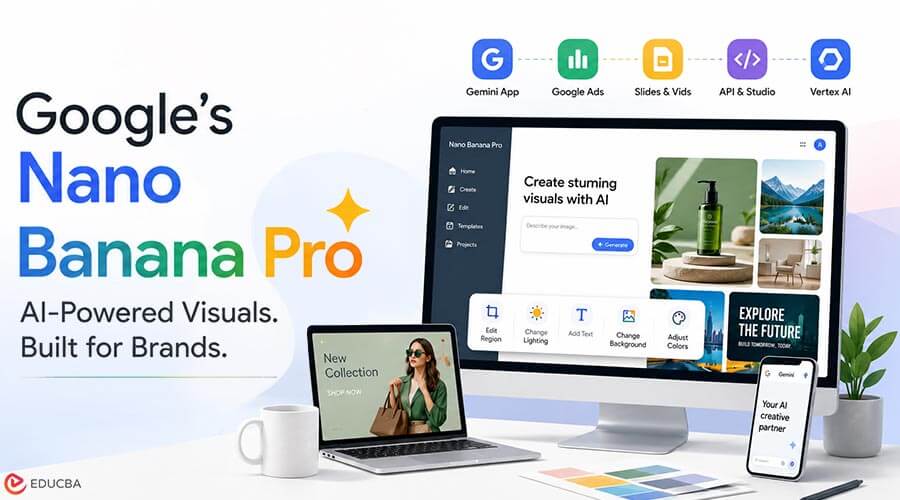
For most of the last two years, the conversation around AI images has been stuck on novelty, impressive demos, uncanny hands, and pictures that fell apart the moment you looked closely. That framing is starting to feel dated. With the arrival of Google’s latest image model, the more interesting question for founders and marketing teams is no longer “can AI make a picture?” but “can it make the specific picture my business actually needs, on brand, at production quality?” That shift is what makes Nano Banana Pro worth a serious look.
Released by Google DeepMind on November 20, 2025, it is the image model built on Gemini 3 Pro, the successor to the original Nano Banana, which ran on Gemini 2.5 Flash and earned a following for its natural-language editing and its knack for keeping a subject looking the same across edits. The Pro version pushes those same ideas toward something closer to a studio workflow.
Why Nano Banana Pro Matters for Businesses?
The features that made earlier image tools fun rarely mapped onto real commercial work. Two constraints kept them out of production pipelines: they could not render clean, readable text inside an image, and they could not keep a brand or a person consistent across a set. Nano Banana Pro targets both.
On text, the model generates legible, correctly spelled words directly in the image across multiple languages, with control over fonts and styling. For anyone who has tried to produce a social graphic, a product mockup, or an ad concept with earlier tools and ended up with garbled lettering, that single capability changes the economics of a first draft.
On consistency, the model can blend up to 14 images while keeping them visually coherent and can preserve the likeness of up to five people across a composition. For a marketing lead, that translates into something concrete: a repeatable brand look, the same spokesperson across a campaign, and product shots that do not drift every time you regenerate.
The Capabilities that Map to Real Deliverables
A few of the model’s controls read less like AI features and more like a photographer’s toolkit. Nano Banana Pro supports localized editing, selecting and refining one region of an image rather than rerolling the whole thing, along with camera-angle adjustments, focus and depth-of-field control, color grading, and lighting changes such as turning a daytime shot into a night scene. Output goes up to 4K across multiple aspect ratios, which is the difference between “fine for a thumbnail” and “usable on a billboard.”
It also grounds its outputs in Google Search, which lets it build context-rich infographics and explainer visuals from current information rather than inventing details. For content and social teams, that opens a lane for quick, accurate visual assets that would otherwise sit in a designer’s queue for days.
Where It Fits in the Stack?
Businesses deliberately spread access across the platforms they already use. Consumers can access it from the Gemini app and Google AI subscriptions. Professionals can use it through Google Ads and Workspace tools such as Slides and Vids, while developers can build with the Gemini API, Google AI Studio, and Vertex AI. That distribution is the quiet story here, Google is not launching a standalone toy; it is threading the model into workflows where commercial content is already made.
The Honest Caveat
None of this removes the need for judgment. AI-generated visuals still need a human editor for brand fit, legal review, and taste, and no image model eliminates the work of knowing what a good asset looks like in the first place. What Nano Banana Pro changes is the cost and speed of reaching a strong first version, especially for a team that starts with a set of proven Nano Banana prompts rather than a blank box. For a lean team, that is often the whole battle.
The takeaway for operators is straightforward: the frontier of AI imagery has moved from “can it?” to “how fast, how consistent, how on-brand?” and on those questions, Google’s newest model is a meaningful step, one worth testing against your own real deliverables rather than a demo prompt.
Recommended Articles
We hope this guide to Nano Banana Pro helps you understand how AI-powered image generation can transform visual content creation. Check out these recommended articles for more insights, tools, and strategies to strengthen your digital marketing and creative workflows.


