


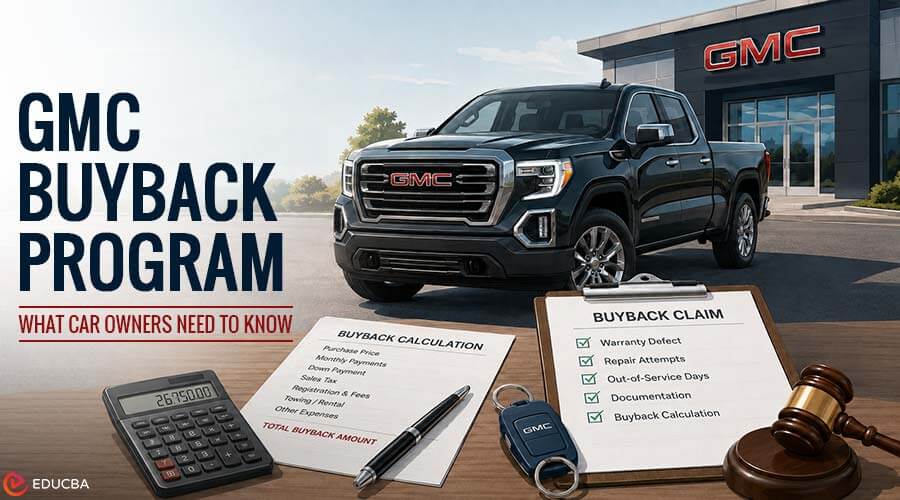
When GMC or General Motors owners experience serious, recurring problems with their vehicles, they may hear about a GMC buyback program. The term gets used in two very different contexts, and confusing them is one of the most costly mistakes a car owner can make. One type is a voluntary buyback, in which GM offers to repurchase a vehicle as a goodwill gesture, typically when a customer is particularly dissatisfied or when the company wants to avoid bad publicity around a known issue.
The other version is statutory: a lemon law or federal warranty claim forces GM to repurchase the vehicle at a price defined by law, not by whatever GM decides to offer. The gap between these two outcomes can be tens of thousands of dollars. The article provides a clear breakdown of how each type of buyback works, when each applies, and what GMC owners need to know to ensure they choose the right one.
What is GM’s Voluntary Buyback Program?
General Motors runs customer satisfaction programs (CSPs) and goodwill repurchase initiatives that allow it to buy back vehicles outside of any legal requirement. GM offers these programs at its discretion, so GM decides who qualifies, the buyback price, and the applicable conditions. Voluntary buybacks typically surface when a customer has been particularly persistent about a problem, when a vehicle has been subject to multiple recall campaigns, or when GM’s customer relations department decides that resolving the situation quietly is less costly than the alternative. They are not advertised in any systematic way. There is no public list of which vehicles qualify or of the buyback price formula.
Customers who accept these offers frequently do not know what they were entitled to under law and have no way to compare. The structure of voluntary buyback offers reflects this information asymmetry. GM structures the offer to be attractive enough to get the customer to sign a release of all claims, but calibrated to minimize the company’s costs. The release is the critical element: once signed, it permanently closes every other legal avenue, including the statutory lemon law claim that may have been worth significantly more.
What a Statutory Lemon Law Buyback Requires?
A statutory lemon law buyback is not a favor from GM. California’s Song-Beverly Consumer Warranty Act or applicable state law creates this legal obligation when a vehicle meets the required qualifying criteria.
1. The Qualifying Threshold
To trigger the statutory buyback obligation, a vehicle must have a defect covered by the manufacturer’s warranty that substantially impairs its use, safety, or value. California law generally requires the manufacturer to have a reasonable opportunity to repair the defect: two attempts for defects that could cause death or serious injury, or four attempts or 30 cumulative days out of service for other defects. When the vehicle meets either threshold, and the defect persists, the statute establishes the owner’s right to a buyback.
2. What the Buyback Price Must Include?
Under California’s Song-Beverly Act, the statutory buyback price is not GM’s choice. The calculation includes the vehicle’s purchase price or capitalized lease cost, monthly payments, down payment, sales tax, registration and licensing fees, and defect-related expenses such as towing and rental vehicle costs. A statutory mileage offset based on miles driven before the first defect report reduces the amount. The law defines each component, not negotiations with GM’s customer relations team.
3. Attorney Fees
If a consumer wins a California lemon law claim, the manufacturer must cover the consumer’s reasonable attorney fees and costs. This provision means that qualified attorneys handle these cases on a contingency basis; the consumer pays nothing upfront. The fee-shifting mechanism allows individual consumers to pursue claims against well-resourced manufacturers without bearing the litigation costs.
Why GMC Vehicles Generate a Disproportionate Number of Lemon Law Claims?
GMC shares platforms and powertrains with Chevrolet, Buick, and Cadillac. Defects that affect one brand often manifest across several. The GM 8-speed automatic transmission, used in the Sierra, Yukon, Canyon, and Acadia among others, generated a class action and significant lemon law activity. The GM L87 V8 engine has been the subject of a lawsuit over failures of its cylinder deactivation system.
Electrical and infotainment system defects across the GMC lineup have produced sustained NHTSA complaint volumes. Because GMC positions itself as a premium truck and SUV brand, owners pay premium prices and typically have premium expectations. When those vehicles produce chronic, unfixable problems, the dollar amounts at stake in any lemon law claim are proportionally higher than comparable claims against entry-level vehicles.
How to Tell Which GMC Buyback Program You Are Being Offered?
When GM contacts an owner about resolving a vehicle dispute, the offer is almost always a voluntary buyback unless the consumer or their attorney has formally invoked the lemon law. The framing is often conciliatory: a customer relations representative calls, acknowledges the frustration, and offers a resolution that feels like a compromise. The offer may be described as a “goodwill buyback,” a “vehicle repurchase,” or a “customer satisfaction resolution.”
None of these phrases mean that the offer matches the consumer’s legal entitlement. The accompanying release of claims gives the offer its legal significance. By signing the release, regardless of the offer’s label, the consumer gives up the right to pursue a statutory claim. The correct sequence is to evaluate the potential outcome of a statutory claim before accepting or rejecting any voluntary offer. That evaluation requires knowing the full buyback calculation: purchase price, all payments, incidental expenses, minus the mileage offset. A voluntary offer below that figure is leaving money on the table.
The Role of Documentation in any Buyback Claim
Both voluntary and statutory buybacks depend on repair documentation. Every visit to an authorized GMC dealer for a warranty complaint should produce a written repair order describing the defect in the owner’s own words, the repair attempted, and the dates and mileage in and out. These documents establish the repair pattern that forms the basis of any claim.
Owners who have been through multiple repair visits for the same GMC problem should compile their repair orders chronologically, calculate cumulative out-of-service days, and verify whether they have met the statutory threshold before accepting any offer GM puts forward. Understanding how a buyback claim works under California law, what gets included in the price, how the mileage offset is calculated, and what the manufacturer is obligated to pay, puts the owner in a significantly stronger negotiating position than accepting GM’s first offer without that context.
What GMC Owners Should Do Before Signing Anything?
- Compile every repair order: Every dealer visit should have produced a dated, written repair order. These documents are the primary evidence in any lemon law proceeding.
- Calculate out-of-service days: Add up every day the vehicle was at the dealer across all visits. 30 or more cumulative days constitute a statutory threshold, independent of the number of repair attempts.
- Do not sign a release without a buyback calculation: Before accepting any offer from GM, calculate what a full statutory buyback would produce. If the offer is lower, the consumer is giving up the difference by signing.
- Consult a lemon law attorney before any deadline passes: Voluntary offers often come with acceptance deadlines. Lemon law claims in California must be filed within four years of when the defect first occurred. Acting while documentation is current and the statutory window is open produces better outcomes than waiting.
Final Thoughts
The GMC buyback program is not a single thing. There are voluntary buybacks that GM structures to minimize its cost, and statutory buybacks that law requires GM to provide at a price calculated by a specific legal formula. The difference between them, for a $60,000 GMC truck, can easily be $10,000 to $20,000 or more. Understanding which one applies to a specific situation and what the statutory calculation would produce is the foundational knowledge every GMC owner dealing with a recurring defect should have before any conversation with GM goes further.
Recommended Articles
We hope this comprehensive guide to the GMC buyback program helps you better understand your rights and options as a vehicle owner. Check out these recommended articles for more insights into consumer rights and vehicle-related legal matters.


