


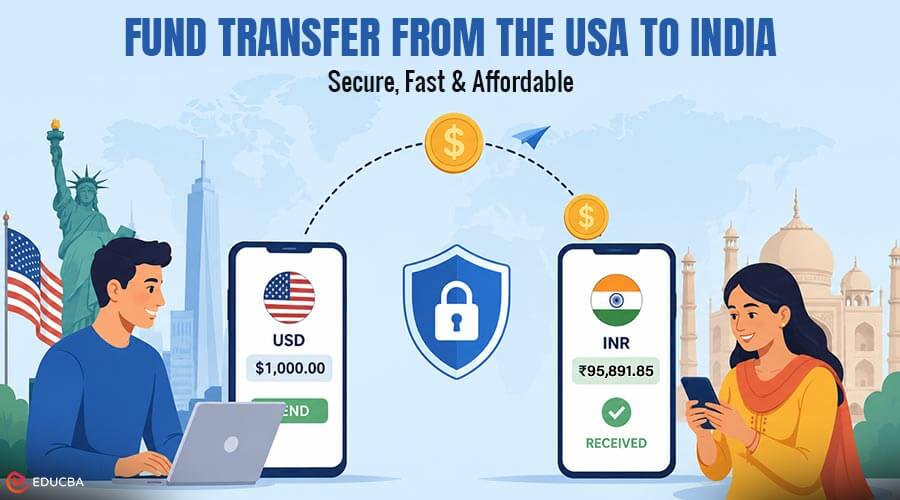
For NRIs in the USA, transferring funds to India is a regular financial activity. The practical goal for most senders is simple: get money to India quickly while minimizing costs, such as fees and exchange-rate margins.
This guide covers the key factors that determine how fast and affordable a fund transfer from the USA to India can be, and the steps you can take to optimize both.
What Determines Transfer Speed?
The speed at which funds from the USA reach India depends primarily on the transfer channel, the funding method, and the time of initiation.
- Transfer channel: Online remittance platforms designed for the USA-to-India corridor may deliver funds in up to one to two business days. Bank wire transfers via SWIFT take two to five business days. Real-time services are available with select providers for eligible amounts.
- Funding method: ACH transfers from a US bank account take one to two business days to clear before the international transfer is processed. Debit card funding is faster but may carry a small surcharge.
- Time of initiation: Transfers submitted before the platform’s daily cut-off time are processed the same business day. Those submitted after the cut-off are queued for the next processing window.
- Compliance checks: First-time transfers or large amounts may require additional compliance review, which can add time. Completing your KYC in advance and providing accurate purpose of transfer information minimizes this risk.
What Determines Transfer Cost?
The total cost of a fund transfer from the USA to India includes the following components:
- Exchange rate margin: The difference between the mid-market USD to INR rate and the rate offered by the provider.
- Sending fee: A flat charge per transfer or a percentage of the transfer amount.
- Correspondent bank fees: Applicable for SWIFT-routed transfers where intermediary banks deduct fees.
- Receiving bank charge: Some Indian banks levy a fee on incoming international transfers.
The only meaningful cost comparison is the total INR credited to the Indian bank account after all deductions.
Choosing a Platform That Balances Speed and Cost
Traditional bank wire transfers are reliable but tend to be slower and more expensive due to wider exchange rate margins and the multi-bank SWIFT routing. Online remittance platforms that maintain direct connections to Indian banks offer a more efficient alternative for regular remittances.
ICICI Bank’s Money2India is an example of a platform purpose-built for NRI remittances to India. It is backed by ICICI Bank’s banking infrastructure in India, which supports direct crediting to NRE, NRO, and resident Savings Accounts.
Tips to Improve Transfer Speed
- Complete KYC verification before you need to transfer, not at the time of transfer
- Initiate transfers on business days before the platform’s stated cut-off time.
- Save beneficiary details in advance to avoid data entry at the time of transfer.
- Check for public holidays in India before initiating time-sensitive transfers.
- Verify all beneficiary details before each transfer to eliminate holds due to errors.
Tips to Reduce Transfer Cost
- Compare total INR received across at least two to three providers before each large transfer
- Use ACH bank transfer funding rather than a debit card to avoid surcharges
- Consolidate multiple small transfers into fewer larger transfers to reduce per-transaction fees
- Set rate alerts to act when the USD to INR rate moves in your favor
- Review your provider annually to confirm you are still on a competitive arrangement
Account Type and Its Relevance
Selecting the correct Indian account type is important both for compliance and for the practical usability of transferred funds:
- NRE account: For remittances from abroad. Held in Indian rupees. Fully repatriable. Interest is exempt from income tax in India.
- NRO account: For income earned in India. Repatriation of capital income permitted up to USD 1 million per financial year, subject to RBI conditions and applicable taxes.
- Resident Savings Account: For transfers to family members holding standard accounts in India.
Regulatory Considerations
All money transfer operators in the USA must be registered with FinCEN and comply with the Bank Secrecy Act. Transfers to India must comply with FEMA and RBI guidelines on inward remittances. Providing an accurate purpose of transfer information supports faster compliance processing.
Final Thoughts
Achieving both speed and cost-efficiency in a fund transfer from the USA to India is not a compromise. By choosing a regulated platform with direct India connectivity, verifying details before transfer, and applying consistent cost-reduction practices, NRIs can remit funds reliably and affordably.
Disclaimer:
Transfer times, fees and regulatory requirements are subject to change. Always verify current details with your chosen provider before initiating a transfer.
Recommended Articles
We hope this comprehensive guide to fund transfer from the USA to India has helped you understand how to send money quickly, securely, and cost-effectively. Check out these recommended articles for more expert tips and insights on smarter financial management.

