


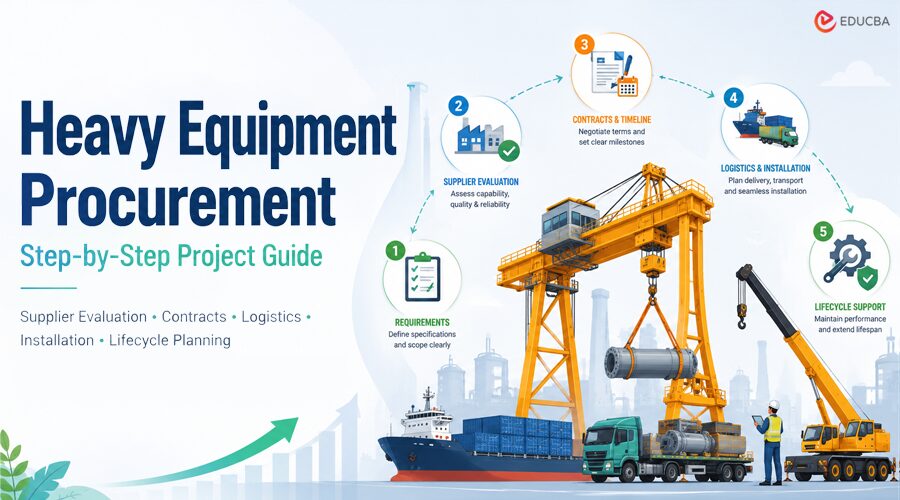
Heavy equipment procurement is one of the most complex and high-stakes project management challenges in industrial operations. Whether you are sourcing port cranes, gantry systems, or marine lifting equipment, the decisions made during procurement directly affect project timelines, operational performance, and long-term maintenance costs. Specialized manufacturers like HT Crane, which supplies RTG cranes, ship-to-shore cranes, marine boat cranes, and gantry systems to customers in over 170 countries, are frequently involved in procurement projects with extremely low margins for error. Getting the process right from the start is not optional; it is the difference between a project that delivers on schedule and one that stalls before it begins.
This guide walks through the five core stages of heavy equipment procurement, using project management best practices to help procurement teams, project managers, and operations leaders navigate the process with confidence.
Step 1: Define Your Equipment Requirements
Every successful heavy equipment procurement project begins with a precise definition of what is actually needed. Vague or incomplete requirements are the single most common cause of procurement failures in heavy industry.
Start by answering three foundational questions:
- What is the operating environment? An indoor warehouse, open yard, port terminal, marine vessel, or hazardous industrial setting each imposes different engineering requirements.
- What are the load and cycle specifications? Lifting capacity, span, hook height, and daily duty cycles must be defined in concrete numbers, not ranges.
- What are the integration requirements? Will the equipment interface with existing rail systems, automation platforms, or electrical infrastructure?
Once these are answered, consolidate them into a formal Technical Specification document. This document becomes the reference point for every supplier conversation, contract clause, and acceptance test that follows. Internal stakeholders operations, safety, engineering, and finance should sign off on the specification before any supplier outreach begins.
Step 2: Identify and Evaluate Suppliers
With a clear specification in hand, the next step is building a qualified supplier shortlist. In heavy equipment procurement, price is rarely the right place to start. The more productive first filter is capability and compliance.
- Certifications matter: For marine and port equipment in particular, look for suppliers holding internationally recognized certifications such as CCS, ABS, BV, or RINA. These certifications indicate that the manufacturer’s equipment meets defined safety and engineering standards and that the certification body has audited the production process, not just the final product.
- Export experience is a practical proxy for execution reliability: A supplier that has successfully delivered equipment to customers across multiple continents has already navigated customs documentation, shipping logistics, and cross-border compliance requirements that often trip up less-experienced manufacturers.
- Manufacturing scale and R&D capacity: Determine whether a supplier can handle custom specifications without compromising lead time. Facilities with dedicated engineering teams can adapt standard designs to project-specific requirements, a critical capability for non-standard applications.
Issue a formal Request for Quotation (RFQ) to shortlisted suppliers. The RFQ should include your Technical Specification, delivery timeline requirements, warranty expectations, and any site-specific constraints. Evaluate responses based not only on price, but also on technical compliance, delivery timelines, and the quality of the supplier’s engineering support.
Step 3: Manage the Contract and Timeline
Once a supplier is selected, the contract negotiation phase begins. This is where many procurement teams lose ground they cannot recover later.
Key contract elements to lock down before signing:
- Delivery milestones: Define specific dates for design approval, manufacturing completion, factory acceptance testing, and shipment, not just a single delivery date.
- Payment structure: Tie payment tranches to milestone completion rather than calendar dates. This aligns the supplier’s cash flow incentives with your project schedule.
- Warranty terms: Specify the warranty period, what it covers, how claims are processed, and who bears the cost of spare parts during the warranty window.
- Factory Acceptance Testing (FAT): Include the right to conduct or witness FAT before equipment leaves the supplier’s facility. FAT is the most cost-effective point to identify and resolve defects far cheaper than discovering problems after the equipment has been shipped and installed.
Build a project schedule that accounts for manufacturing lead time, FAT, shipping transit, customs clearance, and installation. For large or complex equipment, total project timelines of six to twelve months from contract signing to operational commissioning are not uncommon.
Step 4: Coordinate Logistics and Installation
Heavy equipment logistics is a specialized discipline. Oversized and overweight shipments require route surveys, special transport permits, and coordination with port authorities that standard freight forwarding cannot handle without specific expertise.
Key logistics considerations:
- Confirm site access in advance: Verify that the destination port, roads, bridges, and installation site can accommodate the equipment’s dimensions and weight before shipment. Equipment that arrives without a feasible transport route can cause significant delays, additional handling costs, and project disruptions.
- Prepare complete customs documentation: Heavy industrial equipment shipments typically require commercial invoices, packing lists, bills of lading, certificates of origin, and equipment-specific certifications. Incomplete or inaccurate documentation can lead to customs delays, port detention, and unexpected financial penalties.
- Plan for installation supervision: Reputable manufacturers often provide on-site installation supervision and commissioning support. Including this service in the project plan helps ensure proper assembly, alignment, and system integration, reducing the risk of operational failures and costly rework.
- Invest in operator and maintenance training: Arrange formal training for operators and maintenance personnel during commissioning. Train staff while the manufacturer’s technical team is on site. This gives them hands-on experience and teaches safety procedures. It also helps them learn preventive maintenance before full operation.
Step 5: After-Sales and Lifecycle Management
Procurement does not end at commissioning. Heavy equipment operates under continuous load for years or even decades. The supplier’s after-sales support directly affects operating costs and equipment availability.
Evaluate suppliers on their after-sales infrastructure before signing the contract, not after:
- Spare parts availability: Confirm that the supplier maintains a spare parts inventory for your equipment model and can ship components within acceptable lead times. Negotiate a consignment stock arrangement for critical wear parts. You can also purchase an initial spare parts package during equipment procurement.
- Remote technical support: Leading suppliers offer multilingual remote support via phone, email, and video, enabling rapid diagnosis of operational issues without waiting for an on-site visit.
- Planned maintenance schedules: Create a preventive maintenance plan with the supplier based on equipment usage. Planned maintenance consistently outperforms reactive maintenance on both cost and uptime metrics.
- Long-term parts commitment: For equipment with a 15 to 20-year operational life, confirm that the supplier can commit to parts support for the full lifecycle, not just the warranty period.
Final Thoughts
Heavy equipment procurement is a project management discipline in its own right. Successful teams are not always the ones with the biggest budgets. They succeed because they clearly define requirements, carefully evaluate suppliers, manage contracts well, and plan for the equipment’s long-term maintenance.
Each stage of the process described above is an opportunity to reduce risk and protect project outcomes. Skipping any of these steps creates vulnerabilities. These issues often appear during commissioning or after the equipment is under load.
Treat heavy equipment procurement as a structured project. Apply the same rigor you would to any critical workstream. This approach greatly improves the chances of a successful outcome.
Recommended Articles
We hope this guide helps you understand how effective heavy equipment procurement improves project timelines, operational efficiency, and long-term equipment performance. Explore these recommended articles for more insights into supplier evaluation, contract management, industrial logistics, equipment maintenance, and procurement project management.

