


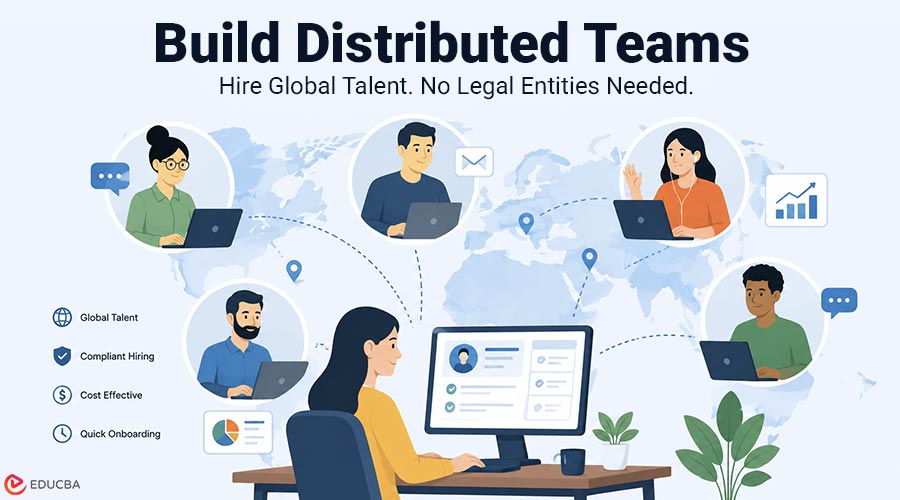
Businesses are hiring across borders constantly now. Even the ones with zero plans to ever open a physical office overseas. Remote work made finding skilled people outside your own zip code a lot easier, sure. Still, international hiring drags a pile of legal and administrative baggage, and many companies just are not ready for that part. The good news is that you do not always need to establish a legal entity in every country where you hire. By understanding the available hiring models and following the right processes, businesses can build distributed teams efficiently while remaining compliant with local regulations.
Why Businesses Build Distributed Teams?
A distributed team opens doors. Talent you would never find in your own country, or that would cost you a small fortune to hire locally. Instead of boxing your search into one city, you get to hire whoever’s actually right for the job. That wider pool speeds things up too. When a company’s growing fast, burning months trying to fill one seat can stall the whole operation.
Cast a wider net internationally, and you have more qualified people to choose from, which helps you scale without being tied to a single labor market. Then there is cost. Hiring across borders often means you can manage payroll more sensibly while still paying competitively based on where the person actually lives. And with so many companies running remote-first these days, distributed hiring is no longer a clever workaround. It is just how many businesses work now.
The Challenges of Hiring Employees Internationally
Hiring internationally is not just firing off an offer letter and calling it done. Every country has its own rulebook, contracts, working hours, paid leave, taxes, and employee protections. What is totally fine in one place might land you in real trouble somewhere else. Payroll makes it worse. You are often stuck calculating local tax withholdings, social contributions, mandatory benefits, and getting any piece of that wrong is not a small mistake.
Misclassify someone as a contractor when the law actually sees them as an employee? That is fines, back pay, maybe a legal fight you did not see coming. Even routine tasks become more complicated once you spread your workforce across countries. HR and finance are juggling contracts, paperwork, payments, and compliance rules across multiple legal systems, all at once. Without some kind of structured process in place, that administrative load can eat up time fast.
Why Opening a Legal Entity Is Not Always the Best Solution?
Setting up a local company does let you hire people directly. No argument there. But it is rarely the fastest or smartest move if you only need a few workers in a new market. Registering an entity usually entails government paperwork, local bank accounts, appointed representatives, and ongoing accounting and reporting duties that do not just disappear once the paperwork is done. Those costs stick around long after setup.
Say you need two engineers in another country for product development. Building an entire subsidiary for that? Probably more work than it is worth. A local entity starts to make sense when you are actually betting long-term on that market, when you expect real operations to follow.
Alternatives to Opening a Legal Entity
Companies lean on different hiring models depending on what they are actually trying to do. Independent contractors work well for project-based gigs or specialized skills you only need for a stretch. But that only holds up when the relationship genuinely meets local contractor rules, not just what is written on paper. An Employer of Record, or EOR, is another path worth knowing. The EOR becomes the legal employer in the worker’s country, while you continue to run that person’s day-to-day work yourself.
The provider handles local employment contracts, payroll, tax obligations, and most of the compliance headaches, so you can hire internationally without ever opening your own entity. Some businesses also use contractor management platforms to smooth out onboarding, payments, and documentation for international contractors. Companies looking to engage international contractors without establishing local entities often turn to global workforce solutions such as Hightekers to handle contractor administration and simplify cross-border compliance.
Best Practices for Managing a Global Workforce
Getting this right takes more than picking a hiring model. You need clarity on whether each person is an employee or a contractor, and that classification must hold up under local law. Ditch the one-size-fits-all contract. Use agreements built around each country’s actual laws. Consistent onboarding matters too, and so does keeping your records organized, especially once your team’s too big to track by memory.
Pay people accurately on time. Use payment processes you can actually trust across borders. Late or messy pay erodes trust fast, and that stings even more when someone’s rent is riding on that paycheck landing on time. And employment law shifts constantly, which is exactly why partnering with experienced global workforce providers can save you from getting blindsided mid-expansion.
Final Thoughts
The ability to build distributed teams allows companies to tap into global talent without the cost of establishing legal entities in every country where they hire. Once you understand the options available to you, you can pick the model that best fits how you hire. Add solid processes and the right partners, and you are free to grow internationally, stay compliant, and keep the admin load from spiraling out of control.
Recommended Articles
We hope this guide helps you understand how to build distributed teams efficiently while staying compliant with international hiring regulations. Check out these recommended articles for more insights and strategies to scale your global workforce successfully.

