


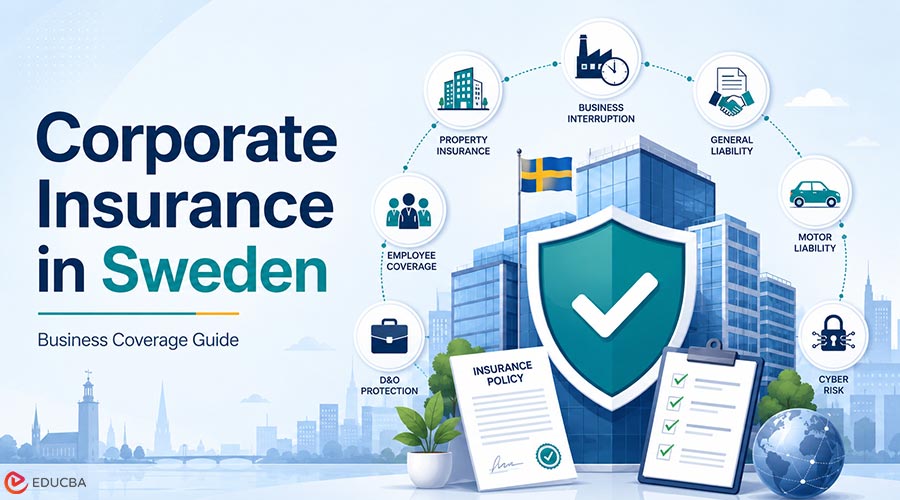
Managing operational risk in the Nordic region requires a deep understanding of localized compliance and insurance structures. For enterprises expanding into Scandinavia, evaluating coverage options through platforms like Sweden Insurance provides a baseline for navigating local market conditions. Corporate Insurance in Sweden differs significantly from Anglo-American models, primarily due to the integration of collective bargaining agreements (kollektivavtal) and a robust state welfare system. Businesses must carefully delineate between statutory mandates, collectively bargained obligations, and voluntary commercial liability policies to optimize their risk-management strategies.
Financial directors and risk managers evaluating Corporate Insurance in Sweden must assess how Swedish tort law (Skadeståndslagen) interacts with commercial insurance policies. Unlike jurisdictions where punitive damages drive high liability claims, Sweden focuses primarily on compensatory damages. However, high litigation costs and strict environmental and workplace regulations present unique financial exposures that necessitate comprehensive coverage.
Structure of Corporate Insurance in Sweden
The corporate insurance market in Sweden is regulated by the Swedish Financial Supervisory Authority (Finansinspektionen). Corporate insurance policies are generally structured around a package model, often referred to as a “combined business insurance” (företagsförsäkring). This package forms the core risk management solution for small and medium-sized enterprises (SMEs). In contrast, larger organizations generally rely on tailored, multi-layered insurance programs to address their more complex risk exposures.
A standard commercial package comprises several distinct modules designed to protect corporate assets, balance sheets, and human capital. The primary components include property damage, business interruption, general liability, and product liability. When configuring these modules, financial analysts must evaluate the deductibles (självrisk) against premium costs to determine the optimal retention level for the organization.
The interplay between state-provided social security (Försäkringskassan) and corporate responsibility is another critical factor. While the state covers basic healthcare and long-term disability, corporations often face secondary liabilities and contractual obligations to supplement these state benefits, particularly when operating under a collective agreement.
Mandatory and Contractual Requirements for Corporate Insurance in Sweden
In Corporate Insurance in Sweden, insurance requirements fall into three categories: statutory (mandated by law), contractual (mandated by collective bargaining agreements), and commercial (driven by market risk). Understanding the boundaries of each category prevents costly double-insurance or compliance gaps.
Statutory insurances are minimal but strictly enforced. For example, any business owning vehicles must carry third-party motor liability insurance (trafikförsäkring). However, the more complex layer involves contractual employee insurance. Approximately 90% of employees in Sweden are covered by collective bargaining agreements negotiated between employers’ associations and trade unions. If a company signs a collective agreement, it is legally bound to provide a specific suite of labor market insurances (avtalsförsäkringar).
Comparison of Corporate Insurance Classifications
| Insurance Type | Legal Basis | Primary Risk Covered | Financial Impact of Non-Compliance |
| Motor Liability (Trafikförsäkring) | Statutory Law | Protects against claims involving third-party injuries or damage to their property resulting from the use of company vehicles. | Daily fines from the Swedish Motor Insurers Association (Trafikförsäkringsföreningen). |
| Work Injury (TFA) | Contractual (Collective Agreement) | Workplace accidents and occupational diseases supplement state benefits. | Breach-of-contract lawsuits, union sanctions, and direct liability for employee damages. |
| General & Product Liability | Commercial / Market Driven | Third-party financial losses, bodily injury, or property damage from operations/products. | Uncapped balance sheet exposure to compensation claims and legal defense costs. |
| Business Interruption (Avbrottsförsäkring) | Commercial / Market Driven | Fixed costs and lost profits following a physical disruption (e.g., fire, water damage). | Bankruptcy or severe cash flow insolvency during prolonged operational shutdowns. |
Core Pillars of Corporate Insurance in Sweden
To build an effective financial defense framework in Sweden, corporations must conduct a thorough analysis of specific insurance categories that directly impact the income statement and balance sheet.
Property and Asset Protection
Property insurance covers physical assets, including real estate, machinery, inventory, and office equipment. In Sweden, valuation methods are tightly defined in policies, usually based on either replacement value (nyvärde) or actual cash value (marknadsvärde). Financial teams must maintain accurate asset registers to avoid underinsurance (underförsäkring), which allows insurers to reduce claim payouts in line with the “pro-rata rule proportionally.”
Business Interruption (BI) Modeling
Within Corporate Insurance in Sweden, business interruption insurance (avbrottsförsäkring) is directly linked to property damage. If a fire halts production, BI insurance covers the loss of gross profit and ongoing fixed costs, such as rent and salaries. The critical variable for financial planners is the indemnity period (ansvarsperiod), which typically ranges from 12 to 24 months. Given the long lead times for obtaining construction permits and specialized machinery in Sweden, selecting an inadequate indemnity period can lead to structural financial failure before operations resume.
General Liability and Tort Law (Skadeståndslagen)
The Tort Liability Act governs Swedish corporate liability. A company is liable for damages caused by its negligence. Commercial general liability (CGL) insurance covers the cost of defending the company against lawsuits and paying court-ordered compensation. This coverage extends to:
- Premises Liability: Injuries occurring on corporate property.
- Operations Liability: Damages caused by employees while performing work on-site or at client locations.
- Product Liability: Financial and physical damages caused by defective products distributed within the European Single Market.
Directors and Officers (D&O) Liability
As part of Corporate Insurance in Sweden, Directors and Officers (D&O) insurance plays a vital role because Swedish corporate governance places significant personal accountability on the Board of Directors and the Managing Director. According to the Swedish Companies Act (Aktiebolagslagen), board members may be personally responsible for financial losses incurred by the company, its shareholders, or creditors if those losses result from negligence or a failure to fulfill their duties. D&O insurance is therefore standard practice for protecting executives’ personal assets against regulatory actions, shareholder lawsuits, and bankruptcy proceedings.
Operational Risk Checklists for Swedish Enterprises
When establishing or auditing insurance portfolios in Sweden, risk managers should utilize structured protocols to ensure alignment with local legal standards and financial objectives.
- Verify Collective Agreement Obligations: Audit employee payroll to ensure that your company pays the correct premiums to Fora or Collectum, the administrative bodies responsible for collective insurance. Failure to register employees can result in retroactive premium demands with penal interest.
- Assess Supply Chain Dependencies: Evaluate whether the policy includes Contingent Business Interruption (CBI) coverage. This protects against financial losses caused by disruptions at critical Swedish or international suppliers.
- Review Cyber Risk Endorsements: Due to Sweden’s highly digitized economy and stringent GDPR enforcement by the Swedish Authority for Privacy Protection (Integritetsskyddsmyndigheten), standard general liability policies are insufficient. Businesses should integrate dedicated cyber insurance to cover data breach responses, ransomware attacks, and regulatory fines.
- Evaluate Environmental Liability: Sweden enforces strict environmental codes (Miljöbalken). Companies involved in manufacturing, logistics, or chemical processing must secure specialized environmental impairment liability (EIL) insurance to cover soil remediation and pollution clean-up costs.
Tax Treatment of Corporate Insurance in Sweden Premiums
The financial optimization of Corporate Insurance in Sweden requires precise accounting of premium payments and claim payouts under the Swedish Corporate Tax Act (Inkomstskattelagen).
Generally, commercial insurance premiums are fully deductible as legitimate business expenses, provided the insurance directly relates to the company’s revenue-generating operations. This includes property, liability, BI, and cyber insurance.
However, employee-related insurance is subject to specific tax rules. Employers pay a special wage tax of 24.26% on premiums for mandatory and collectively bargained pensions and life insurance. Employers who offer voluntary health insurance (sjukvårdsförsäkring) also create a taxable benefit for employees. They must pay standard social security contributions (arbetsgivaravgifter) on the value of that benefit.
When insurers pay an insurance claim, the tax treatment depends on the type of compensation received. Tax authorities classify payouts for lost revenue, such as business interruption insurance, as taxable corporate income. Companies offset payouts for destroyed capital assets against tax write-offs. Corporate accountants should carefully manage depreciation and capital gains.
Final Thoughts
Corporate Insurance in Sweden is essential for helping businesses manage financial, legal, and operational risks while ensuring compliance with local regulations and collective bargaining obligations. A well-structured insurance program that combines mandatory, contractual, and commercial coverage helps organizations safeguard their assets, employees, and long-term financial stability. By regularly reviewing policies and adapting coverage to changing business risks, companies can operate with greater confidence and resilience in Sweden’s evolving business environment.
Recommended Articles
We hope this guide on Corporate Insurance in Sweden helps you understand the country’s commercial insurance framework and build a stronger risk management strategy. Explore these recommended articles for additional insights into business insurance, regulatory compliance, and financial risk management.

