


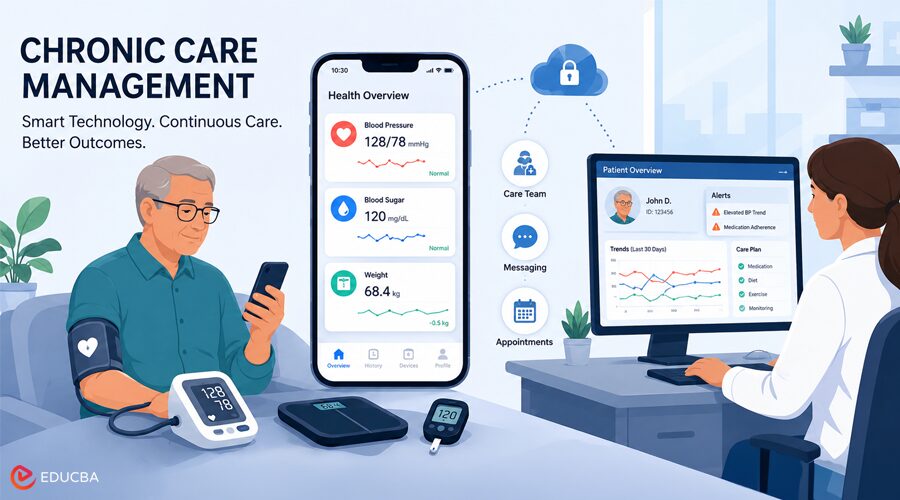
For people living with chronic conditions such as diabetes or hypertension, management has traditionally felt like a 24-hour responsibility, with most of the care burden falling on patients between clinic visits. However, a major shift in the healthcare landscape is closing the gap between the doctor’s office and the home. Chronic Care Management (CCM), bolstered by new “smart” technologies, is gaining significant traction nationwide. By keeping patients connected with providers, the system shifts medicine from reactive treatment to proactive long-term care.
The Shift from Reactive to Proactive Chronic Care Management
In the traditional healthcare model, visits were largely reactive: a patient saw a doctor only when they felt unwell or visited the emergency room during a flare-up. Today’s CCM programs use platform automation and Artificial Intelligence (AI) to spot dangerous trends before patient conditions escalate. Through AI-powered trend analysis, providers no longer look at a single high blood pressure reading in isolation.
Instead, they monitor patterns over weeks to identify whether a patient’s health is heading in the wrong direction. This allows for early intervention. If a system detects subtle changes in vitals, it can prompt a care team to adjust medication or schedule a virtual consultation immediately, potentially preventing a costly hospital stay.
Solving the “Bandwidth” Problem
The rapid adoption of CCM stems from its ability to solve the “bandwidth” problem in modern medicine. By providing a continuous layer of clinical support between traditional appointments, the system ensures patients do not feel lost in the gaps of the healthcare system. At its core, CCM acts as a continuous support system. Through a combination of dedicated care coordinators and monitoring systems, the platform provides a sense of security for those managing complex illnesses.
This is particularly transformative for Iowans in rural or underserved areas, where consistent access to high-quality clinical resources has historically been a challenge. The technology also handles the “heavy lifting” of administrative tasks, such as billing and eligibility checking. This approach reduces manual data entry, allowing medical teams to focus more on patient care.
Managing the “Whole” Patient
Chronic conditions rarely exist in isolation. Many patients manage multiple conditions simultaneously, such as diabetes, obesity, and hypertension. Modern CCM systems integrate data from Remote Patient Monitoring (RPM) devices like smart blood pressure monitors, glucose meters, and connected weight scales. This creates a complete and continuous view of patient health.
By combining these data points, CCM platforms move away from one-size-fits-all treatment plans. Instead, care becomes highly personalized, preventive, and aligned with real-time clinical needs. This “whole patient” approach allows providers to detect interconnected health risks and intervene more effectively.
Key Pillars of a Successful Chronic Care Management Program
As these programs become more common in university hospitals and private practices, their impact continues to grow. Experts point to three key pillars of success for effective chronic care management.
- Seamless Integration: Data should flow directly to a provider’s record without requiring the patient to manually log every entry.
- The Human Touch: Technology is intended to empower nurses and physicians to make faster decisions, not to replace the patient-provider relationship.
- Proven Outcomes: The ultimate goal remains keeping patients out of the hospital while improving quality of life through reduced ER visits and better treatment adherence.
The Future of CCM
Chronic Care Management is gaining momentum because it addresses the reality of living with a long-term condition: health happens every day, not just during a 15-minute office visit. By leveraging smart technology to provide continuous oversight, the medical community is moving toward a truly patient-centered future.
Recommended Articles
We hope this guide to Chronic Care Management helps you better understand how technology is transforming long-term patient care. Check out these recommended articles for more insights to improve healthcare delivery and patient outcomes.

