


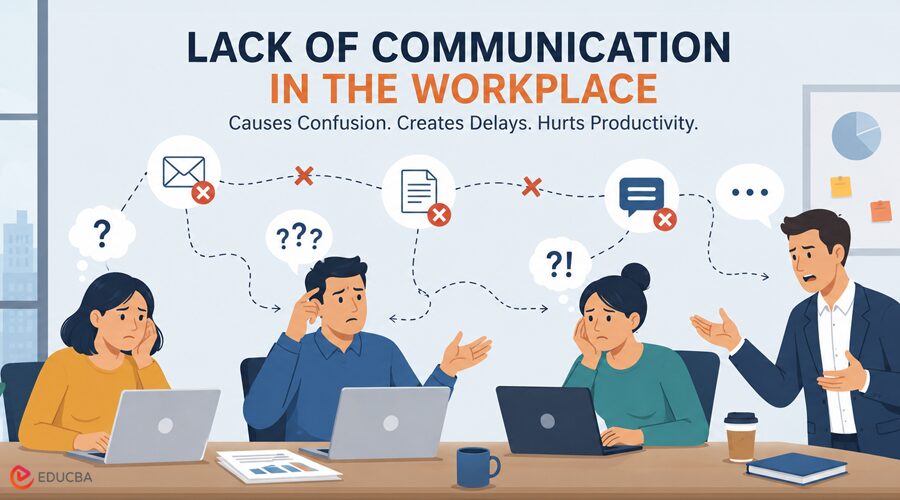
Lack of communication in the workplace is not simply a matter of people failing to send enough emails or hold enough meetings. It is a systemic failure in which important information does not reach the people who need it, instructions are misunderstood or incomplete, expectations go unstated, and the gaps between what people assume and what is actually true compound into errors, delays, and damaged working relationships. Fixing lack of communication in the workplace requires identifying the specific failure patterns causing the most damage in a given organization and addressing them at the levels of writing and communication skills, processes, and structure, rather than simply urging people to “communicate more.” More communication that is unclear, disorganized, or poorly targeted does not solve the underlying problem. It creates more noise around it.
Why Does Workplace Communication Break Down?
The most common causes of workplace communication breakdown are structural rather than motivational. People generally want to communicate effectively. They fail to do so because they have not been trained to write and speak clearly for different audiences, because organizational processes do not create appropriate channels and expectations for information flow, and because the culture in many organizations does not surface communication failures early enough to address them before they lead to costly consequences.
According to a McKinsey Global Institute study, organizations with strong employee connectivity and effective communication can experience productivity gains of 20% to 25%. The inverse of that finding is equally significant: organizations where communication is consistently unclear or incomplete are operating with a measurable, addressable productivity deficit. That deficit shows up in missed deadlines, repeated mistakes, frustrated stakeholders, and management time spent clarifying what should have been clear the first time.
In regulated industries specifically, communication breakdown carries consequences that extend beyond productivity. Unclear documentation in pharmaceutical, biotech, and engineering environments can result in regulatory rejections, compliance failures, and operational incidents that are expensive and avoidable. The Gallup organization has found that only 13% of employees strongly agree that their organization communicates effectively with them. In organizations where documentation quality and communication clarity carry regulatory and financial weight, that gap is not simply an employee engagement concern. It is an operational risk.
How Do You Identify Communication Problems in Your Organization?
The clearest signs that an organization has a systematic communication problem are visible in process friction: documents that require multiple rounds of revision before they reach an acceptable standard, requests for clarification that arrive after work has already begun, meetings that end without clear decisions or action items, and stakeholder complaints about receiving information that is incomplete, late, or inconsistent with what was expected.
Less obvious but equally telling signs include the amount of time managers spend rewriting their teams’ documents before forwarding them to senior leadership or external partners, the frequency with which the same misunderstanding recurs across different projects or departments, and the degree to which employees in different functions have inconsistent understandings of strategic priorities or procedural requirements.
A communication audit, also called a communication diagnostic or readability risk assessment, is the most rigorous tool available for identifying where and how communication is failing in an organization. A structured audit examines the documents an organization produces, the processes through which those documents move, and the specific patterns of confusion or miscommunication that are generating the most friction, and returns a clear picture of what is broken and where the highest-leverage improvements can be made.
Practical Steps to Fix Lack of Communication in the Workplace
The most effective way to address a lack of communication in the workplace is to treat it as a skills-and-systems problem rather than a motivation problem. The following approaches address the most common and costly communication failure patterns in professional organizations.
1. Invest in Targeted Writing and Communication Training
Investing in targeted writing and communication training is the foundational step. Most professionals have never received structured instruction in how to write clearly for different audiences, how to organize information for maximum reader comprehension, or how to calibrate tone and register appropriately for different communication contexts. Training that teaches these skills using participants’ own documents and communication challenges, rather than generic examples, produces the most immediate and durable improvement in communication quality.
2. Establish Clear Communication Norms and Expectations
Establishing clear communication norms and expectations is equally important. Organizations that define what good communication looks like, including expectations around email response time, document structure, meeting communication, and stakeholder update frequency, give employees a consistent standard to work toward. Without explicit norms, communication quality defaults to whatever habits individuals have developed on their own, which vary widely and often do not serve organizational needs.
3. Create Feedback Loops that Surface Failures Early
Creating feedback loops that surface communication failures early prevents small misunderstandings from compounding into significant operational problems. This means building review processes that identify unclear documentation before it reaches its intended audience, rather than discovering its inadequacy after confusion has already led to rework. It means training managers to provide specific, actionable feedback on the quality of communication rather than simply returning unclear documents with a general request to “revise.” And it means building a culture where people treat asking clarifying questions as responsible professionalism rather than a sign of inadequate preparation.
What Role Does Written Communication Play in Workplace Communication Breakdown?
Most professionals coordinate, document, and evaluate their work primarily through written communication. Emails, reports, SOPs, proposals, regulatory submissions, project updates, and performance documentation are all written artifacts that persist, circulate, and generate consequences well beyond the moment of their creation. A poorly written SOP continues to confuse every time it is consulted, and a poorly written email generates a thread of clarifying replies that consumes the time of multiple people. A poorly written report leads to decisions based on a misunderstanding of what the data actually show.
The SIS International Research organization found that communication barriers in business cost companies with 100 employees approximately $420,000 in lost productivity annually. That figure reflects the cumulative cost of the time employees spend managing the consequences of unclear communication: seeking clarification, correcting mistakes, revising documents, and resolving the misunderstandings that unclear writing generates. Reducing this cost requires improving written communication at its source by developing employees’ skills rather than adding more processes to their work.
Does Communication Training Actually Fix the Problem Long Term?
Structured communication training produces lasting improvement when designers focus on behavioral transfer rather than simply delivering knowledge. The distinction is critical: training that teaches communication principles in the abstract and then returns participants to their existing work environment without follow-up support produces short-term awareness that fades within weeks.
Training that uses participants’ real documents, applies principles to the communication challenges they face in their actual roles, and includes mechanisms for reinforcement and measurement produces writing behavior changes that persist because participants understand not just what to do differently but also why the change matters for their specific work.
Organizations that have addressed workplace communication failures through targeted training consistently report shorter document revision cycles, faster approval timelines for key documents, and measurable reductions in the time managers spend correcting their teams’ communication before it is ready for broader distribution. These outcomes make the case for communication training as an investment rather than an expense, and well-designed programs aim to produce them.
Final Thoughts
Lack of communication in the workplace is a systemic issue rooted in unclear writing, weak processes, and inconsistent communication standards. Fixing it requires structured training, defined norms, and continuous feedback systems rather than simply encouraging more communication. When addressed properly, organizations can significantly improve productivity, reduce errors, and create a more aligned and efficient work environment.
Recommended Articles
We hope this guide on lack of communication in the workplace helps you identify communication gaps and build a more connected, productive work environment. Check out these recommended articles for additional insights and strategies to improve workplace communication.


