


Updated June 11, 2026
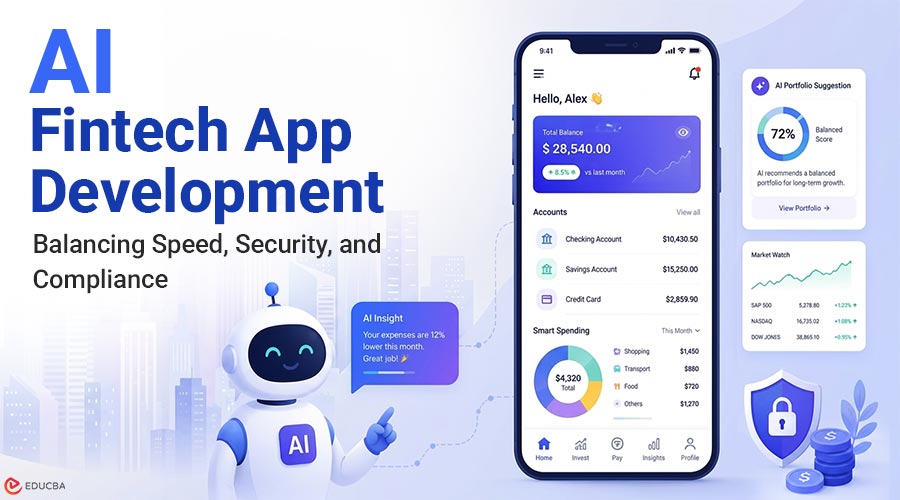
AI builders have made product teams faster. A small group can turn a payment flow, lending dashboard, onboarding journey, or back-office automation idea into a working prototype in days. For engineering leaders under pressure to cut cycle time, this matters. Yet fintech does not reward prototypes. It rewards systems that pass audits, protect customer data, integrate with core platforms, recover from failure, and scale during demand spikes. That changes the role of AI fintech app development from feature creation to risk-controlled product engineering. The gap appears when a vibe-coded app moves from demo to enterprise use. The code may look functional. The product may feel convincing. But unseen layers decide whether the build survives procurement, compliance review, security testing, and cloud cost scrutiny.
Financial institutions cannot treat AI builders as substitutes for architecture, secure SDLC practices, threat modeling, observability, data governance, and release discipline. They can use AI builders as accelerators when engineering teams place them inside a controlled delivery model. IBM’s 2025 breach research placed the average global breach cost at $4.44 million. Verizon’s 2025 breach research reviewed more than 12,000 confirmed breaches. Those figures explain why boards ask sharper questions. Speed has value. Unreviewed speed creates exposure.
The Real Problem is Not Code Generation—it is Control
Vibe coding works when teams need a clickable concept or a workflow. It breaks down when the application touches payment data, account credentials, KYC records, credit logic, fraud signals, or regulated customer communication. The issue starts with missing context. AI builders do not understand an institution’s risk appetite, data retention rules, access control model, vendor policy, audit evidence needs, or recovery objectives unless engineers define those boundaries. For VP-level leaders, this creates a management challenge. Teams need faster delivery without expanding the attack surface, product experiments without shadow technology, and AI productivity without weakening engineering standards.
That balance requires guardrails before code generation begins. Teams need reference architectures, approved component libraries, secure API patterns, policy-based access controls, environment separation, test automation, and logging that provides security teams with evidence. The same logic applies to mobile app development. A fintech mobile experience must handle device security, biometric flows, session expiry, push notifications, jailbreak detection, consent, analytics, and app store compliance. OWASP’s 2025 guidance on large language model applications highlights risks such as prompt injection, sensitive information disclosure, insecure output handling, and excessive agency. These risks move AI-assisted fintech work beyond standard application security. Teams must secure both the software and the AI workflows that support it.
What Enterprise Teams Need Before They Scale AI-Built Products?
The answer is not to reject AI builders. It is to industrialize their use. Engineering leaders need a model in which AI helps teams move faster while architecture, compliance, and security retain decision rights. A mature AI-assisted fintech build has clear ownership. Product teams define the business outcome. Architects define system boundaries. Security teams define controls. Compliance teams define evidence needs. Platform teams define deployment standards. Customer experience teams validate adoption. This model separates prototype speed from production readiness.
A feature should not be deployed to a regulated environment because it works in a demo environment. It should enter because it meets the defined quality gates. Those gates should cover identity, data classification, encryption, audit logging, third-party risk, API resilience, model usage, human review, automated tests, accessibility, and incident response. The work may sound conventional, but AI-generated code makes it more urgent. For large North American enterprises, the issue includes scale. Fintech apps sit inside complex ecosystems. They connect to core banking systems, payment networks, CRM platforms, data warehouses, fraud engines, cloud services, and customer support systems. A small shortcut can become an operational constraint.
5 U.S. Technology Partners for AI Fintech App Development in 2026–2027
Organizations pursuing AI fintech app development often benefit from experienced engineering partners who understand both modern AI workflows and enterprise software requirements.
1. GeekyAnts
GeekyAnts is an AI-Powered Digital Product Engineering & Consulting Company with experience across AI-enabled product engineering, mobile applications, web platforms, cloud-ready systems, and enterprise modernization. Its relevance for fintech teams comes from combining product delivery with architecture, UI engineering, and scalable platform thinking.
Clutch rating: 4.8 with 114 verified reviews.
2. Saritasa
Saritasa fits teams that need custom software, mobile apps, IoT systems, AI solutions, and modernization support with a U.S. delivery presence. Its profile suits fintech leaders who need structured discovery, complex workflow engineering, and long-term support for systems that cannot remain at prototype quality.
Clutch rating: 4.8 with 106 verified reviews.
3. Simform
Simform serves enterprises that need product engineering, cloud, DevOps, data, AI, and experience engineering across distributed teams. Its fit for fintech product leaders comes from co-engineering models and platform depth, which matter when AI-assisted development must connect with legacy systems and production cloud operations.
Clutch rating: 4.8 with 84 verified reviews.
4. BlueLabel
BlueLabel works on AI, product design, mobile applications, and custom software for enterprises that need practical AI workflows and digital product delivery. Its relevance for fintech teams lies in AI strategy, proof-of-concept work, and product development for use cases that require as much adoption planning as engineering.
Clutch rating: 4.7 with 69 verified reviews.
5. Zco Corporation
Zco Corporation fits organizations that need mobile apps, custom software, enterprise systems, AR, VR, and product engineering support. For fintech teams, its value lies in a long operating history, a large delivery capacity, and experience building applications that connect business workflows with customer-facing channels.
Clutch rating: 4.8 with 58 verified reviews.
Final Thoughts
AI builders have earned a place in fintech product development, but they cannot carry the full burden of regulated software delivery. Successful AI fintech app development requires organizations to combine the speed of AI-assisted coding with the discipline of product engineering, security architecture, compliance management, and platform operations. The winning approach treats AI as leverage, not as governance.
For teams planning their next fintech build, the useful conversation starts with risk, architecture, customer workflows, data movement, and release constraints. A consultation with an engineering partner can help clarify what should move fast, what needs guardrails, and what must meet production standards before a launch date appears on the roadmap.
Recommended Articles
We hope this guide to AI fintech app development has provided valuable insights into building secure, compliant, and scalable financial applications. Browse these recommended articles to discover more emerging trends in fintech technology.


