


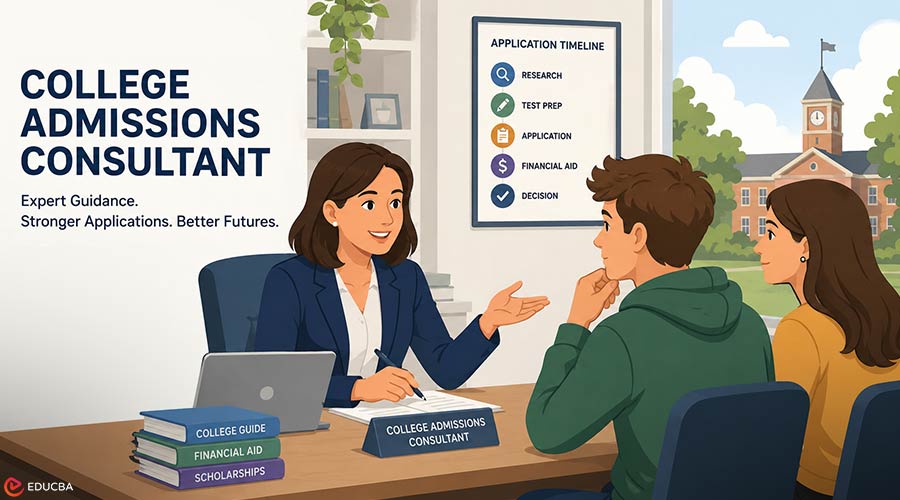
Getting into a competitive college has become measurably harder over the past decade. Acceptance rates keep dropping at selective schools, and the college admissions process now involves far more moving parts than it did even a few years ago. Essays, demonstrated interest, test strategy, financial planning, and activities framing all factor into a decision. For students and families navigating this process without expert guidance, the journey can be overwhelming. This is where a college admissions consultant can make a significant difference.
What a College Admissions Consultant Actually Does?
A college admissions consultant is a private professional who guides high school students through the college application process from beginning to end. The role differs from a school-based counselor in one foundational way: consultants work with a small client roster and focus exclusively on admissions strategy. There are no competing priorities, no oversized caseloads, and no divided attention between one student and hundreds of others.
The work starts with a thorough assessment of the student: academic record, test scores, extracurricular history, financial situation, and realistic school targets. From there, the consultant develops a strategy covering school selection, application positioning, and submission timing.
What Does a Consultant Offer?
Every full-service engagement is built around the student’s specific goals, but the structure is largely consistent across clients. The objective is not just to get a student admitted. It is getting them into a school that fits their academic direction, their financial situation, and where they actually want to go. What the consultant offers at every stage is careful research and sound judgment before any decision gets locked in.
CollegeCommit gives consultants and families access to school-level data, commitment trends, and recruiting timelines that would otherwise take hours to compile, making it easier to build a realistic list from the start.
The core services covered in a full engagement include:
- College lists: Building a balanced range of reach, match, and safety schools based on academics, interests, and financial fit
- Essay coaching: Guiding the personal statement through multiple drafts and reviewing all supplemental essays for each school on the list
- Activities list: Helping students frame their extracurricular involvement clearly and compellingly for the admissions committee
- Test strategy: Advising on retake timing and whether applying test-optional makes sense at specific schools
- Financial aid: Reviewing net cost projections, comparing award letters, and identifying scholarship opportunities worth pursuing
Admission counseling also covers the operational layer: tracking deadlines for every school, managing the Common App, coordinating recommendation requests, and ensuring nothing falls through the cracks. For students in the most demanding academic year of their lives, that logistical support matters as much as the strategy behind it.
College Admissions Consultant vs. High School Counselor
The comparison between private consultants and high school counselors comes up constantly, and the difference is largely structural rather than a question of effort or intent.
High School Counselor
Manage an average caseload of 300 to 500 students and split their time among academic planning, personal counseling, and college planning. They write recommendation letters, send transcripts, and provide general application guidance – but the number of students they serve limits how much individual attention any one student receives. The National Association for College Admission Counseling estimates that the average public school student gets roughly 44 minutes of admissions advising per year from their school counselor.
Independent Educational Consultants
Typically work with 20-40 students per year, focusing entirely on college admissions. They review and revise every essay draft, develop a customized strategy for each student’s profile, and remain available throughout the entire application cycle. Full-service engagements typically range from $1,500 to $10,000 or more, but so is the difference in what each arrangement can realistically deliver. Neither replaces the other.
High school counselors are essential for transcripts, letters of recommendation, and four-year course sequencing. Private consultants fill the gap where specificity is needed – school research, essay strategy, and financial decisions that school counselors rarely have the capacity to address with the depth most families need.
When to Start and What to Expect?
Admissions consultants work on a timeline that mirrors the student’s academic calendar. School research and initial list-building typically begin in the fall of junior year. Essay development typically begins in spring of junior year and continues through early fall of senior year, with most applications submitted between October and January. There is no single right time to start, but consistently starting earlier creates more options. Students who start working with a consultant in 9th or 10th grade have time to improve their grades.
They can choose extracurriculars with purpose. They can also build a clear profile before the process opens. Many also benefit from early input on AP course selection and standardized testing timelines. Students starting in junior year still get real value, just on a more compressed schedule. Even senior year engagements improve outcomes when the focus is on essays and final school selection. The most important thing is having professional input before consequential decisions are finalized.
What Does the College Application Process Look Like?
Each engagement starts with a discovery phase that helps students better understand their goals, strengths, and what they are looking for in a college experience. A skilled consultant asks the right questions and helps students articulate what matters to them, separate from what they assume admissions offices want to hear.
What separates applications that receive serious consideration rarely comes down to grades and test scores alone. It is how the student is presented across every component: the reasoning behind the school list, the consistency of the activities, the specificity of the essays. The consultant’s job is to ensure all those pieces support a coherent story.
A full-service engagement typically moves through these phases:
- Assessment: Reviewing academic records, test history, and extracurricular involvement to identify what the application needs
- School research: Building a final list of 10 to 15 schools across reach, match, and safety categories
- Essay development: Multiple feedback rounds on the personal statement and all school-specific writing
- Application review: Checking every section for accuracy, consistency, and completeness before submission
- Post-decision support: Comparing financial aid packages, evaluating waitlist positions, and advising on the final choice
The Value of Professional Guidance
Working with a college consultant reduces stress for both students and parents during one of the more demanding stretches in a family’s life. If you do not have the time or familiarity to manage the strategy yourself, we take full responsibility. That alone changes the experience for most families. The financial case is direct. A four-year degree at a private university averages over $234,000. Comprehensive college admissions coaching typically costs between $1,500 and $10,000, depending on the support level and coach’s experience.
If that guidance results in a stronger financial aid offer or admission to a school with better merit awards, the investment often covers itself before the first semester ends. No consultant can guarantee an outcome. Admissions decisions rest entirely with each college. A consultant strengthens the application, refines the strategy, and helps ensure critical details are not overlooked. In a process with this much at stake, accountability matters.
How to Choose the Right Consultant?
Not every consultant is the right fit for every student. The field ranges from experienced former admissions officers with long track records to newer practitioners with little evidence of results. Knowing what to look for before committing makes a meaningful difference. Professional affiliations are a reliable starting point for filtering. Consultants in the Independent Educational Consultants Association (IECA) or the National Association for College Admission Counseling (NACAC) follow ethical standards.
These standards protect students and families throughout the process. Membership is not a guarantee of quality, but it screens out a significant number of lower-quality operators. Ask directly about caseload. A consultant handling 25–30 students can typically provide more personalized attention than one managing 80–100 per cycle. Ask how many clients they serve annually, how often they communicate, and whether they can provide verifiable client results. Then speak with two or three candidates before deciding. The working relationship often lasts 1 to 3 years, and fit matters as much as credentials.
Final Thoughts
A college admissions consultant serves as a strategic advisor, coach, and guide throughout one of the most important educational decisions a student will make. From building a college list and refining essays to evaluating financial aid offers and making final enrollment decisions, their expertise can simplify a complex process. While hiring a college admissions consultant is not necessary for every student, families seeking personalized guidance, reduced stress, and a more structured admissions strategy often find the investment worthwhile. In an increasingly competitive admissions landscape, informed decision-making can make a meaningful difference.
Recommended Articles
We hope this guide on working with a college admissions consultant has helped you better understand the college application process. Check out these recommended articles for more insights and strategies to make informed college planning and admissions decisions.


