


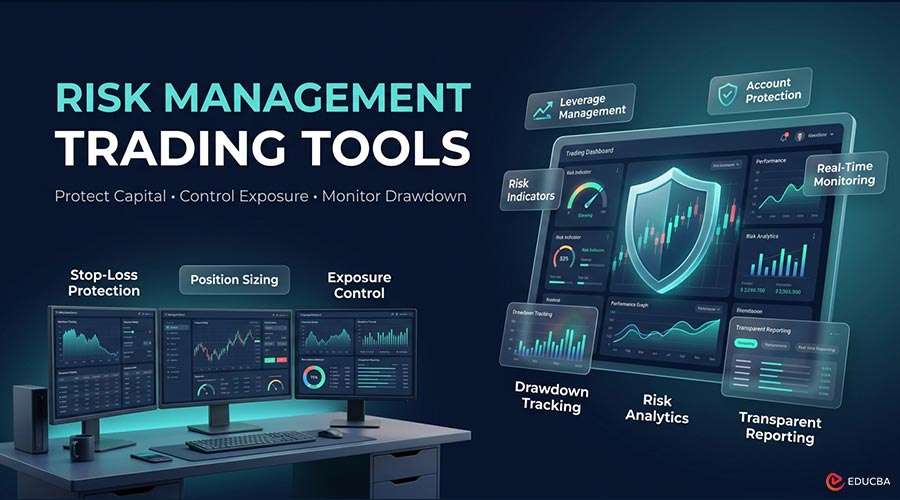
When most people pick a trading platform, they look at the obvious stuff. How fast does it execute? How many instruments can I trade? What does the chart look like? Those things matter, but they are not what keeps your account alive over the long run.
What actually protects you is the risk management trading tools built into the trading platform. These are the features working quietly in the background, stopping one bad trade from wiping out weeks of progress, and they are the part most traders overlook until it is too late.
So let us walk through the risk capabilities that genuinely matter, the ones worth checking before you commit to any platform or funded account.
Why Do Risk Controls Define a Trading Platform’s Quality?
Markets move fast. One sharp swing, one piece of unexpected news, and a position can turn against you in seconds. In those moments, the controls baked into your platform decide whether you take a small, planned loss or a painful one.
The presence of robust risk management tools often defines the true quality of a trading platform, beyond what is shown in marketing or surface-level features.
Trading Tools vs. Risk Tools
Here is a distinction worth making. Charting, order entry, and a clean interface are table stakes. Every decent platform has them. Risk tools are different. They are the features that preserve your capital when your judgment is clouded by stress or excitement.
A platform can look polished and still leave you exposed if its risk controls are weak.
What Do Good Risk Features Say About a Platform?
There is also a trust signal here. Platforms that surface your risk data clearly, in plain view, tend to operate openly in general. If a platform hides how close you are to a loss limit, ask yourself what else it might be keeping quiet.
Position and Exposure Controls That Protect Capital with Risk Management Trading Tools
The first layer of protection is control over how much you have at stake in any single trade, and this is where risk-management trading tools play a critical role.
Stop-loss and Automated Exits
A reliable stop-loss is non-negotiable. It is the line you draw before emotion takes over. The key word is reliability, because a stop that slips badly or fails to trigger is almost worse than none at all. Take-profit and automated exit orders matter for the same reason. They let you set your plan in advance and stick to it.
Position Sizing and Exposure Limits
Good platforms let you cap your exposure so that no single position can do outsized damage. Position sizing sounds boring, but it is one of the simplest ways to stay in the game. One trade should never have the power to end your week.
Leverage with Real Context
Leverage is an important concept because it enables traders to control larger market positions without committing significant upfront capital. While this can increase potential returns, it also magnifies losses when trades move in the wrong direction. A trustworthy platform makes this clear, rather than dressing up leverage as an easy win. If a platform only talks about the upside, that tells you something.
Drawdown Monitoring and Loss-Limit Clarity in Risk Management Trading Tools
Drawdown is simply the maximum loss you are allowed before consequences kick in. For anyone trading an evaluation or a funded account, this is the number that matters most, and risk management trading tools make it visible and manageable.
Real-Time Drawdown Tracking
You should never have to guess how close you are to a limit. A solid platform shows your drawdown live, in real time, so you can adjust before you breach it rather than finding out after the fact. Picture a trader who is up on the day, only to watch the market pull back. With a trailing limit that tracks their highest unrealized profit, the account can breach and close even though the day still looks green. That surprise is exactly what real-time visibility is there to prevent.
Rules you can Actually Understand
Loss limits should be stated plainly. Vague or buried rules are a genuine pain point, leading to accidental breaches that feel deeply unfair. This is one area where firms in futures prop trading often differ significantly. The way trailing limits and daily loss thresholds are structured can vary from one firm to the next. Hola Prime, for example, publishes its trading rules openly so traders know the thresholds upfront, and that kind of clarity is what you want to look for. Either way, it pays to read the rules closely and pick a setup whose limits you fully understand before you place a single trade.
Trading Platform Risk Management Features for Transparency and Reporting
You cannot manage a risk you cannot see. That is why information access is part of risk management, even though it rarely gets filed under that label. It is also supported by modern risk management trading tools built into advanced platforms.
Fair Pricing and Clean Execution
Price transparency builds confidence. When a platform benchmarks its pricing and shows you clear fills, you stop wondering whether you are getting a fair deal. That doubt, the nagging sense that execution might be working against you, is its own kind of stress. Removing it lets you focus on actual trading decisions.
Reporting that Helps you Improve
Good reporting turns past trades into lessons. Detailed trade history, performance analytics, and risk summaries help you spot patterns in your own behavior. Maybe you always size up after a loss, or hold winners too long. The numbers show you what to fix, so you can fix it rather than repeat it. The same logic drives the reporting and risk features built into modern stock brokerage software, where clear data is treated as a core safeguard rather than a nice-to-have.
Support and the Human Side of Risk
Not all risks live in the software. Sometimes the biggest variable is what happens when something goes wrong, and you need help fast. Even here, risk management trading tools indirectly influence how well you are protected.
Support that Responds when it Counts
Slow support during a volatile moment is a risk in itself. If you cannot reach anyone while a position is moving against you, the quality of the platform’s code no longer matters. Fast, human help is part of staying protected.
Clear Rules and Compliance
Well-documented rules prevent honest mistakes. A platform with a clear compliance framework protects you from accidental violations and, over time, earns the kind of trust that keeps traders around. Clarity is not bureaucracy here. It is fair.
Frequently Asked Questions (FAQ’s)
Q1. What is the most important risk management feature in a trading platform?
Answer: A reliable stop-loss paired with real-time drawdown visibility tops the list. Together, they help you cap individual losses and stay aware of how close you are to your overall limit.
Q2. How does drawdown affect funded or evaluation accounts?
Answer: Drawdown is the threshold that can cause an account to be liquidated if you breach it. Because the stakes are high, live tracking of your drawdown is essential to help you adjust before crossing the line.
Q3. Is higher leverage always riskier?
Answer: In effect, yes. Leverage amplifies both gains and losses, so larger leverage means larger swings in your account. The key is using it with full awareness of the downside, not just the upside.
Q4. How can transparency reduce trading risk?
Answer: Clear pricing and honest reporting let you verify that execution is fair and learn from your own trade history. That visibility removes guesswork and supports better, calmer decisions.
Final Thoughts
Risk management is the real lens for judging a trading platform. Speed and instrument range are nice, but they mean little if a single bad day can end your account. The platforms worth your time are the ones that clearly show your drawdown, offer dependable controls, price things transparently, and respond when you need them. These are the core risk-management trading tools that distinguish reliable platforms from weak ones.
Choose with that in mind, and you set yourself up for steady, disciplined trading rather than a short, stressful sprint. Risk is an unavoidable part of trading. The key is to control it wisely so you can continue trading consistently in the future.
Recommended Articles
We hope this guide on trading platform risk management features helps you make more informed decisions and protect your trading capital. Explore these recommended articles for additional insights and strategies to strengthen your trading performance and risk management approach.

