


What is Marketing Myopia?
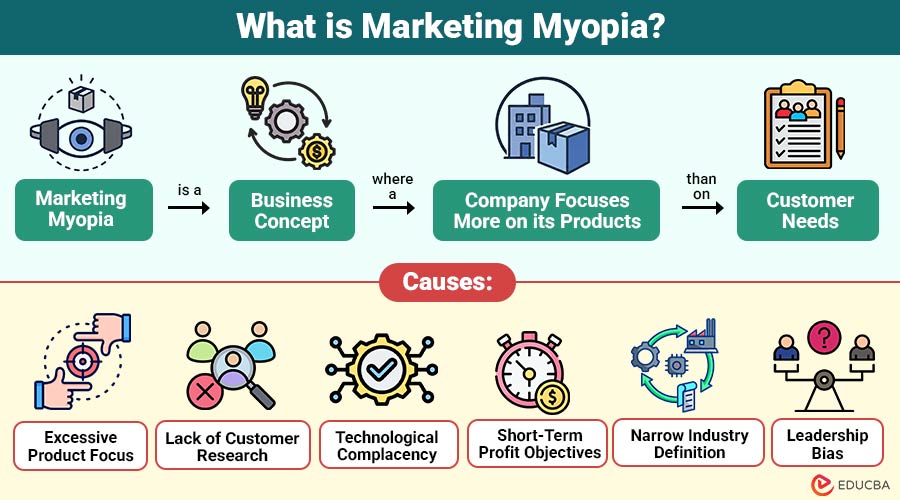
Marketing myopia is a business concept where a company focuses more on its products than on customer needs. This narrow approach can cause businesses to overlook market changes, technological advancements, and evolving consumer preferences, limiting innovation and growth.
For example, a film company that fails to adapt to digital photography may lose relevance as customer demands change.
Table of Contents:
- Meaning
- Working
- Characteristics
- Causes
- Examples
- Effects
- Difference
- How to Avoid Marketing Myopia?
- Advantages
- Challenges
Key Takeaways:
- Marketing myopia occurs when companies prioritize products over evolving customer needs and expectations.
- Ignoring market trends and innovation can reduce competitiveness, relevance, and long-term growth.
- Customer-focused businesses adapt more quickly to change, improving satisfaction, loyalty, and profitability.
- Continuous research, innovation, and broad strategic thinking help prevent marketing myopia effectively.
How Does Marketing Myopia Work?
Marketing myopia occurs when organizations become excessively focused on their products, production processes, or short-term sales goals rather than customer needs and market developments.
The process typically follows these stages:
1. Product-Centered Thinking
The company focuses heavily on improving existing products, assuming customers will continue purchasing them without significant changes.
2. Ignoring Customer Needs
Management prioritizes product features and internal goals rather than understanding evolving customer preferences and expectations.
3. Overlooking Market Changes
Emerging technologies, changing consumer behavior, and competitive threats are underestimated, delaying necessary business adaptation efforts.
4. Declining Relevance
Products gradually become less appealing as customer needs evolve and alternative solutions better meet those needs.
5. Loss of Market Share
Competitors that understand customer needs more effectively attract customers, reducing the company’s market position.
Characteristics of Marketing Myopia
The following characteristics help identify when a business is experiencing marketing myopia and focusing more on products than customer needs.
1. Product-Oriented Approach
Companies prioritize product development over understanding customer needs, preferences, and overall experiences.
2. Short-Term Focus
Businesses emphasize immediate sales and profits instead of building long-term customer relationships.
3. Resistance to Change
Organizations hesitate to adopt new technologies, innovations, or business models despite changing market conditions.
4. Limited Market Perspective
Managers define industries narrowly, overlooking broader opportunities and emerging customer demands.
5. Poor Customer Understanding
Insufficient customer research results in offerings misaligned with evolving consumer expectations.
6. Overconfidence in Existing Success
Past achievements create complacency, reducing motivation to innovate and adapt continuously.
Causes of Marketing Myopia
Several factors contribute to marketing myopia:
1. Excessive Product Focus
Companies become overly attached to products, assuming quality alone ensures continued customer demand and success.
2. Lack of Customer Research
Insufficient customer feedback prevents businesses from recognizing changing preferences, expectations, and emerging market needs.
3. Technological Complacency
Organizations underestimate disruptive innovations, delaying adaptation and reducing competitiveness in rapidly evolving markets.
4. Short-Term Profit Objectives
Pressure for immediate financial results discourages investments supporting long-term growth and customer satisfaction.
5. Narrow Industry Definition
Companies define themselves by the products they sell rather than by the customer needs they fulfill and the value they deliver.
6. Leadership Bias
Management relies heavily on past experiences, resisting change despite shifting market realities and trends.
Examples of Marketing Myopia
The following examples illustrate how businesses can lose market relevance when they focus too narrowly on existing products or business models instead of evolving to meet customer needs.
1. Mobile Phone Industry
A mobile phone manufacturer may concentrate on improving traditional phone designs while ignoring consumer demand for smartphones with advanced applications and internet connectivity.
2. Retail
A retailer may focus solely on in-store shopping experiences, even as customers increasingly prefer online and mobile purchasing options.
3. Taxi Service
A traditional taxi company may continue to rely solely on phone bookings, while customers prefer app-based ride-hailing services.
Effects of Marketing Myopia
Marketing myopia can negatively affect organizations in several ways:
1. Declining Revenue
Products become less relevant as customer preferences change, leading to reduced sales and revenue growth.
2. Loss of Competitive Advantage
Innovative competitors seize market opportunities, strengthening their positions while diminishing the company’s competitive standing significantly.
3. Reduced Customer Satisfaction
Failure to address evolving customer needs decreases satisfaction, loyalty, retention, and overall brand perception.
4. Missed Growth Opportunities
Companies overlook emerging markets, technologies, and trends that could generate future business expansion opportunities.
5. Brand Weakening
Brands that fail to evolve gradually lose relevance, credibility, customer trust, and market influence.
6. Business Failure
Persistent marketing myopia can undermine adaptability, threatening profitability, sustainability, and long-term organizational survival.
Difference Between Marketing Myopia and Market Orientation
The table below highlights the key difference between marketing myopia and market orientation:
| Basis | Marketing Myopia | Market Orientation |
| Focus | Product-centered | Customer-centered |
| Goal | Sell existing products | Satisfy customer needs |
| Innovation | Often limited | Encouraged |
| Market Research | Minimal emphasis | Continuous emphasis |
| Strategic View | Narrow | Broad |
| Customer Relationships | Secondary | Primary |
| Adaptability | Lower | Higher |
| Long-Term Success | Less sustainable | More sustainable |
How to Avoid Marketing Myopia?
Businesses can avoid marketing myopia by maintaining a strong customer focus, staying responsive to market changes, and continuously adapting their strategies to meet consumer needs.
1. Focus on Customer Needs
Understand why customers buy products and what problems they are trying to solve.
Example:
Customers do not buy drill because they want a drill; they buy it because they need a hole.
2. Conduct Regular Market Research
Gather feedback through surveys, interviews, social media monitoring, and customer analytics.
Benefits include:
- Identifying emerging trends
- Understanding customer pain points
- Detecting changing preferences early
3. Embrace Innovation
Organizations should encourage experimentation and remain open to new technologies and business models. Innovation helps companies stay relevant in rapidly changing markets.
4. Define the Business Broadly
Instead of focusing on products, focus on customer needs.
5. Monitor Competitors and Industry Trends
Businesses should regularly analyze the following:
- Competitor strategies
- Emerging technologies
- Regulatory changes
- Consumer behavior shifts
This proactive approach reduces strategic blind spots.
6. Build a Customer-Centric Culture
Every department should prioritize customer satisfaction and long-term value creation. A customer-centric culture encourages continuous improvement and stronger customer relationships.
Advantages of Avoiding Marketing Myopia
Organizations that avoid marketing myopia enjoy several advantages:
1. Better Customer Satisfaction
Products and services consistently align with customer expectations, improving overall satisfaction and experience.
2. Increased Innovation
Businesses actively explore new ideas, technologies, and opportunities to maintain market relevance.
3. Stronger Competitive Position
Companies adapt quickly to market changes, strengthening competitiveness and sustaining industry leadership.
4. Sustainable Growth
Customer-focused organizations build lasting value, supporting steady expansion and long-term business success.
5. Improved Brand Loyalty
Customers remain loyal when businesses consistently understand, address, and fulfill evolving needs.
Challenges in Avoiding Marketing Myopia
Despite its importance, avoiding marketing myopia can be difficult.
1. Rapid Market Changes
Consumer preferences evolve quickly, making it difficult for businesses to adapt and remain relevant.
2. Organizational Resistance
Employees and leaders often resist change, especially when existing business models appear highly successful.
3. Resource Constraints
Continuous market research and innovation require significant investments of time, money, and expertise.
4. Balancing Short-Term and Long-Term Goals
Businesses must sustain current profitability while investing strategically for future growth opportunities.
5. Information Overload
Companies face vast market data, making important trends difficult to identify and prioritize.
Final Thoughts
Marketing myopia occurs when businesses focus too heavily on products instead of evolving to meet customer needs. Organizations that prioritize customer insights, innovation, and market awareness are better positioned for long-term success. By maintaining a broad strategic perspective and adapting to change, companies can remain competitive, relevant, profitable, and sustainable over time.
Frequently Asked Questions (FAQs)
Q1. Why is marketing myopia harmful?
Answer: It can cause businesses to lose customers, miss innovations, and fall behind competitors.
Q2. How can companies avoid marketing myopia?
Answer: Companies can avoid it by focusing on customer needs, conducting regular market research, embracing innovation, and maintaining a broad strategic perspective.
Q3. Is marketing myopia still relevant today?
Answer: Yes. In rapidly changing industries, companies that fail to adapt to customer expectations and technological advancements remain vulnerable to marketing myopia.
Q4. What industries are most vulnerable to marketing myopia?
Answer: Industries experiencing rapid technological change, such as technology, media, retail, transportation, and telecommunications, are particularly vulnerable.
Recommended Articles
We hope that this EDUCBA information on “Marketing Myopia” was beneficial to you. You can view EDUCBA’s recommended articles for more information.

