


What is a Voidable Contract?
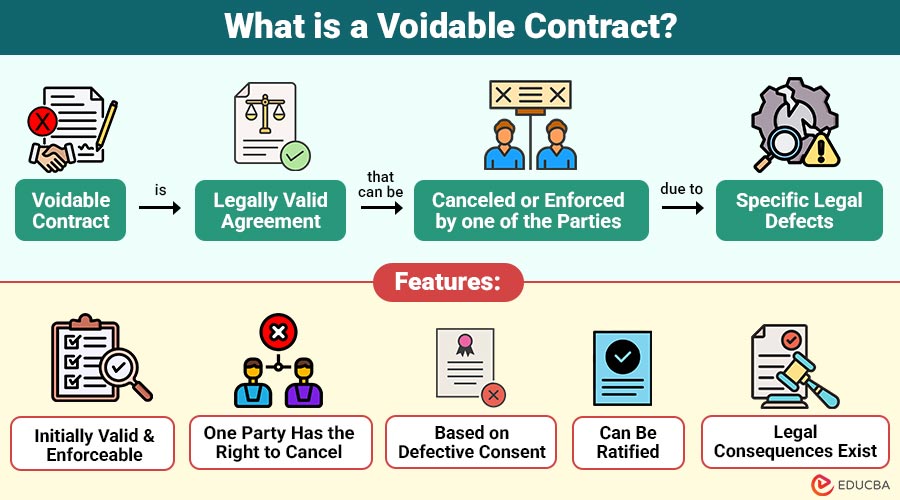
A Voidable contract is legally valid agreement that can be canceled or enforced by one of the parties due to specific legal defects. Although the contract is initially enforceable, one party has the legal right to reject, rescind, or affirm the agreement if certain circumstances, such as misrepresentation, fraud, coercion, undue influence, or lack of capacity, affected consent during its formation.
Voidable contracts are common in contract law and help protect individuals who may have entered into agreements without full knowledge, free will, or legal competence.
Table of Contents:
- Meaning
- Features
- Working
- Causes
- Examples
- Difference
- Advantages
- Disadvantages
- How to Avoid Voidable Contracts?
Key Takeaways:
- A voidable contract is legally valid, but it can be canceled by one party under specific circumstances.
- The affected party has the legal option to either rescind the contract or ratify and continue it.
- The agreement remains legally binding until the eligible party chooses to void it.
- Voidable contracts differ from void contracts because they remain enforceable until canceled.
Features of a Voidable Contract
The following features distinguish a voidable contract from other types of agreements:
1. Initially Valid and Enforceable
A voidable contract remains legally binding and enforceable until the affected party rescinds.
2. One Party Has the Right to Cancel
Only the disadvantaged party may legally choose to cancel the contract.
3. Based on Defective Consent
The agreement results from consent obtained through fraud, coercion, misrepresentation, or mistake.
4. Can Be Ratified
The affected party may confirm and continue the contract despite known defects.
5. Legal Consequences Exist
Contractual obligations remain enforceable until the affected party formally voids the agreement.
How Does a Voidable Contract Work?
The process typically follows these steps:
Step 1: Formation of the Contract
Two parties enter into a contract that appears legally valid.
Step 2: Discovery of a Legal Defect
One party discovers that the agreement was influenced by fraud, coercion, misrepresentation, undue influence, or incapacity.
Step 3: Decision by the Affected Party
The affected party may:
- Continue the contract (ratification)
- Cancel the contract (rescission)
Step 4: Legal Resolution
If disputes arise, courts may determine whether the contract should be enforced or rescinded based on the circumstances.
Causes of a Voidable Contract
Several causes can make a contract voidable.
1. Fraud
When one party purposefully gives false information to trick another into signing a contract, this is known as fraud.
2. Misrepresentation
Misrepresentation occurs when inaccurate statements influence another party’s decision to enter a contract without deception.
3. Coercion or Duress
Coercion or duress occurs when threats, pressure, or force compel someone to enter a contract involuntarily.
4. Undue Influence
Undue influence occurs when a person exploits authority or trust to improperly affect another’s contractual decision.
5. Lack of Capacity
Lack of capacity exists when a person cannot fully understand or legally consent to contractual obligations.
6. Mistake
A mistake occurs when parties hold incorrect beliefs about essential facts affecting the contract’s validity.
Examples of Voidable Contracts
The following examples illustrate common situations in which a contract may be considered voidable and legally canceled by the affected party.
1. Contract Signed by a Minor
A 17-year-old purchases an expensive motorcycle through a financing agreement. Since the buyer is a minor, they may have the legal right to cancel the contract.
2. Fraudulent Business Sale
A business owner falsely reports company revenues to attract buyers. After discovering the deception, the buyer may rescind the purchase agreement.
3. Contract Under Duress
An employer’s threats compel an employee to sign a non-compete agreement. Because of compulsion, the agreement can be voidable.
4. Misrepresentation in Insurance
An insurance company provides misleading information regarding policy coverage. The policyholder may seek rescission if the misinformation influenced their decision.
Difference Between Voidable Contract and Void Contract
The table below highlights the key differences between a voidable contract and a void contract:
| Basis | Voidable Contract | Void Contract |
| Legal Status | Valid until rescinded | Invalid from the beginning |
| Enforceability | Enforceable unless canceled | Not enforceable |
| Rights of Parties | One party can cancel | Neither party can enforce |
| Formation | Created with a legal defect affecting consent | Created without legal validity |
| Ratification | Can be ratified | Cannot be ratified |
| Examples | Fraud, coercion, misrepresentation | Illegal agreements, impossible contracts |
Advantages of Voidable Contracts
The following advantages demonstrate how voidable contracts help protect parties, promote fairness, and provide legal remedies when consent is compromised.
1. Protects Vulnerable Parties
Voidable contracts protect individuals from exploitation, deception, coercion, and unfair influence during the formation of the agreement.
2. Promotes Fairness
These contracts ensure agreements reflect genuine consent, encouraging equitable and legally sound contractual relationships.
3. Offers Flexibility
Affected parties may choose to continue the contract or terminate it based on their interests and circumstances.
4. Discourages Fraudulent Conduct
The risk of rescission discourages dishonest practices and promotes ethical behavior during negotiations.
5. Supports Legal Remedies
Courts can grant remedies that help restore parties to their original contractual positions.
Disadvantages of Voidable Contracts
The following disadvantages highlight the challenges and risks associated with voidable contracts for both individuals and businesses.
1. Legal Uncertainty
The contract’s enforceability remains uncertain until the affected party decides whether to affirm or rescind.
2. Potential Financial Losses
Parties may suffer financial losses when contracts are canceled after resources have been committed.
3. Risk of Litigation
Disagreements over contract validity can lead to expensive, time-consuming legal disputes and proceedings.
4. Delayed Transactions
Unresolved legal concerns may delay the performance, execution, and completion of contractual obligations.
5. Administrative Complexity
Organizations often require additional procedures and documentation to verify consent and contractual validity.
How to Avoid Voidable Contracts?
Businesses and individuals can reduce risk of voidable contracts by following these practices:
1. Verify Capacity
Confirm all parties are legally competent and capable of understanding contractual rights and obligations.
2. Provide Accurate Information
Ensure all statements, disclosures, and representations are truthful, complete, and free from misleading information.
3. Obtain Free and Voluntary Consent
Make certain every party agrees willingly without coercion, pressure, threats, or undue influence.
4. Use Clear Contract Language
Draft contracts using simple, precise language that all parties can easily understand.
5. Conduct Due Diligence
Thoroughly verify relevant facts, documents, and claims before entering any contractual agreement.
6. Seek Legal Advice
Consult qualified legal professionals to identify risks and ensure contract compliance requirements.
Final Thoughts
A voidable contract serves as an important legal safeguard by protecting parties whose consent was compromised by fraud, coercion, misrepresentation, mistake, or incapacity. While initially valid and enforceable, it provides flexibility to either affirm or rescind the agreement. Understanding voidable contracts helps individuals and businesses promote fairness, reduce legal risks, and ensure informed contractual decisions.
Frequently Asked Questions (FAQs)
Q1. Can a voidable contract become fully valid?
Answer: Yes. If the affected party chooses to affirm or ratify the agreement, it becomes fully enforceable.
Q2. What happens when a voidable contract is rescinded?
Answer: When a voidable contract is rescinded, the parties are generally restored to their original positions, and any exchanged benefits may need to be returned.
Q3. How long does a party have to void a voidable contract?
Answer: Time limit varies depending on the applicable law and jurisdiction. The affected party should act promptly after discovering the defect.
Recommended Articles
We hope that this EDUCBA information on “Voidable Contract” was beneficial to you. You can view EDUCBA’s recommended articles for more information.


