


What is Novation?
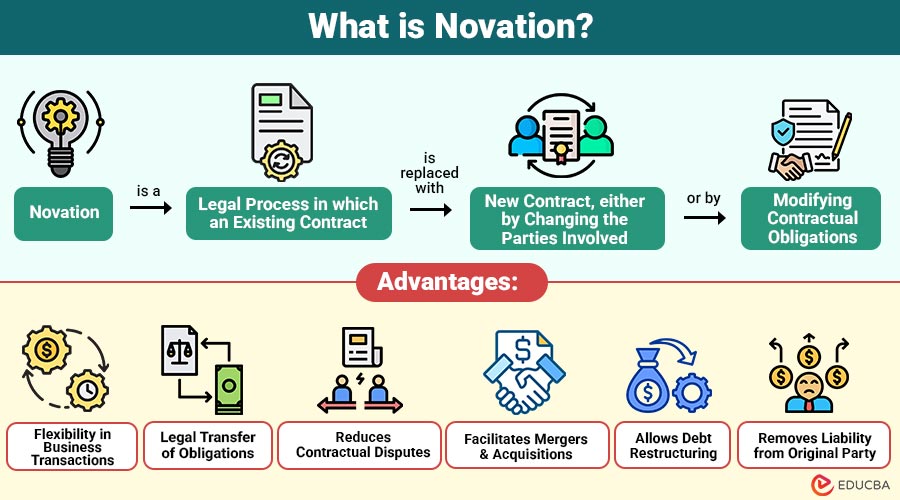
Novation is a legal process in which an existing contract is replaced with a new contract, either by changing the parties involved or by modifying the contractual obligations. In novation, the original agreement is extinguished, and a new legally binding agreement takes its place.
This concept is commonly used in business transactions, banking, real estate, mergers, acquisitions, and debt restructuring. Novation ensures that all parties agree to the substitution and that the rights and obligations under the old contract are transferred to the new agreement.
For example, if Company A transfers its contractual duties to Company B with the other party’s consent, the original contract between Company A and the other party terminates, and a new contract between Company B and the other party is created.
Table of Contents:
- Meaning
- Key Features
- Types
- Elements
- Process
- Difference
- Advantages
- Limitations
- Real-World Examples
- Best Practices
Key Takeaways:
- Novation replaces existing contracts or parties through mutual consent, creating entirely new legally binding agreements.
- Original contractual obligations terminate completely after novation, transferring responsibilities and liabilities to newly involved parties.
- It supports business restructuring, debt modifications, mergers, acquisitions, and efficient management of contractual relationships.
- Successful novation requires valid contracts, written consent, legal compliance, clear obligations, and proper documentation maintenance.
Key Features of Novation
Below are the major features that define how novation legally replaces contracts and transfers obligations.
1. Mutual Consent
All parties involved must willingly agree before novation becomes legally valid and enforceable under contract law.
2. Replacement of Contract or Party
It replaces an existing contract entirely or substitutes one contractual party with another legally recognized participant.
3. Extinguishment of Old Contract
The original agreement automatically terminates once the novation process is completed and accepted by all parties.
4. Creation of a New Contract
A completely new legally binding agreement is formed after successfully replacing the previous contractual rights and obligations.
5. Transfer of Rights and Obligations
It legally transfers contractual benefits, duties, liabilities, and responsibilities from one party to another.
6. Legal Validity
The newly formed contract must satisfy essential legal conditions to remain enforceable and legally recognized.
Types of Novation
Novation can generally be divided into three main types:
1. Novation by Change of Parties
One contractual party is replaced by another, transferring rights and obligations with consent from all involved parties.
Common Uses:
- Business acquisitions
- Outsourcing agreements
- Construction contracts
- Loan transfers
2. Novation by Change of Obligation
Existing parties remain unchanged, but contractual duties and responsibilities are replaced with newly agreed obligations and terms.
Common Uses:
- Debt restructuring
- Loan modifications
- Settlement agreements
3. Novation by Substitution of Contract
The original agreement is fully terminated and replaced with an entirely new, legally binding contract between the parties.
Common Uses:
- Partnership restructuring
- Commercial agreements
- Long-term service contracts
Elements Required for Novation
Below are the essential legal elements required for an agreement to become valid and enforceable.
1. Existing Valid Contract
A legally enforceable original contract must exist before the parties can successfully proceed with the novation process.
2. Agreement Among Parties
All parties involved must clearly and willingly consent to the novation of the existing contractual relationship.
3. Extinguishment of Original Contract
The previous agreement must be completely terminated before the newly formed contract becomes legally effective and binding.
4. New Valid Contract
A fresh, legally enforceable agreement must replace the original contract after successful completion of the novation process.
5. Consideration
Many legal systems require valuable consideration or exchange between parties for novation agreements to remain enforceable.
Process of Novation
The process usually involves several important steps.
Step 1: Review the Existing Contract
Parties carefully examine the original agreement to verify whether novation terms and replacement rights are permitted under applicable law.
Step 2: Identify the Need for Novation
The parties determine valid reasons requiring replacement of contractual obligations, responsibilities, terms, or involved contracting parties
Step 3: Obtain Consent
All involved parties must provide clear written consent before the novation agreement becomes legally enforceable and effective.
Step 4: Draft the Novation Agreement
A formal legal document is prepared that clearly and accurately outlines revised contractual terms, obligations, rights, and responsibilities.
Step 5: Sign the Agreement
All parties to the novation agree to the new contractual terms and obligations.
Step 6: Discharge the Old Contract
Step 7: Enforce the New Contract
The newly created contract becomes legally binding, enforceable, and effective upon successful completion of the novation process.
Difference Between Novation and Assignment
The table below highlights the major differences between novation and assignment in contract law.
| Basis | Novation | Assignment |
| Meaning | Replacement of the contract or party | Transfer of contractual rights |
| Consent Required | Consent of all parties required | Usually, no consent is needed |
| Transfer of Obligations | Rights and obligations transferred | Mostly only rights transferred |
| Original Contract | Extinguished | Continues to exist |
| New Contract | Created | Not necessarily created |
| Liability | The old party was released from liability | An old party may remain liable |
Advantages of Novation
Below are the major advantages:
1. Flexibility in Business Transactions
It enables businesses to effectively modify contracts in response to changing operational, financial, or strategic organizational requirements.
2. Legal Transfer of Obligations
It legally transfers contractual duties, responsibilities, and liabilities from one party to another with proper consent.
3. Reduces Contractual Disputes
Clearly defined agreements significantly minimize misunderstandings, confusion, and potential legal conflicts between contracting parties.
4. Facilitates Mergers and Acquisitions
It efficiently simplifies contract transfers during mergers, acquisitions, and corporate restructuring within business organizations.
5. Allows Debt Restructuring
Borrowers and lenders can successfully revise repayment obligations and financial terms through mutually agreed novation arrangements.
6. Removes Liability from Original Party
Upon completion of novation, the parties generally release the original contracting party from all future contractual liabilities and obligations.
Limitations of Novation
1. Requires Mutual Consent
Obtaining approval from all involved parties can be challenging, especially when interests and objectives differ significantly.
2. Legal Complexity
Preparing novation agreements often requires legal expertise to ensure contractual terms remain valid and enforceable properly.
3. Time-Consuming Process
Negotiations, approvals, and documentation procedures may consume significant time before novation becomes legally effective and binding.
4. Possible Financial Costs
Legal fees, administrative charges, and documentation expenses may substantially increase overall costs during the novation process.
5. Risk of Disputes
Parties may disagree regarding revised contractual terms, obligations, responsibilities, or conditions within the newly formed agreement.
Real-World Examples
Below are some practical examples showing how novation is used across different industries and business transactions.
1. Business Acquisition
Company X acquires Company Y. Company Y transfers its existing supplier contracts to Company X through novation agreements.
2. Loan Transfer
A bank transfers a borrower’s loan obligations to another financial institution with the borrower’s consent.
3. Construction Industry
A contractor exits a project, and another contractor takes over responsibilities through novation.
4. Financial Derivatives Market
In derivative trading, clearinghouses often use novation to become the counterparty to both sides of a trade.
Best Practices for Successful Novation
Below are the best practices to ensure a smooth, legally valid, and effective process.
1. Review Contract Terms Carefully
The parties must carefully examine the original contract clauses to confirm whether they permit novation under the existing contractual terms and conditions.
2. Obtain Written Consent
Always secure clear written approval from all involved parties before implementing any novation agreement legally and officially.
3. Use Professional Legal Assistance
Legal professionals help draft accurate novation agreements while ensuring proper compliance with applicable contractual and regulatory requirements.
4. Clearly Define Obligations
The new agreement should clearly specify contractual rights, duties, responsibilities, liabilities, and performance expectations for all parties.
5. Maintain Proper Documentation
Safely preserve all novation agreements, approvals, and supporting documents for future legal reference and compliance verification purposes.
Final Thoughts
Novation is a legal process that replaces the parties to a contract or the contract itself by mutual agreement. It ensures smooth transfer of rights and obligations while maintaining legal continuity. Widely used in business restructuring and financial transactions, novation provides flexibility, reduces disputes, and supports efficient contract management when properly documented and compliant.
Frequently Asked Questions (FAQs)
Q1. Is consent necessary for novation?
Answer: Yes, consent from all parties involved is essential for novation.
Q2. What happens to the old contract after novation?
Answer: The original contract is terminated and replaced by a new agreement.
Q3. Where is novation commonly used?
Answer: Novation is commonly used in banking, construction, mergers and acquisitions, insurance, and financial markets.
Q4. Can novation change contractual obligations?
Answer: Yes, novation can replace old obligations with new obligations.
Recommended Articles
We hope that this EDUCBA information on “Novation” was beneficial to you. You can view EDUCBA’s recommended articles for more information.


