


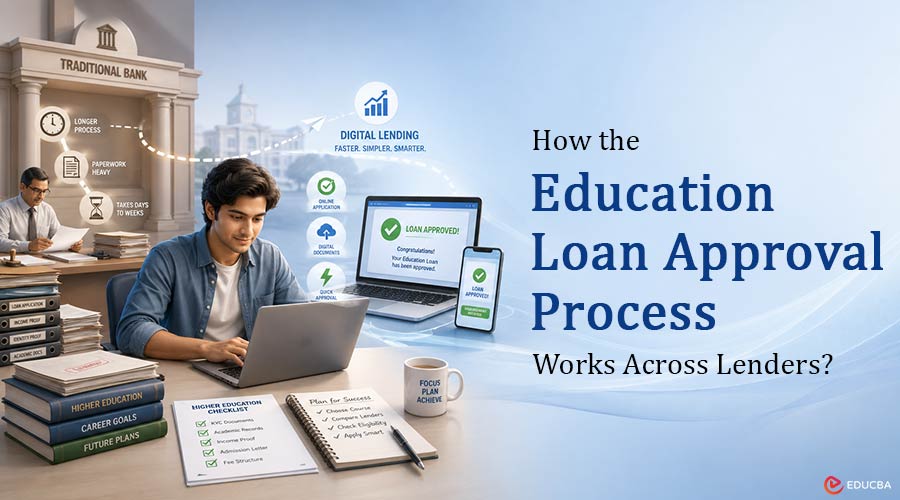
If you have ever applied for an education loan from two different banks in the same week, you already know the truth: the education loan approval process is wildly inconsistent. One lender wants a stack of papers thick enough to double as a doorstop, while another lets you upload everything from your phone and sends approval in 48 hours. Understanding why these differences exist and how to leverage them to your advantage can save you weeks of frustration and possibly thousands of dollars.
The Documentation Gap Is Real in Education Loans
Banks, NBFCs (non-banking financial companies), and fintech lenders all operate under different internal risk frameworks. That’s the core reason their paperwork requirements diverge so sharply in the education loan approval process.
A traditional public sector bank like SBI or Bank of Baroda typically requires identity proof, address proof, academic records, admission letters, income documents for the co-applicant or guarantor, collateral papers (for larger loans), and often a few extras, such as passport-size photos or affidavits. When you start gathering documents for education loan applications at these institutions, plan for a folder, not an envelope. Some branches still insist on notarized copies or original documents for physical verification, which adds another layer of delay.
Private-sector banks like HDFC or ICICI tend to ask for a similar core set of documents, but have digitized more of the intake process. You might still need income tax returns, salary slips, and property documents for collateral-backed loans, but the submission process is faster because much of it happens online.
Fintech lenders and NBFC platforms such as Credila, Avanse, and Prodigy Finance have further trimmed requirements in many cases. Some accept digital copies of admit letters and transcripts uploaded through a portal, skip the guarantor paperwork for certain loan sizes, and use algorithms to assess creditworthiness with fewer manual inputs.
Why Approval Timelines Vary So Much in the Education Loan Approval Process?
The gap in approval speed between lenders is sometimes measured in days, sometimes in weeks. Public sector banks are notorious for longer timelines. A loan from SBI’s education loan division can take 2 to 4 weeks to process, depending on the branch, loan amount, and whether collateral is required. Part of this is bureaucratic. Loan officers at nationalized banks process high volumes with limited staff, and every file passes through multiple levels of review.
Private banks generally move faster. HDFC Credila, dedicated exclusively to education lending, often processes applications within 7 to 10 business days. Their staff specializes in student loans, so they aren’t switching between home loan files and business loan files all day. That focus speeds up the education loan approval process.
Fintech lenders promise the fastest turnarounds, sometimes claiming approval within 24 to 72 hours. In practice, the initial conditional approval might come quickly, but full disbursal still depends on document verification and compliance checks. So take those marketing claims with a grain of salt.
Collateral Changes Everything in Education Loans
If your loan amount crosses a certain threshold, typically around 7.5 lakh rupees for domestic programs and higher for international study, most traditional lenders require collateral. This single requirement adds enormous complexity to the education loan approval process. Property valuation reports, legal opinions on title, encumbrance certificates, and registration documents all come into play. Each of these has its own verification timeline, and delays in any one of them can push your approval back by weeks.
Some of the best education loan providers have found ways to reduce this friction. Certain NBFCs offer unsecured loans of up to 40 lakh rupees, or even 75 lakh rupees, to students admitted to top-ranked universities. They manage this risk by applying higher interest rates and carefully choosing the universities and courses they are willing to finance.
What You Can Actually Control in the Education Loan Approval Process?
You can’t change a bank’s internal review system, but you can absolutely influence how smooth your education loan approval process becomes.
Getting all your paperwork organized before you apply, rather than gathering it piecemeal after submission, eliminates the most common source of delay. Banks don’t reject applications outright for missing documents. They pause your file until all required information is provided.
Apply to more than one lender simultaneously. There’s no rule against it, and it gives you leverage. If one lender approves you faster, you can use that timeline to push another lender for better terms.
Also, pay attention to each lender’s specific requirements before you apply. Small differences in documentation expectations can create major delays if ignored. A little research up front makes the entire education loan approval process much smoother and faster.
Final Thoughts
The education loan approval process varies significantly across lenders due to differences in documentation requirements, collateral rules, and internal verification systems. These variations directly affect how quickly a loan is approved and disbursed, making it important for applicants to understand each lender’s expectations before applying.
With proper preparation and comparison, borrowers can reduce delays and improve their chances of approval. Organizing documents in advance and applying to multiple lenders can help you navigate the process more efficiently and secure better loan terms.
Recommended Articles
We hope this guide to the education loan approval process helps you better understand how lenders differ in their documentation requirements and approval speeds. Explore these recommended articles for additional insights and strategies to make your education financing journey smoother and more efficient.


