


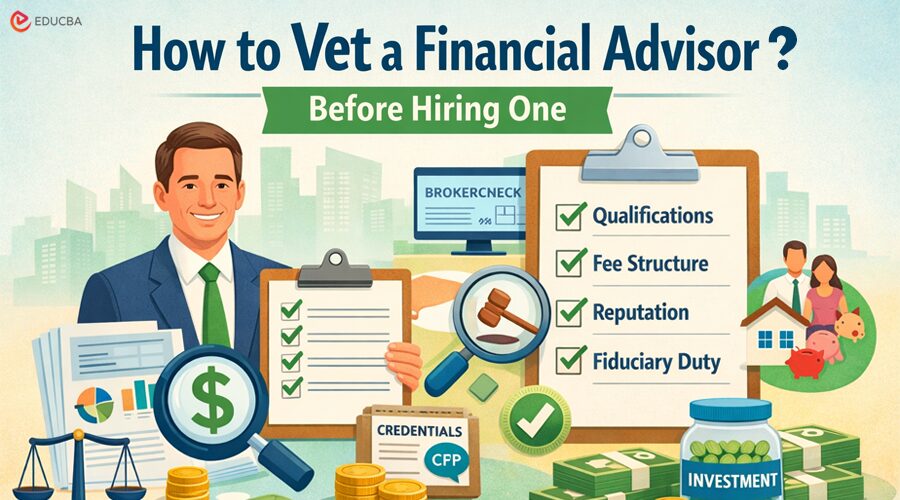
Choosing a financial advisor is not like choosing a new app or a gym membership. This is the person you are trusting with your retirement plans, your investments, your tax strategy, and often your family’s future. The stakes are high, which means your vetting process should be thoughtful and thorough.
If you are going to hand someone access to your financial life, you need to know who they are, how they operate, and whether their track record supports their promises. Taking time to vet a financial advisor helps you avoid costly mistakes and build a better financial future.
How to Vet a Financial Advisor?
Here is how to do it the right way:
1. Get Clear on Their Fee Structure
Before you look at credentials or performance, make sure you fully understand their compensation model.
This is critically important because how an advisor is paid shapes their incentives.
- Are they fee-only, meaning they charge a flat fee or a percentage of assets under management?
- Are they commission-based, meaning they earn money from selling financial products?
- Are they using a hybrid structure that blends the two?
None of these models is automatically wrong, but you need clarity so that you can make a wise decision when you vet a financial advisor based on all of the facts. Ask direct questions. For example, do they receive commissions for recommending certain investments or insurance products? Are there additional fees layered into the investments they manage?
Transparency is a strong early signal of integrity. If you feel like you are getting vague answers, that is a red flag and should prompt you to dive deeper and explore more.
2. Verify Credentials and Regulatory Status
Next, confirm their qualifications. Titles can be confusing, and not all designations carry the same weight when you vet a financial advisor. Look for recognized credentials such as CFP (Certified Financial Planner), CFA (Chartered Financial Analyst), or CPA (Certified Public Accountant) if they provide tax advice. Each designation requires extensive education, testing, and adherence to ethical standards – so you get a decent amount of peace of mind right away when someone has one or more of these credentials.
Then check regulatory databases. If they are registered as a broker, review their FINRA BrokerCheck profile. If they are an investment advisor representative, look them up through the SEC’s Investment Adviser Public Disclosure website.
3. Research Their Reputation
A few online searches can reveal more than you might expect when you vet a financial advisor. Look for news articles, regulatory filings, online reviews, and any public disputes.
Search for their full name along with keywords such as “complaint,” “lawsuit,” or “disciplinary action.” You can check industry directories and professional association listings to pull up information that might otherwise slip through a basic search. Sometimes you will find nothing, which can be reassuring. Other times, you will uncover disclosures that warrant closer examination.
However, things are not always as they first appear.
Take the example of Lance Belline, a long-time financial advisor who built a three-decade career with a clean record before suddenly facing a wave of customer complaints. At first glance, a review of his regulatory record showed multiple allegations and a termination from his firm. For someone casually researching him, that would look alarming.
However, a deeper look revealed a different story. An arbitration panel later determined that many of the complaints were false or encouraged by a former business partner who was attempting to take clients during a split. After reviewing testimony and documentation, the panel ordered the complaints expunged from his record, effectively clearing his name.
The lesson here is important when you vet a financial advisor: disclosures matter, but context matters as much. If you see something concerning, do not stop there. Ask the advisor directly for an explanation. A trustworthy advisor should openly explain any past issues.
4. Ask About Their Process
Credentials and reputation are important, but so is fit when you vet a financial advisor. You need to understand how the advisor actually works.
- Do they start with a comprehensive financial plan, or do they jump straight into investment recommendations?
- How do they approach risk?
- What does ongoing communication look like?
- How often will you meet?
Ask an advisor you are considering to describe their planning process step by step. A structured, repeatable process signals professionalism. On the other hand, vague promises like “we will take care of everything” are less reassuring.
You can ask how they work with other professionals, such as tax advisors or estate-planning attorneys. Financial planning rarely exists in isolation, so these connections are important when you vet a financial advisor. For a step-by-step breakdown of what to evaluate during this stage, review this guide on how to choose a financial advisor to ensure your investment strategy aligns with your long-term goals.
5. Evaluate Their Fiduciary Commitment
Not all advisors operate under the same legal standard. Some are fiduciaries at all times, meaning they are legally obligated to act in your best interest. Others operate under a suitability standard in certain roles, meaning they must recommend investments that are suitable, but not necessarily optimal.
Ask directly: “Are you a fiduciary at all times?” If you want to be extremely thorough, request that they confirm this in writing. An advisor who embraces fiduciary responsibility signals that they take their duty seriously. It does not guarantee perfection, but it does establish a higher ethical baseline.
6. Assess Communication and Compatibility
Financial planning is personal, which is why communication matters when you vet a financial advisor.
Pay attention to how the advisor communicates during your initial meetings. Do they listen more than they talk? Not only should they communicate well, but there should also be a certain level of comfort between you and the advisor.
In other words, compatibility matters. You will likely be working together for years, and it is tough to hand over the keys to your finances to someone you do not connect well with.
Final Thoughts
Vetting a financial advisor is not something you want to rush through. Taking the time to vet a financial advisor properly can protect your financial future and give you confidence in your long-term strategy.
This is a decision that will affect you and your family’s financial outcomes for decades. Be as thorough as possible, and only choose an advisor after carefully vetting them and considering all available information.
Recommended Articles
We hope this guide on how to vet a financial advisor helps you understand the key factors to consider before trusting someone with your finances. Explore the recommended articles below for insights on choosing financial professionals, investment planning strategies, and building long-term financial security.


