


Updated May 5, 2026
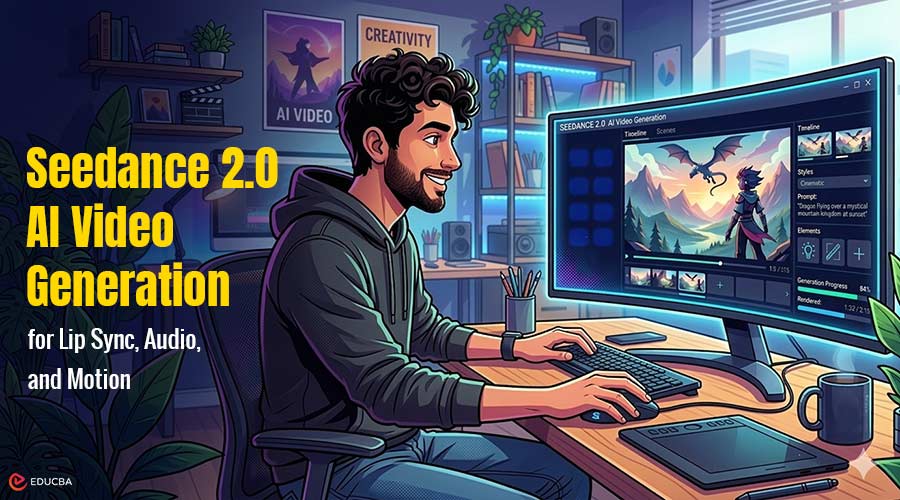
How Seedance 2.0 AI Video Generation Combines Lip Sync, Audio, and Motion?
For a long time, the generative AI industry struggled with what creators called the fragmentation of senses. Earlier models could produce visuals or basic background music, but they treated audio as a secondary layer, usually added after rendering. Creating a speaking character often required separate tools for voice and lip-sync animation, resulting in an uncanny valley effect where audio and visuals felt disconnected. In 2026, this limitation is being addressed through next-generation systems like Seedance 2.0 AI video generation on Higgsfield. Instead of stitching together files from different sources, this model generates motion, sound, and speech simultaneously. This unified approach makes the final video look and sound much more natural because every element is born from the same underlying process.
As multimodal generation continues to evolve, newer platforms such as Seedance 3.0 on SeedVideo are expanding these capabilities even further by refining real-time synchronization, visual coherence, and creator controls for professional-grade AI filmmaking.
The Dual-Branch Diffusion Transformer
The technical secret behind this all-in-one generation is an architecture called the Dual-Branch Diffusion Transformer. Most traditional AI video models are single-branch, meaning they only focus on pixels and temporal visual consistency. Seedance 2.0 is fundamentally different because it handles video and audio data simultaneously in a single mathematical space. When you use the Higgsfield platform to generate a scene, these two branches constantly communicate through shared attention layers.
If the AI decides a character should slam a door, it does not just wait for a post-processing tool to add a sound effect. It simultaneously calculates exactly what that slam should sound like based on the motion’s speed and the materials in the room. This native synchronization means the sound is physically grounded in the action. You no longer have to spend hours in a video editor sliding audio tracks back and forth to get them to line up perfectly with a visual impact.
Semantic Lip-Sync: Beyond Surface Warping
Standard lip-sync tools usually work by just moving the lips of an existing video to match an external sound file. This often looks fake or robotic because the rest of the face stays still while the mouth moves in isolation. The unified method on Higgsfield treats speech as a full-body performance rather than a skin-deep modification. The model generates speech and motion together, so it understands how talking affects the entire face, including the jawline, cheeks, and even the micro-expressions around the eyes.
If a character is shouting, the neck muscles tighten, and the eyes squint naturally. People often call this asymmetric dual-stream logic, in which the audio stream conditions or instructs the pixels on how to move. This level of detail is currently available in over 8 languages, allowing for global content creation that feels authentic to every audience. Research on Joint Audio-Visual Diffusion confirms that modeling the joint distribution of visual frames and audio waveforms is key to addressing the core challenge of synchronization.
Directing with Quad-Modal Inputs
The real advantage for professional creators is the ability to guide this generation with four types of input at once. This is often called Quad-Modal control, and it gives you a level of precision that text prompts alone just cannot provide. By feeding the AI more than just words, you are providing a blueprint for the final output.
First, you use Text Prompts to describe the scene, the dialogue, and the overall mood in simple English. Second, you use Image References by uploading a photo to lock in a character’s look or a specific product design, ensuring consistency across shots. Third, you provide Audio Cues, such as a voice sample or a music beat, which the AI uses to pace the character’s movements and the rhythm of the speech. Finally, you can use Video Motion references to show the AI exactly how you want the camera to move, like a cinematic pan or a complex tracking shot. By combining these four elements, the platform can generate a professional video in less than a minute.
Multi-Shot Continuity and Narrative Logic
Before this technology became the standard, AI videos were mostly just single, short clips. Building a story meant creating dozens of separate files and hoping the characters looked the same in each. Seedance 2.0 AI video generation solves this with built-in multi-shot logic. In a single 15-second generation on Higgsfield, the model can create a sequence of shots, such as a wide establishing shot followed by a close-up of a character speaking.
The native audio perfectly follows these cuts. The background noise or the character’s speech continues seamlessly from one camera angle to the next without any awkward jumps or audio pops. This makes the AI feel less like a simple clip generator and more like a digital film crew that understands the flow of a scene. You get a finished product ready for the timeline without heavy post-production editing.
Professional Use Cases for Unified Content
This combined generation power is already changing how industries work. In advertising, brands are using it to create high-impact video ads directly from product photos. Because the audio is native, the product’s sound in action feels real and high-quality. Filmmakers are using it for cinematic storytelling, enabling them to maintain consistent characters across multi-shot narratives with perfect audio-visual sync. This removes the technical friction that previously prevented independent creators from creating high-end content.
Social media creators and influencers are also benefiting significantly. They can turn ideas into polished Reels and TikToks in minutes. The ability to have perfect lip-sync in multiple languages makes it easy to go viral on a global scale. Whether it is an intense action sequence with realistic body dynamics or a promotional video with consistent branding, the ability to produce everything in a single pass is the new professional benchmark.
Final Thoughts
The emergence of Seedance 2.0 AI video generation marks a major turning point in AI-driven content creation. We are moving past the days of silent puppets and entering the era of unified digital life. When a model generates motion, sound, and speech as a single coherent entity, it creates a much more immersive and believable experience for the viewer. It represents a shift from generative tools being toys to them becoming a real creative infrastructure. By using these multimodal tools on Higgsfield, creators are evolving from technicians into true directors. As we move into 2026, the ability to generate perfectly synced audio-visual content in a single pass is becoming the new baseline for professional work. The tools are now here to make sure your ideas finally sound as good as they look. This technology does not just save time; it enables a new kind of creative expression that once belonged only to those with massive studio budgets.
Recommended Articles
We hope this comprehensive guide to Seedance 2.0 AI video generation helps you create more realistic and engaging content. Check out these recommended articles for more insights and strategies to enhance your video production and creative workflows.


