


Updated May 25, 2026
Introduction to AI in E-commerce
Online stores are no longer just simple websites showing products. Today, many businesses use smart systems to improve how they sell, interact with customers, and increase their revenue. The same principle applies across service-led brands as well, where companies such as Aanganstory focus on creating a smoother, more personalized customer journey through their digital presence.
AI in E-commerce is a major contributor to this transformation. Many businesses rely on AI integration services to implement these capabilities, helping them better understand customer behavior, improve marketing strategies, and deliver a more personalized shopping experience.
Real-World Examples of AI in E-commerce
Let’s see some real-life examples of how AI contributes to the growth of online businesses through this blog. We will also see how it works in simple terms. including how businesses can streamline their setup and operations using platforms like ZenBusiness.
Personalized Product Suggestions That Increase Sales
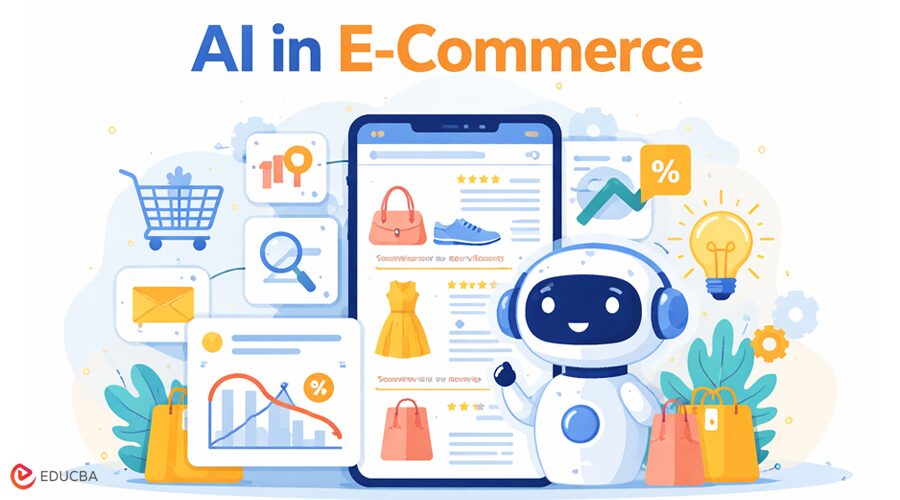
One of the most common examples of AI in E-commerce is personalized product recommendations. When a customer visits an online store, they often see products related to their search. These suggestions use the products the customer previously viewed or searched for.
For example, when a customer views a pair of shoes, the store might show them similar shoes or matching products, such as socks or accessories.
Many large online stores are using this idea to increase their sales. Usually, customers are buying more products from the store because of this idea. They are buying products that they did not plan to buy.
This idea is helping increase customers’ total order value. It is also helping customers stay on the site longer.
Better Search That Helps Customers Find Products Faster
Search is a very significant feature of online shopping. Usually, customers search for what they need by writing it in the search box. If the search results are not satisfactory, customers may leave the site.
AI in E-commerce search systems helps solve this problem by understanding customer intent, even when there are spelling mistakes or incomplete product names.
For example, customers might search for a product by writing its name slightly differently. In this case, the smart search system will provide the correct results. It can also display popular products or related products.
This facilitates online shopping. If customers can find the products they need quickly, they are more likely to buy them.
Chat Support That Responds Instantly
Customer support is another area where smart systems can be of great help. Many e-commerce sites now use chat support powered by AI agents for customer support to answer customers’ queries quickly and efficiently.
When a customer visits a website, a chat box pops up. This enables the customer to ask questions about products, delivery, or payments.
Rather than waiting for a response from a person, the system immediately provides the customer with useful information.
This also builds trust with customers. When customers get quick responses to their queries, they develop confidence in buying from the store.
It also saves the support team time.
Email Messages That Reach Customers at the Right Time
Email marketing remains highly effective for an e-commerce business. However, sending emails manually takes a lot of time.
This is where AI in E-commerce marketing automation becomes useful. AI systems can automatically send emails based on customer actions. For example, if a customer adds a product to their cart but does not complete the purchase, the system sends a reminder email.
The emails may contain information about the product or even a small offer. This will encourage the customer to return and complete their purchase.
Another example is sending emails to new or regular customers with special offers.
The emails are relevant because they are sent based on the customer’s actions. This generates better results, leading to more sales, as e-commerce and email marketing are a powerful combination you need to consider
Price Adjustments Based on Demand
Pricing plays a crucial role in online retail success. Some businesses use AI in E-commerce pricing strategies to adjust prices based on demand, competition, and customer behavior.
If demand for the goods is high, their prices rise slightly. If sales are slow, the price may drop to attract more buyers.
This is essential for the success of the businesses. This strategy also enables businesses to increase their sales and profits.
Customers do not know about the pricing strategy, but it plays a crucial role in business success.
Stock Management That Reduces Loss
It is hard to manage stock for expanding businesses without the right stock management software. If the stock runs out, customers may leave. On the other hand, having too much stock can be costly.
AI in E-commerce inventory management helps businesses track product demand and predict which products will sell more.
This is good for businesses because they can keep the right amount of products. For instance, products that sell well will not run out of stock, and products that sell less will be well managed.
This is good for customers and reduces waste.
Visual Search That Makes Shopping Easier
Some online shopping websites offer the option to search by image. It is a great feature when customers are unsure of the product name.
For example, a customer can upload a picture of a product they like. The system will display similar products that are available in the store. Many brands now combine this feature with Generative AI in ecommerce to deliver smarter product recommendations and a more personalized shopping experience.
This feature helps customers search for what they want without having to write long descriptions.
This feature also helps in making a sale.
Customer Groups That Improve Marketing
Customers do not always behave in the same way. Some customers are frequent, and some are new. Some customers spend more in the store, while others spend only once.
Smart systems enable businesses to identify customer groups based on their behavior. This helps businesses to market the right message to the right customers.
For instance, frequent customers may receive special offers. On the other hand, new customers may receive welcome messages.
This helps businesses to market effectively. The customers will feel that the store understands them.
Predicting Trends for Better Planning
Another powerful application of AI in E-commerce is predicting future trends. By analyzing past sales, businesses can get an idea of which products might be popular in the future.
This benefits businesses, as they can plan and stock the right products for sale.
This reduces risk and improves sales.
Final Thoughts
The success of an e-commerce business often depends on how well it understands its customers. AI in E-commerce helps businesses gain these insights quickly and efficiently.
These tools are helping businesses improve every aspect of the shopping experience. It ranges from product suggestions to improved search options, quick support, and smart emails.
The best part is that these technologies are no longer limited to large corporations. Small and medium-sized businesses can also adopt AI in E-commerce solutions to grow and compete effectively.
By focusing on customer needs and using simple systems, ecommerce stores can increase sales and improve the shopping experience.
Recommended Articles
We hope this guide on AI in E-commerce helps you understand how smart technologies enhance customer experiences, streamline operations, and drive business growth. Explore the recommended articles below for insights on AI applications, digital marketing strategies, and e-commerce optimization techniques.


