


What is Paid Advertising?
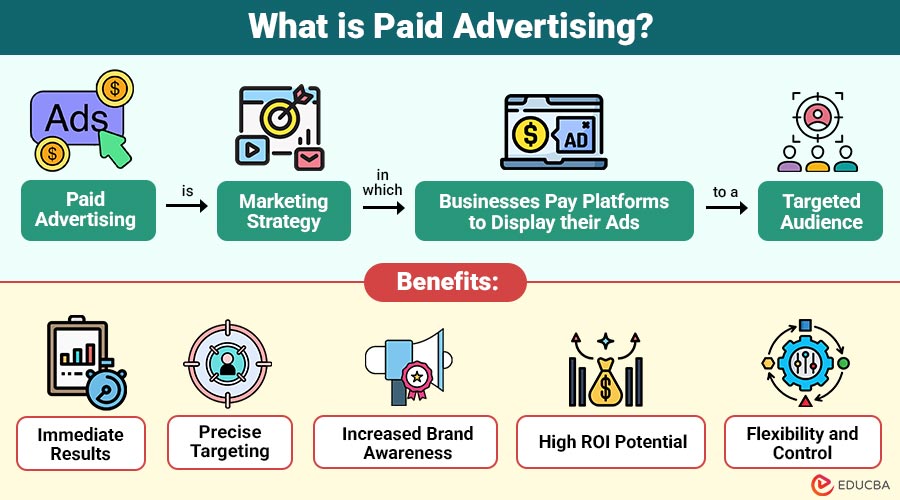
Paid advertising is marketing strategy in which businesses pay platforms to display their ads to a targeted audience. These ads can appear on apps, search engines, websites, social media, or video platforms.
Popular platforms for paid advertising include:
- Google Ads
- Facebook Ads
- Instagram Ads
- LinkedIn Ads
- YouTube Ads
Table of Contents:
Key Takeaways:
- Paid advertising delivers quick, measurable results by effectively targeting specific audiences across multiple digital platforms.
- Success depends on strategic planning, audience understanding, compelling creatives, and continuous campaign optimization to improve performance.
- Various ad types and pricing models provide flexibility to meet different marketing goals and budget constraints.
- Despite challenges like cost and competition, paid advertising offers high ROI when managed and optimized efficiently.
Key Features of Paid Advertising
Below are the key features that make paid advertising an effective, results-driven marketing strategy.
1. Targeted Reach
Paid advertising enables businesses to precisely target audiences using demographics, locations, interests, behaviors, and other data-driven segmentation criteria and to effectively strategize.
2. Instant Visibility
Paid ads go live instantly after campaign launch, providing immediate visibility, faster reach, and quick exposure to potential customers online.
3. Measurable Performance
Paid advertising offers measurable performance by tracking impressions, clicks, conversions, metrics, and return on investment through real-time analytics tools.
4. Budget Control
Advertisers can control budgets by setting daily or lifetime limits, adjusting bids, allocating resources, and optimizing spending based on performance.
5. Scalability
Paid advertising campaigns are scalable, allowing businesses to adjust budgets, expand reach, and adjust strategies based on results.
Types of Paid Advertising
Below are the main types of paid advertising used by businesses to reach and engage their targeted audience effectively.
1. Search Engine Advertising
Search engine advertising displays paid ads on search engine results pages when users search relevant keywords, driving intent-based traffic instantly.
2. Social Media Advertising
Social media advertising promotes content through platforms like Facebook, Instagram, and LinkedIn, enabling precise audience targeting with engaging visual formats.
3. Display Advertising
Display advertising uses banner or image ads placed on websites, apps, or blogs within advertising networks to increase brand visibility online.
4. Video Advertising
Video advertising involves short promotional videos shown before, during, or after content on platforms like YouTube to capture audience attention effectively.
5. Native Advertising
Native advertising integrates promotional content seamlessly into website articles or feeds, matching the platform’s design and providing a less disruptive user experience.
6. Remarketing (Retargeting)
Remarketing targets users who previously visited a website or app, showing relevant ads to re-engage them and encourage conversions later.
Paid Advertising Pricing Models
Below are the common pricing models used in paid advertising to measure cost and campaign performance.
1. PPC (Pay-Per-Click)
In this model, advertisers pay only when a user clicks on their ad, making it cost-efficient and performance-driven.
2. CPM (Cost-Per-Mille)
This model charges advertisers per 1,000 ad impressions, prioritizing brand visibility and awareness over direct engagement.
3. CPA (Cost-Per-Acquisition)
To ensure results-based expenditure, advertisers only pay when a certain action is completed, like a purchase or signup.
4. CPL (Cost-Per-Lead)
In this model, businesses pay for each lead generated, such as form submissions or sign-ups, helping drive potential customer acquisition.
Benefits of Paid Advertising
Below are the key benefits of paid advertising, making it a powerful strategy for business growth and marketing success.
1. Immediate Results
Paid advertising delivers immediate traffic and visibility, allowing businesses to quickly reach audiences and generate results without waiting periods.
2. Precise Targeting
Advanced targeting options ensure ads reach the right audience based on demographics, interests, behavior, and location, leading to better outcomes.
3. Increased Brand Awareness
Repeated ad exposure helps build strong brand recognition, even when users do not click, improving recall and trust over time.
4. High ROI Potential
Well-optimized paid campaigns can deliver high returns on investment by targeting qualified leads and maximizing conversions through strategic planning.
5. Flexibility and Control
Advertisers can easily pause, modify, or optimize campaigns at any time, providing full control over budgets, strategies, and overall advertising performance.
Challenges of Paid Advertising
Below are the common challenges businesses may face while implementing paid advertising strategies.
1. High Costs
Paid advertising can become expensive in competitive industries where high keyword demand and bidding wars significantly increase overall campaign costs.
2. Ad Fatigue
When people see the same advertisements again, they may become disinterested, which eventually lowers engagement, efficacy, and campaign performance.
3. Requires Expertise
Successful paid advertising campaigns require expertise, continuous monitoring, data analysis, and strategic optimization to achieve desired results and maximize performance.
4. Temporary Results
Paid advertising delivers results only while campaigns run, and traffic stops immediately once the allocated budget is exhausted or paused.
How Paid Advertising Works?
Below is a step-by-step process for planning, executing, and optimizing paid advertising campaigns for better results.
1. Define Campaign Goals
Clearly define campaign goals, such as traffic, lead generation, or sales, to align the advertising strategy with the desired business outcomes.
2. Choose the Right Platform
Based on the target market, company goals, and the online locations where prospective clients are most active, choose the best advertising platform.
3. Select Target Audience
Identify and segment your target audience by demographics, interests, behavior, and location to ensure ads reach relevant, high-potential users.
4. Create Engaging Ad Creatives
Develop compelling ad creatives featuring strong visuals, persuasive copy, and a clear call-to-action to capture attention and drive user engagement.
5. Set Budget and Bidding Strategy
Determine the campaign budget and choose appropriate bidding strategies to control costs, maximize performance, and efficiently achieve the desired advertising objectives.
6. Launch Campaign
Launch the advertising campaign across selected platforms, ensuring all settings, creatives, and targeting parameters are properly configured for optimal performance.
7. Track and Optimize Performance
Continuously monitor campaign performance using analytics, track key metrics, and optimize ads, targeting, and budget to improve results consistently.
Real-World Examples
Below are some practical examples of how businesses use paid advertising to achieve their marketing goals effectively.
1. E-Commerce Brand
An online store uses Google Ads to target users searching for “buy running shoes,” increasing website traffic and driving higher product sales.
2. SaaS Company
A software company runs ads on LinkedIn targeting professionals, generating high-quality leads and improving conversion rates through precise audience segmentation.
3. Local Business
A restaurant uses Facebook Ads to promote discounts and special offers, attracting nearby customers and significantly increasing foot traffic.
Use Cases of Paid Advertising
Below are the common use cases where paid advertising helps businesses achieve specific marketing objectives effectively.
1. Product Launches
Paid advertising helps promote new products quickly, creating buzz, reaching target audiences instantly, and driving initial interest and early sales.
2. Brand Awareness Campaigns
Businesses use paid ads to increase visibility, reach large audiences, and build strong brand recognition across multiple digital platforms effectively.
3. Lead Generation
Paid advertising campaigns capture potential customer information through forms, landing pages, or sign-ups, helping businesses build and nurture qualified leads.
4. Website Traffic Growth
Ads drive targeted traffic to websites by attracting users interested in specific products, services, or content, improving visits and engagement rates.
5. Event Promotions
Paid ads effectively promote events, webinars, or launches by reaching relevant audiences, increasing registrations, and significantly boosting overall attendance.
6. Retargeting Campaigns
Retargeting campaigns encourage users to return, complete tasks, and increase conversion rates by re-engaging them with a brand.
Final Thoughts
Paid advertising enables businesses to achieve quick, measurable results by targeting specific audiences through platforms like Google Ads and social media. With strategic planning, ongoing optimization, and clear audience insights, brands can maximize performance. Paid advertising is a crucial component of an all-encompassing digital marketing plan since it increases visibility, encourages conversions, and yields a high return on investment when done well.
Frequently Asked Questions (FAQs)
Q1. Is paid advertising suitable for small businesses?
Answer: Yes, small businesses can benefit by targeting niche audiences with controlled budgets.
Q2. How much should I spend on paid ads?
Answer: It depends on your goals, industry, and competition. Start small and scale based on performance.
Q3. Which platform is best for paid advertising?
Answer: It depends on your audience. Google Ads is great for search intent, while social platforms are ideal for engagement.
Q4. How long does it take to see results?
Answer: Paid advertising delivers immediate results, but optimization improves performance over time.
Recommended Articles
We hope that this EDUCBA information on “Paid Advertising” was beneficial to you. You can view EDUCBA’s recommended articles for more information.

