
Updated March 17, 2026
What is Data Harmonization?
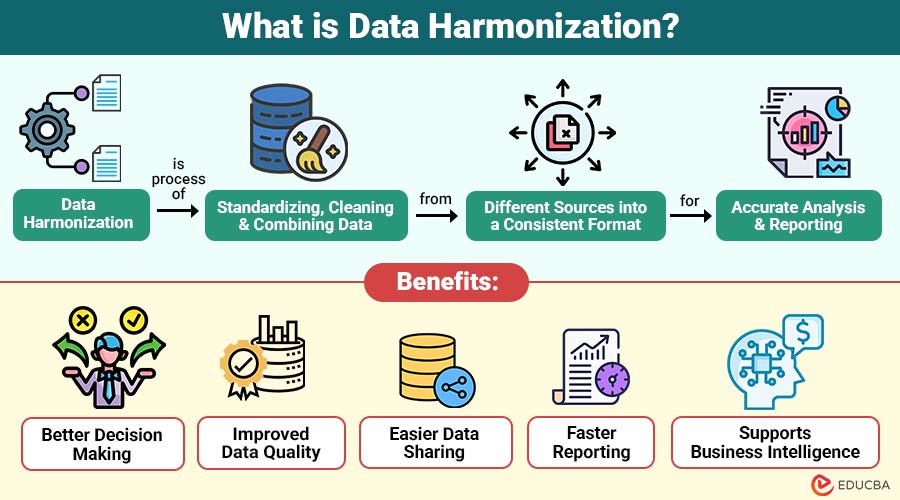
Data harmonization is the process of standardizing, cleaning, and combining data from different sources into a consistent format for accurate analysis and reporting. It involves transforming data so that fields, values, units, and naming conventions match across datasets.
For example:
A company collects employee data from three systems:
- HR system stores the department as HR
- The payroll system stores the department as Human Resources
- The attendance system stores the department as H.R.
During data harmonization, all values are standardized to Human Resources, so reports remain consistent and accurate across all systems.
Table of Contents:
Key Takeaways:
- Data harmonization standardizes and cleans data from multiple sources to ensure consistency, accuracy, and reliable analytics results.
- It enables seamless data integration, better reporting, and the creation of a single trusted source of information.
- The process includes data mapping, transformation, cleaning, validation, and storing data in a unified format.
- Although complex and costly, data harmonization improves data quality, supports compliance, and strengthens business decision-making processes.
Why is Data Harmonization Important?
Here are the main reasons why data harmonization is important:
1. Improves Data Consistency
Different systems store data in different formats, so harmonization standardizes structure, naming, and values to maintain consistent data across all systems.
2. Enables Better Analytics
Standardized and harmonized data allows analysts to compare information easily, generate accurate reports, and make reliable business decisions without confusion or errors.
3. Supports Data Integration
Enables the integration of information from multiple databases, applications, and platforms without format conflicts or compatibility issues.
4. Reduces Errors and Duplicates
By cleaning, matching, and standardizing records, data harmonization removes duplicate entries, fixes inconsistencies, and improves overall data quality across the organization.
5. Helps in Regulatory Compliance
Industries like healthcare, banking, and finance require accurate records, and harmonized data helps organizations meet legal, audit, and compliance requirements properly.
6. Creates a Single Source of Truth
Harmonized data ensures that all departments have access to the same standardized information, preventing confusion, improving collaboration, and supporting consistent decision-making across the organization.
How Does Data Harmonization Work?
Data harmonization works by transforming data from various sources into a common structure and format.
1. Data Collection
For processing, data is collected from a variety of sources, including databases, files, apps, APIs, and cloud storage systems.
2. Data Profiling
Data is examined to understand structure, format, relationships, and quality issues before starting the harmonization and transformation process properly.
3. Data Mapping
Fields from different data sources are matched and linked to a common schema or standard format for consistency across systems.
4. Data Transformation
Data is converted into the required format, data type, and structure so that all datasets follow the same defined rules correctly.
5. Data Cleaning
Incorrect values, duplicate records, missing data, and inconsistencies are identified and fixed to improve overall data quality and reliability.
6. Data Standardization
Naming conventions, measurement units, date formats, and codes are standardized so data looks uniform and understandable across all connected systems.
7. Data Validation
The harmonized data is verified to ensure accuracy, consistency, completeness, and correctness before it is used for reporting or analysis.
8. Data Storage / Output
The final harmonized data is stored in a unified database, data warehouse, or data lake for easy access and usage.
Data Harmonization Process
The process ensures that data becomes compatible across systems.
1. Identify Data Sources
Determine all internal and external data sources, such as databases, files, APIs, and cloud systems, that require proper harmonization.
2. Define Standard Format
Create a standard data model that defines naming conventions, formats, units, and structures that all datasets must follow after the harmonization process.
3. Map Data Fields
Match and link fields from different systems to the defined standard format so equivalent data elements align correctly across sources.
4. Transform Data
Convert data types, change formats, adjust units, and restructure values so the information fits the required standardized schema across all datasets.
5. Clean Data
Remove duplicate records, correct incorrect values, fill missing data, and resolve inconsistencies to improve overall data quality before the final integration step.
6. Validate Data
Examine the harmonized data against quality rules and validation criteria to ensure accuracy, completeness, consistency, and reliability before storing or using it.
7. Load Harmonized Data
Store the final harmonized data in a data warehouse, database, or data lake to support analytics and reporting.
Benefits of Data Harmonization
Here are the key benefits that help organizations improve data accuracy, consistency, and decision-making.
1. Better Decision Making
Consistent and harmonized data provides accurate information, helping managers and analysts make better decisions without confusion, errors, or conflicting reports.
2. Improved Data Quality
Removes duplicates, corrects errors, standardizes formats, and ensures reliable, clean, high-quality data for analysis and reporting.
3. Easier Data Sharing
When data follows the same format and structure, it becomes easier to share across departments, systems, and applications without compatibility problems.
4. Faster Reporting
Standardized and harmonized data expedites the generation of reports and dashboards, as it already undergoes cleaning, formatting, and consistency checks.
5. Supports Business Intelligence
Business intelligence tools work efficiently with harmonized data, enabling accurate dashboards, improved analytics, more profound insights, and more reliable tracking of business performance.
Challenges in Data Harmonization
Despite its benefits, data harmonization has some challenges.
1. Different Data Formats
Different data sources store information in various formats, making it difficult to combine them without applying conversion and standardization processes.
2. Large Data Volume
Handling large amounts of data requires powerful processing tools, high storage capacity, and efficient systems to perform harmonization without delays.
3. Data Quality Issues
Missing values, incorrect entries, and inconsistent records make the harmonization process more difficult and require additional cleaning and validation steps.
4. Complex Mapping Rules
Matching fields from multiple systems into a single standard format can be complicated, especially when structures, names, and meanings differ significantly.
5. High Implementation Cost
May require expensive tools, advanced infrastructure, and skilled professionals, thereby increasing the overall implementation cost for organizations.
Example of Data Harmonization
The following example shows how data harmonization standardizes values from multiple systems to maintain consistency.
Retail Industry:
A retail company collects product data from multiple systems:
- Inventory system
- Online store
- Billing system
- Supplier database
Each system stores product categories differently:
- Inventory: Electronics
- Online Store: Electronic Items
- Billing: E-Electronics
- Supplier: Elec
During data harmonization, all category values are standardized to Electronics, ensuring product reports, stock records, and sales analytics remain consistent across all systems.
Use Cases of Data Harmonization
Here are some common use cases of data harmonization, in which organizations standardize data to ensure consistency, accuracy, and reliable analysis across systems.
1. Business Intelligence
Data harmonization ensures consistent data across sources, helping dashboards, analytics tools, and reports generate accurate and reliable business insights.
2. Data Warehousing
Before loading data into a data warehouse, harmonization standardizes formats and structures, ensuring smooth integration and consistent analytical reporting results.
3. Healthcare Data Management
Hospitals harmonize patient data across different systems to ensure medical records remain consistent, accurate, and easily accessible for doctors and staff.
4. Marketing Analytics
Marketing teams harmonize customer data from websites, CRM, social media, and ads to accurately analyze behavior and improve campaign performance.
5. Financial Reporting
Financial departments harmonize transaction data across multiple systems to maintain consistent records, ensuring accurate reports, audits, and regulatory compliance.
Tools Used for Data Harmonization
Organizations use different tools to perform data harmonization.
1. ETL Tools (Extract, Transform, Load)
ETL tools extract data from sources, transform it into a standard format, and load harmonized data into target systems for analysis.
2. Data Integration Tools
Data integration tools connect multiple data sources, combine information, and ensure a consistent structure, enabling efficient harmonization across systems.
3. Data Quality Tools
Data quality tools identify errors, duplicates, and missing values, helping clean and standardize data before properly performing harmonization across different datasets.
4. Data Governance Platforms
Data governance platforms define rules, standards, and policies to ensure harmonized data remains consistent, secure, accurate, and compliant across organizational systems.
5. Data Warehouses
Data warehouses store harmonized data in a centralized location, allowing organizations to perform reporting, analytics, and business intelligence operations efficiently.
Final Thoughts
Data harmonization is a key process in modern data management that makes data from multiple sources consistent, accurate, and ready for analysis. Without it, organizations may face duplicate records, incorrect reports, and poor decisions. By standardizing formats, cleaning data, and applying rules, businesses create a reliable single source of truth, improving analytics, efficiency, and overall decision-making.
Frequently Asked Questions (FAQs)
Q1. When should data harmonization be performed?
Answer: Data harmonization should be performed before data analysis, reporting, or loading into a data warehouse to ensure all datasets follow the same format and quality standards.
Q2. Can data harmonization be automated?
Answer: Yes, data harmonization can be automated using ETL tools, data integration platforms, and data quality software that apply predefined rules to clean and standardize data.
Q3. Is data harmonization required for big data projects?
Answer: Yes, big data projects require harmonization because data comes from many sources, and without standardization, analytics results may become inaccurate or misleading.
Q4. Who is responsible for data harmonization in an organization?
Answer: Data engineers, data analysts, and data governance teams usually handle data harmonization to ensure data remains consistent, accurate, and ready for reporting or analytics.
Recommended Articles
We hope that this EDUCBA information on “Data Harmonization” was beneficial to you. You can view EDUCBA’s recommended articles for more information.

