
Updated March 9, 2026
What is Data Profiling?
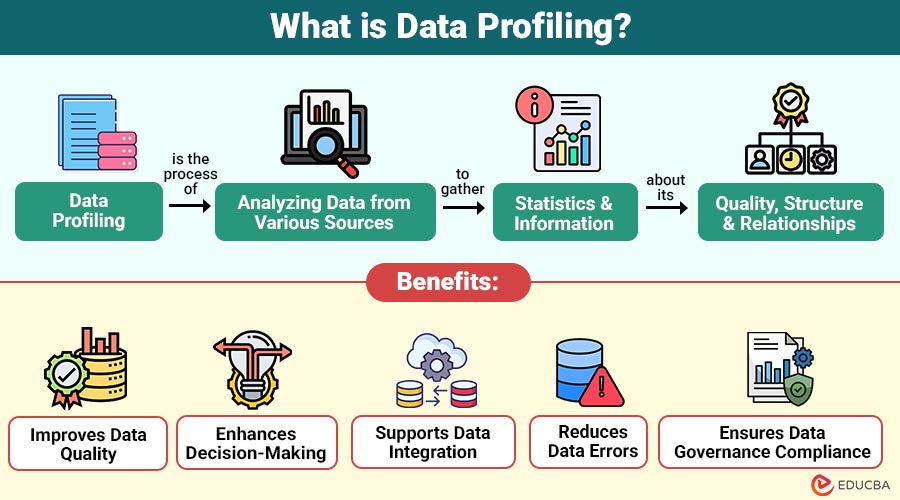
Data profiling is the process of analyzing data from various sources to gather statistics and information about its quality, structure, and relationships. The primary goal of data profiling is to assess whether the data is accurate, complete, and suitable for business use.
It involves evaluating datasets to detect issues such as:
- Missing or incomplete data
- Duplicate records
- Incorrect formats
- Inconsistent values
- Data anomalies
Data profiling provides a detailed overview of data characteristics before it is used in analytics, reporting, or migration processes. It is commonly used during data integration, data warehousing, and data migration projects to ensure data accuracy and reliability.
Table of Contents:
Key Takeaways:
- Data profiling analyzes datasets to evaluate quality, structure, and relationships before analytics, integration, or migration.
- Early data profiling helps detect errors, inconsistencies, and missing values, ensuring accurate and reliable information.
- Effective data profiling supports better decision-making, smoother data integration, and stronger data governance across organizations.
- Automated tools improve efficiency, handle large datasets, and maintain consistent data quality continuously.
Why is Data Profiling Important?
Below are the key reasons why it is important for data management and analytics.
1. Improves Data Quality and Accuracy
It improves data quality by identifying missing, incorrect, or duplicate values, ensuring datasets are accurate, consistent, reliable, and suitable for analysis.
2. Helps Detect Data Inconsistencies and Anomalies
It helps detect inconsistencies, unusual patterns, and anomalies in datasets, allowing organizations to fix errors early and maintain trustworthy, high-quality information.
3. Supports Better Decision-Making
Organizations may make well-informed decisions, lower risks, improve planning, and boost overall business performance with the use of clean, accurate, and well-structured data.
4. Simplifies Data Integration and Migration
It analyzes data structure, format, and relationships, making it easier to combine data from different sources and ensuring smooth, error-free migration between systems.
5. Ensures Compliance with Data Governance Standards
It helps organizations follow data governance policies by verifying data accuracy, consistency, and completeness, ensuring compliance with regulations, standards, and internal rules.
How Does Data Profiling Work?
It typically involves several analytical techniques for examining datasets. These techniques help identify patterns, relationships, and quality issues in the data.
1. Data Discovery
Finding and gathering information from various sources is the first stage. This includes databases, spreadsheets, cloud storage, and enterprise systems.
2. Data Structure Analysis
In this step, the data structure is analyzed. It involves examining the following:
- Data types
- Field lengths
- Data formats
- Column patterns
This analysis ensures that the data is structured properly and follows expected standards.
3. Content Analysis
Content analysis examines the actual values in the dataset. It checks for:
- Missing values
- Duplicate records
- Invalid entries
- Frequency of values
4. Relationship Analysis
This step identifies relationships between different datasets or columns. For instance, this step involves verifying whether the values of the foreign key match those of the primary key in related tables.
5. Data Quality Reporting
Finally, a report is generated summarizing the data quality issues, patterns, and statistics. These insights help organizations plan data cleansing or transformation processes.
Types of Data Profiling
It can be categorized by the level of analysis performed.
1. Structure Profiling
Structure profiling examines the format and structure of data fields. It verifies whether the data follows the expected format and type.
2. Content Profiling
Content profiling analyzes the values in the dataset to identify inconsistencies or anomalies.
3. Relationship Profiling
Relationship profiling identifies relationships between datasets or tables to ensure consistency and integrity.
4. Statistical Profiling
Statistical profiling uses statistical methods to analyze data distribution and patterns. It includes metrics such as:
- Mean
- Median
- Minimum and maximum values
- Frequency distribution
Data Profiling Techniques
Several techniques are used to perform effective data profiling.
1. Column Analysis
Column analysis evaluates each column individually to identify data type, minimum and maximum values, unique entries, null values, and overall data consistency and accuracy.
2. Cross-Column Analysis
Cross-column analysis compares multiple columns within the same dataset to verify logical relationships, ensuring calculated values, dependencies, and business rules are correctly maintained.
3. Cross-Table Analysis
Cross-table analysis checks relationships between different tables to ensure data consistency, verify foreign keys, maintain referential integrity, and confirm records exist across related datasets.
4. Data Pattern Analysis
Data pattern analysis identifies common formats and value patterns in data, helping detect invalid entries, formatting errors, duplicates, and inconsistencies in fields such as email addresses or phone numbers.
Benefits of Data Profiling
It provides several benefits for organizations that rely on large datasets.
1. Improves Data Quality
Identifies errors, duplicates, and inconsistencies in datasets, enabling organizations to improve overall data quality.
2. Enhances Decision-Making
Better insights and more intelligent business decisions result from accurate and trustworthy data.
3. Supports Data Integration
When integrating data from multiple sources, it ensures that the datasets are compatible and consistent.
4. Reduces Data Errors
Early detection of data issues prevents errors from propagating into reports, dashboards, and analytics systems.
5. Ensures Data Governance Compliance
Data profiling helps organizations comply with data governance policies by maintaining data integrity and consistency.
Challenges of Data Profiling
Although data profiling offers many benefits, it also comes with certain challenges.
1. Large Data Volumes
Organizations handle huge datasets, making data profiling time-consuming, computationally intensive, and difficult to perform efficiently without advanced tools and automation.
2. Data Complexity
Data comes from multiple sources with different formats, structures, and standards, making profiling difficult and requiring additional effort to ensure consistency and accuracy.
3. Resource Requirements
Effective data profiling requires skilled professionals, specialized software tools, and strong computing resources, which may increase cost, time, and implementation complexity for organizations.
4. Continuous Monitoring
New data is constantly added to systems, so profiling must be repeated regularly to maintain quality, detect errors early, and ensure consistent, reliable datasets.
Real-World Example
The following example shows how data profiling is used in real-world business scenarios to ensure data accuracy before analysis.
Consider an e-commerce company that gathers customer data from various sources such as online orders, mobile apps, and customer service systems.
Before integrating this data into a central data warehouse, the company performs data profiling to analyze the datasets. During this process, they discover several issues:
- Duplicate customer records
- Missing email addresses
- Inconsistent phone number formats
- Incorrect product pricing values
By identifying these problems early, the company can clean and standardize the data before using it for analytics, marketing campaigns, and customer insights. This ensures that reports and business decisions are based on accurate information.
Best Practices for Effective Data Profiling
To achieve the best results, organizations should follow certain best practices:
1. Profile Data Early in the Data Lifecycle
Data should be profiled at the beginning of the data lifecycle to detect errors early, reduce correction costs, and improve overall data quality.
2. Use Automated Profiling Tools for Large Datasets
Automated tools help analyze large datasets quickly, reduce manual effort, improve accuracy, and ensure consistent results across complex data environments.
3. Establish Clear Data Quality Standards
Organizations should define clear data quality rules, formats, and validation standards to ensure consistency, accuracy, reliability, and proper usage of data across systems.
4. Regularly Monitor and Update Data Quality Reports
Data quality reports should be reviewed frequently to detect new issues, track improvements, maintain accuracy, and ensure data remains reliable over time.
5. Integrate Data Profiling with Data Governance Strategies
To enforce rules, uphold compliance, enhance data management, and guarantee uniform data quality throughout the company, data profiling ought to be a component of data governance.
Frequently Asked Questions (FAQs)
Q1. When should data profiling be performed?
Answer: Data profiling should be performed before data migration, integration, or analytics or when implementing a new data management system.
Q2. Is data profiling important for data warehouses?
Answer: Yes, data profiling is essential for data warehouses because it ensures that incoming data is accurate, consistent, and ready for analysis.
Q3. Can data profiling be automated?
Answer: Yes, many modern data management tools provide automated data profiling features to analyze large datasets efficiently.
Final Thoughts
Data profiling is an essential data management process that helps organizations understand data quality, structure, and relationships within datasets. Before using data for analytics or operations, it identifies errors, inconsistencies, and missing values. Effective data profiling improves accuracy, supports reliable decision-making, simplifies data integration, and strengthens data governance, ensuring trustworthy and valuable information.
Recommended Articles
We hope that this EDUCBA information on “Data Profiling” was beneficial to you. You can view EDUCBA’s recommended articles for more information.


