
What is Employee Advocacy?
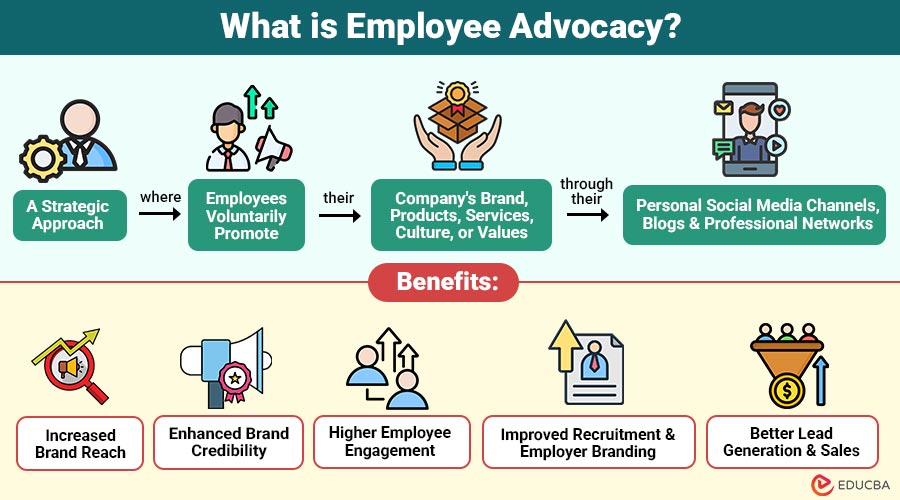
Employee advocacy is strategic approach where employees voluntarily promote their company’s brand, products, services, culture, or values through their personal social media channels, blogs, and professional networks.
Unlike corporate marketing, employee advocacy leverages real voices to share content, insights, achievements, and experiences. Because people trust individuals more than brands, employee-shared content often generates higher engagement and credibility than official brand communications.
Table of Contents:
- Meaning
- Why Employee Advocacy Matters?
- Working
- Benefits
- Key Elements
- Tools
- Challenges
- Real-World Examples
Key Takeaways:
- Employee advocacy leverages authentic employee voices to significantly expand brand reach and strengthen organizational credibility.
- Advocacy programs increase engagement, improve employer branding, and create stronger connections with target audiences.
- Clear objectives, training, technology, and recognition are essential for building sustainable advocacy initiatives.
- Measuring engagement, participation, and lead generation helps evaluate program success and optimize strategy.
Why Employee Advocacy Matters?
Here are the key reasons why employee advocacy plays an important role in modern business success.
1. Increased Brand Reach
Employees collectively have broader, more diverse networks than official company accounts, significantly expanding content visibility and organic audience exposure.
2. Higher Engagement Rates
Content shared by employees typically generates higher engagement, including likes, comments, and shares, compared to posts published directly by brands.
3. Improved Employer Branding
When employees share positive workplace experiences, it strengthens employer branding and attracts skilled professionals seeking authentic, people-focused organizations.
4. Enhanced Trust and Credibility
Audiences trust messages from real employees more than corporate advertisements, thereby increasing brand credibility and fostering positive perceptions.
5. Boosted Sales Opportunities
Employees, especially in sales and leadership roles, can influence prospects through personal networks, increasing qualified leads and conversion opportunities.
How Employee Advocacy Works?
Here is a step-by-step overview of how an effective employee advocacy program functions within an organization.
1. Content Creation
Marketing teams develop valuable, relevant, and engaging content that aligns with brand messaging and supports overall business objectives.
2. Content Distribution
Curated content is distributed to employees through advocacy platforms, email newsletters, or internal communication tools for easy access.
3. Employee Sharing
Employees share approved content on LinkedIn, Twitter, Facebook, and other platforms, expanding reach through their personal networks.
4. Engagement and Measurement
Organizations track reach, engagement, clicks, leads, and conversions to evaluate program effectiveness and optimize advocacy strategies.
Benefits of Employee Advocacy
Here are benefits organizations can gain by implementing a strong employee advocacy program.
1. Increased Brand Reach
Employees have larger combined networks than official pages, helping brands reach wider audiences without increasing advertising expenses.
2. Enhanced Brand Credibility
Content shared by employees feels authentic and trustworthy, encouraging audiences to engage more confidently with brand messages.
3. Higher Employee Engagement
Advocacy programs build pride and belonging, making employees feel valued while improving overall morale and workplace engagement.
4. Improved Recruitment and Employer Branding
Employee advocacy highlights workplace culture and values, attracting quality candidates who trust real employee experiences.
5. Better Lead Generation and Sales
Employee-shared content drives stronger engagement, helping sales teams nurture relationships and convert qualified prospects.
Key Elements of Successful Employee Advocacy Program
Below are the key elements that ensure an employee advocacy program delivers measurable and sustainable results.
1. Clear Objectives
Set quantifiable objectives like increasing website traffic, lead generation, brand recognition, or bolstering employer branding initiatives in general.
2. Employee Training
Train employees on brand guidelines, social media etiquette, personal branding, and effective content-sharing techniques for consistency.
3. Content Strategy
Develop diverse content, including industry insights, company updates, thought leadership, and authentic culture-driven behind-the-scenes stories.
4. Technology and Tools
Implement advocacy platforms that streamline content distribution, employee participation, performance tracking, and analytics measurement.
5. Incentives and Recognition
Encourage participation by rewarding active advocates through recognition programs, gamification strategies, and meaningful performance-based incentives.
Popular Employee Advocacy Tools
Here are some widely used tools that help organizations manage, scale, and measure employee advocacy programs effectively.
1. Hootsuite Amplify
Hootsuite Amplify enables employees to easily share pre-approved content while allowing organizations to track engagement and advocacy performance metrics.
2. Sprout Social Advocacy
Sprout Social Advocacy helps companies curate shareable content, monitor employee participation, and measure social impact through detailed analytics dashboards.
3. EveryoneSocial
EveryoneSocial empowers employees to become brand ambassadors by simplifying content distribution, encouraging engagement, and enabling performance tracking.
4. Sociable
Sociabble combines internal communication and advocacy features, enabling employees to access, share, and engage with curated company content.
5. PostBeyond
PostBeyond supports employee advocacy by streamlining content-sharing processes and delivering analytics to evaluate engagement and campaign success.
Challenges in Employee Advocacy
Despite its advantages, organizations may encounter certain challenges when implementing employee advocacy programs.
1. Low Participation
Not all employees feel confident sharing company content publicly, so programs must remain voluntary and supportive.
2. Content Fatigue
Overly repetitive or promotional content can reduce enthusiasm, making it essential to consistently deliver valuable, relevant information.
3. Compliance and Brand Risk
Without clear social media policies, employees may unintentionally share inaccurate information, creating compliance and reputational risks.
4. Measuring ROI
Direct revenue attribution can be complex, but tracking engagement, reach, and leads provides meaningful performance insights.
Real-World Examples
Here are some notable companies that successfully leverage employee advocacy to strengthen their brand presence and credibility.
1. LinkedIn
LinkedIn encourages employees to share company updates, industry insights, and personal experiences, significantly amplifying brand reach.
2. Starbucks
Starbucks employees frequently share behind-the-scenes content, reinforcing the brand’s culture and customer-centric values.
3. IBM
IBM’s employee advocacy program focuses on thought leadership and innovation, positioning employees as industry experts.
Final Thoughts
Employee advocacy empowers employees to become authentic brand ambassadors who expand reach, build trust, and increase engagement. By aligning on a clear strategy, creating valuable content, providing proper training, and using the right tools, organizations can create a culture of advocacy that benefits both employees and the business. In today’s authenticity-driven market, it remains a powerful and sustainable marketing approach.
Frequently Asked Questions (FAQs)
Q1. Is employee advocacy suitable for small businesses?
Answer: Yes, small businesses can benefit notably from lower costs and greater authenticity.
Q2. How do you measure the success of an employee advocacy program?
Answer: Measure success through reach, engagement, website traffic, leads, participation rates, conversions, and overall ROI.
Q3. Which social platforms are best for employee advocacy?
Answer: LinkedIn is most effective for B2B, while Facebook, Twitter, and Instagram work well for B2C.
Q4. How can businesses motivate staff members to take part in advocacy initiatives?
Answer: Encourage participation through voluntary programs, training, easy-to-share content, recognition, and a positive workplace culture.
Recommended Articles
We hope that this EDUCBA information on “Employee Advocacy” was beneficial to you. You can view EDUCBA’s recommended articles for more information.


