
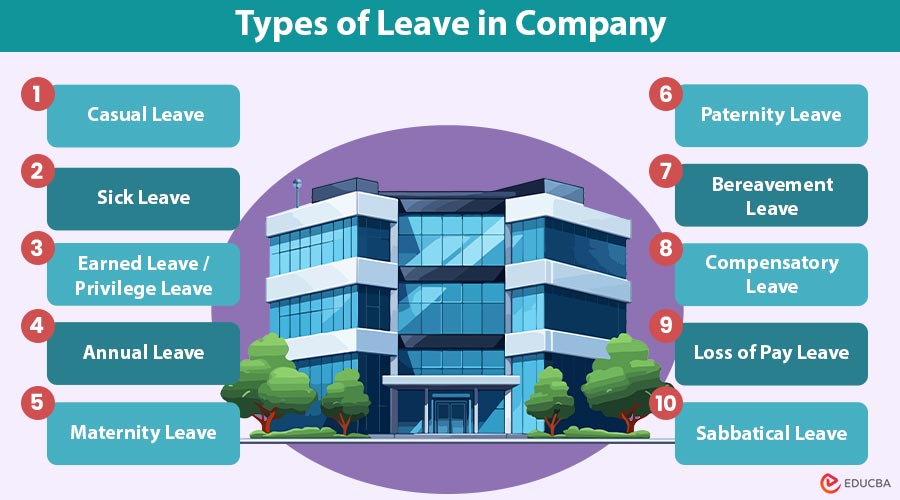
Introduction to Types of Leave in Company
Types of leave in a company refer to the authorized time off that employees can take from work for personal, medical, legal, or professional reasons. Leave policies are a critical component of human resource management, helping organizations balance employee well-being with operational continuity. A well-defined leave structure ensures legal compliance, improves employee morale, reduces burnout, and promotes a healthy work-life balance.
Organizations typically design leave policies based on labor laws, company culture, industry standards, and workforce needs. Understanding the various types of leave in a company helps employees utilize their benefits effectively and enables employers to manage attendance, productivity, and compliance efficiently.
Key Takeaways:
- Types of Leave in company help balance employee well-being, legal compliance, and uninterrupted organizational operations.
- Clear awareness of leave policies helps employees balance health concerns, family obligations, and personal responsibilities effectively.
- Structured leave frameworks enhance transparency, minimize workplace conflicts, and build stronger trust and morale among employees.
- Organizations rely on leave systems to regulate attendance, promote fairness, and sustain consistent productivity levels.
Common Types of Leave in Company
Below are the most common types of leave offered by companies across industries.
#1. Casual Leave (CL)
Casual leave is short-term paid leave granted for unforeseen personal needs or minor emergencies. It helps employees manage sudden situations without disrupting work continuity, usually requiring minimal notice and taken for one to three days.
Key Characteristics:
- Short duration (1–3 days)
- Usually paid
- Requires minimal prior notice
Use Cases:
- Attending a personal appointment
- Handling urgent household issues
#2. Sick Leave (SL)
Sick leave allows employees to take the paid time off due to illness, harm, or medical treatment. It supports physical and mental recovery, may require medical proof, and ensures employees do not suffer income loss while prioritizing health and well-being.
Key Characteristics:
- Paid leave (up to a limit)
- A medical certificate may be required
- Covers physical and mental health issues
Use Cases:
- Flu or fever
- Hospitalization or surgery recovery
#3. Earned Leave / Privilege Leave (EL/PL)
Earned or Privilege Leave is accumulated based on days worked and used for planned absences. It is paid leave that can be saved or cashed out, used for long vacations, personal needs, and planning work-life balance.
Key Characteristics:
- Accrued monthly or annually
- Paid leave
- You can keep it for later or get the money now.
Use Cases:
- Family vacations
- Long personal travel
#4. Annual Leave
Annual leave refers to a fixed number of paid days granted yearly for rest and personal activities. It is scheduled time off that allows employees to relax, recharge, and stay healthy and productive.
Key Characteristics:
- Planned in advance
- Paid leave
- Encourages work-life balance
Use Cases:
- Leisure trips
- Personal rejuvenation
#5. Maternity Leave
Maternity leave is legally mandated paid leave provided to female employees during pregnancy and after the childbirth. It ensures health recovery, infant care, income security, and job protection, supporting maternal well-being and compliance with labor laws.
Key Characteristics:
- Paid leave
- Duration defined by law (e.g., 26 weeks in India)
- Job protection guaranteed
Use Cases:
- Pre-natal and post-natal care
- Childbirth recovery
#6. Paternity Leave
Paternity leave allows male employees paid or partially paid time off following childbirth or adoption. It supports shared parenting responsibilities, family bonding, and emotional support for the partner and newborn during the initial adjustment period.
Key Characteristics:
- Short duration (usually 5–15 days)
- Paid or partially paid
- Encourages shared parental responsibilities
Use Cases:
- Supporting partner and newborn
- Family bonding
#7. Bereavement Leave
Bereavement leave is compassionate leave granted after the death of an immediate family member. It gives employees a short period of time to cope with the loss of a loved one, attend funerals, and deal with their feelings. This type of leave may or may not come with salary.
Key Characteristics:
- Short duration
- Paid or unpaid
- Compassion-based policy
Use Cases:
- Funeral arrangements
- Emotional recovery
#8. Compensatory Leave (Comp-Off)
Compensatory leave is provided when employees work on holidays, weekends, or beyond standard hours. It offers paid time off in exchange for extra work, ensuring fairness, motivation, and compliance with labor practices for extended efforts.
Key Characteristics:
- Time off instead of extra work
- Paid leave
- Valid for a limited period
Use Cases:
- Project deadlines
- Emergency operational needs
#9. Loss of Pay Leave (LOP / Unpaid Leave)
Loss of Pay Leave is unpaid leave taken when paid entitlements are exhausted or voluntarily waived. It requires approval and affects salary and benefits, commonly used for extended personal, medical, or unavoidable long-term commitments.
Key Characteristics:
- Unpaid
- Requires approval
- Affects salary and sometimes benefits
Use Cases:
- Extended personal matters
- Long medical recovery beyond paid leave
#10. Sabbatical Leave
Sabbatical leave is a long-term break offered after continuous service, usually unpaid or partially paid. It allows employees to pursue personal growth, research, education, or social causes while ensuring job continuity upon return.
Key Characteristics:
- Long duration (months)
- Usually unpaid or partially paid
- Job continuity assured
Use Cases:
- Personal growth
- Research or social work
Final Thoughts
Understanding the types of leave in the company is essential for creating a supportive, compliant, and productive workplace. A well-designed leave policy helps employees manage health, family, and personal needs while ensuring business continuity. Clear knowledge of different leave types promotes transparency, trust, and work-life balance, benefiting both employees and organizations in the long term.
Frequently Asked Questions (FAQs)
Q1. Are all types of leave paid?
Answer: No, some leaves, like loss of pay or sabbatical leave, are usually unpaid.
Q2. Can earned leave be encashed?
Answer: Yes, many companies allow earned leave to be encashed in accordance with policy.
Q3. Is sick leave mandatory by law?
Answer: In many countries, statutory sick leave is legally required.
Q4. Can companies customize leave policies?
Answer: Yes, as long as they meet minimum legal requirements.
Recommended Articles
We hope that this EDUCBA information on “Types of Leave in Company” was beneficial to you. You can view EDUCBA’s recommended articles for more information.


