
Introduction
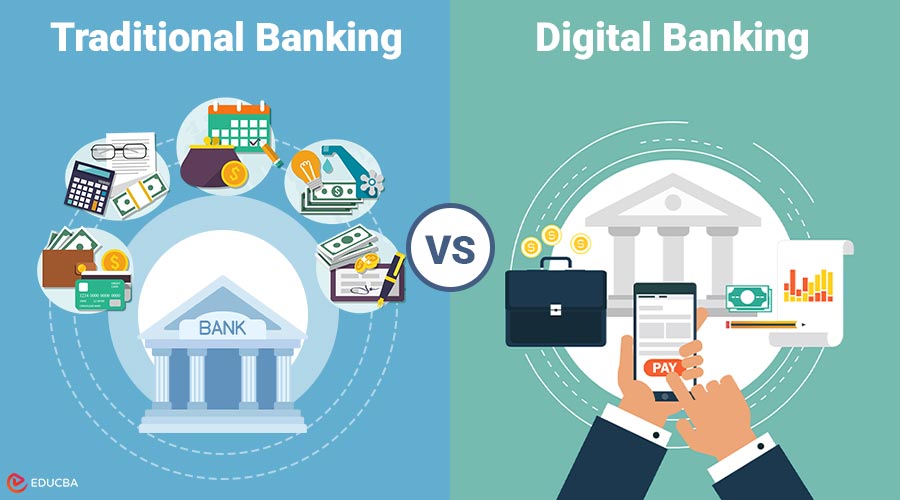
Banking is a cornerstone of modern life, enabling individuals and businesses to manage finances, invest, and access credit. Over the past few decades, banking has evolved significantly from traditional, branch-based operations to fully digital, tech-driven services. Traditional vs. digital banking is now a crucial factor for consumers to take into account as a result of the transition from traditional to modern technology. By being aware of these distinctions, customers may make well-informed decisions and select the services that best meet their needs.
Table of Contents:
- Introduction
- What is Traditional Banking?
- What is Digital Banking?
- Key Differences
- Advantages and Disadvantages
- Real-World Applications
What is Traditional Banking?
Traditional banking refers to the conventional banking model that relies on physical bank branches to serve customers. These banks offer services like savings and checking accounts, loans, credit cards, and investment products through in-person interactions with bank employees.
Examples:
- Wells Fargo
- Bank of America
- State Bank of India
What is Digital Banking?
Digital banking often called as online banking is a technology-driven banking model that allows customers to perform financial transactions entirely online. Digital banks often operate without physical branches and provide access through mobile apps, websites, and even AI-driven chatbots.
Examples:
- Chime
- N26
- Revolut
Key Differences Between Traditional and Digital Banking
Here are the major differences between traditional and digital banking based on key features and operations:
| Feature | Traditional Banking | Digital Banking |
| Mode of Access | Physical branch visits | Online platforms, mobile apps |
| Service Hours | Limited to branch hours | 24/7 availability |
| Documentation | Paper-based forms and checks | Digital forms, e-statements |
| Customer Interaction | Face-to-face | Chatbots, calls, emails, AI assistants |
| Transaction Speed | May take hours or days | Instant or near-instant |
| Cost | Higher operating costs, sometimes reflected in fees | Lower operating costs, often fewer fees |
| Security | Relies on in-branch verification and traditional protocols | Advanced encryption, multi-factor authentication |
| Personalization | Human advice and guidance | AI-driven personalized recommendations |
Advantages and Disadvantages of Traditional and Digital Banking
Here are the advantages and disadvantages of both traditional and digital banking
Advantages of Traditional Banking:
- Personalized, human-centric service: Customers receive one-on-one attention and customized advice from bank staff, fostering trust and lasting relationships.
- Strong trust and brand reputation: Established banks have a long-standing reputation for reliability, stability, and financial security among their loyal customer base.
- In-person assistance for complex financial needs: Customers can visit branches to discuss loans, investments, or disputes directly with financial advisors and support staff.
- Physical presence aids cash handling: Branches and ATMs enable easy deposits, withdrawals, and cash-related services, which are beneficial for businesses and individuals alike.
Disadvantages of Traditional Banking:
- Limited working hours: Customers can only access branch services during specific hours, making it inconvenient for those with busy schedules.
- Slower transaction processes: Manual paperwork and verification steps make transactions, loans, and approvals time-consuming compared to digital banking methods.
- Higher fees due to operational costs: Physical branches, staff salaries, and maintenance increase overall costs, leading to higher service and account fees.
- Less convenient for tech-savvy users: Younger or digital-oriented customers may find traditional methods outdated, preferring faster, app-based financial services.
Advantages of Digital Banking:
- Accessible anytime, anywhere: Customers can perform transactions 24/7 using smartphones or computers without visiting a physical branch.
- Faster and real-time transactions: Digital platforms enable instant fund transfers, bill payments, and account updates with minimal delays or paperwork.
- Reduced fees and lower costs: Automation and lower overhead expenses enable banks to offer lower service charges and higher interest rates.
- Personalized services through AI and automation: Advanced algorithms analyze user behavior to deliver customized recommendations, alerts, and financial insights.
Disadvantages of Digital Banking:
- Lacks personal human interaction: Customers may miss face-to-face communication, reducing emotional connection and personalized service quality.
- May face technical glitches or cyber threats: System outages, hacking, and data breaches can disrupt banking services and compromise sensitive information.
- Not all customers are comfortable with technology: Older adults or non-tech users may struggle with apps, online forms, or password management.
- Limited in handling cash transactions: Digital banks cannot process physical cash deposits or withdrawals, limiting convenience for cash-dependent users.
Real-World Applications
Here are some practical applications of how both traditional and digital banking operate in everyday life:
Traditional Banking in Action:
- Opening a mortgage account and consulting with a bank officer for loan guidance
- Depositing large sums of cash or checks physically
- Personalized financial planning through dedicated advisors
Digital Banking in Action:
- Sending money instantly through mobile apps like PayPal, Google Pay, or Venmo
- Using AI-based chatbots to resolve queries without visiting a branch
- Tracking expenses, investments, and savings digitally in real-time
Both banking models cater to different needs: traditional banking is best for those who need personal advice and cash handling, while digital banking excels in convenience, speed, and tech-driven solutions.
Frequently Asked Questions (FAQs)
Q1. Can I completely switch from traditional to digital banking?
Answer: Yes, many customers rely solely on digital banking, but certain transactions, such as large cash deposits, may still require a branch visit.
Q2. Is digital banking safe?
Answer: Digital banking is generally secure, employing encryption, two-factor authentication, and fraud monitoring. Users should follow safety best practices.
Q3. Which is cheaper: traditional or digital banking?
Answer: Digital banking usually has lower fees due to reduced operational costs.
Q4. Are digital banks regulated?
Answer: Yes, most digital banks are regulated by financial authorities and comply with banking laws in their respective countries.
Final Thoughts
Traditional Banking vs Digital Banking each play vital roles in modern finance. Traditional banking offers trust, personal service, and physical access, while digital banking provides speed, convenience, and technology-driven solutions. The future lies in a blended approach combining both—ensuring secure, accessible, and personalized banking experiences that meet diverse customer preferences and evolving financial needs.
Recommended Articles
We hope that this EDUCBA information on “Traditional Banking vs Digital Banking” was beneficial to you. You can view EDUCBA’s recommended articles for more information.

