


Updated September 2, 2025
Why Companies Are Switching to SaaS Learning Systems?
In recent years, an increasing number of businesses in the United States and worldwide have adopted SaaS learning systems. These platforms offer numerous benefits, appealing to organizations seeking flexible and cost-effective training solutions. With technology advancing rapidly, conventional training techniques are struggling, and a SaaS learning management system offers a suitable solution for modern workforce development needs. Let us explore why more organizations are making this strategic shift and how it is transforming corporate training.
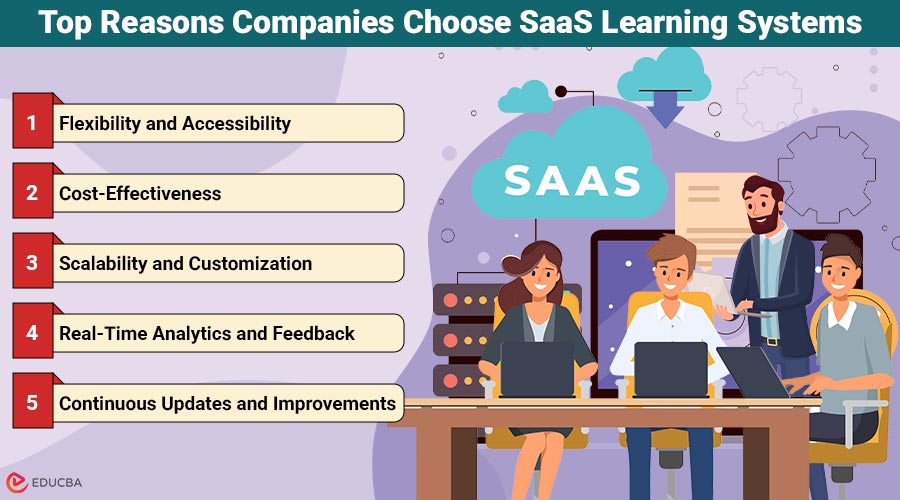
Top Reasons Companies Choose SaaS Learning Systems
Here are the key reasons that make SaaS learning systems the preferred choice for modern corporate training.
1. Flexibility and Accessibility
Learning SaaS systems will always offer the best flexibility. Companies no longer require employees to be physically present in the office, so they provide training materials that employees can access from anywhere with an internet connection. This allows for remote or hybrid work settings to maintain learning momentum. Moreover, these platforms are multi-device compatible, allowing users to learn on computers, tablets, or mobile phones.
2. Cost-Effectiveness
Face-to-face training requires venues, printed materials, and travel costs—all of which contribute to higher prices. SaaS learning systems cut down these costs to a great extent. Typically, organizations pay a subscription fee that automatically provides updates and support. This reduces the dependency on physical materials and minimizes logistics costs. Businesses can reinvest these saved resources in various areas, resulting in a more efficient operation.
3. Scalability and Customization
Business evolves, and so do the training needs. Scaling to more users or new modules is very simple with SaaS learning systems. This scalability helps you stay relevant and effective in training, regardless of your company’s size. Businesses often need to customize content for different roles or departments, and available customization options make it easy to do so.
4. Real-Time Analytics and Feedback
It is essential to monitor progress, which is part of the training itself. SaaS platforms enable real-time analytics, allowing businesses to monitor employee engagement and performance in near real-time. These insights highlight areas for improvement and help measure the effectiveness of your training programs. Immediate feedback systems help users track their progress while also creating a sense of success that motivates them to continue learning.
5. Continuous Updates and Improvements
With an ever-evolving technology landscape, training content too must evolve. You receive updated materials from SaaS platforms regularly because they continually update with current industry trends and best practices. According to the U.S. Department of Education, staying current with educational technology trends is crucial for maintaining competitive workforce skills. This ensures that employees are getting updated information. Regular updates promptly resolve technical glitches, ensuring the learning process continues smoothly.
6. Collaboration and Community Building
SaaS learning systems typically include collaborative features that encourage users to interact with one another. Forums, group work, and peer reviews foster a sense of community and promote learning from one another. Such an atmosphere allows you to strengthen your problem-solving abilities while also sharing and exchanging thoughts with one another, enriching the learning experience as a whole.
7. Security and Data Protection
As data security becomes a growing concern, SaaS providers focus more on safeguarding sensitive data. These platforms have implemented stringent security protocols to protect their users’ data. It maintains the safety of the information through periodic audits and compliance with industry standards. Enterprises can now rely on privacy-protected training data, allowing them to focus on employee development.
8. Ease of Integration
One of the biggest issues with customers who acquire new systems is integrating the new system with their existing workflows. But SaaS learning platforms are built with integration in mind. They also usually promote compatibility with other tools and systems, reducing the implementation effort. Such ease of integration minimizes downtime and ensures that training becomes an integral part of everyday practice.
9. Enhanced Employee Engagement
Engagement enhances the learning process. SaaS platforms utilize interactive content, such as quizzes, videos, and simulations, to keep learners engaged. Gamification features, like badges and leaderboards, add fun and competition, motivating employees to participate. If you make it enjoyable, the knowledge stays.
10. Supporting Diverse Learning Styles
Every individual learns differently. SaaS learning systems cater to all types of learners, incorporating visual, auditory, and hands-on elements. This diversity enables all employees to benefit from the training, leading to a better understanding and improved recall. It fosters a welcoming environment where individuals can thrive in a more conducive learning setting.
Final Thoughts
This trend toward more efficient and adaptable training solutions is driving a notable shift toward SaaS learning systems. The flexibility, cost savings, and continuous updates all appeal to companies. Through these platforms, organizations can enhance employee development, elevate performance, and prepare for upcoming challenges. As technology advances, SaaS learning systems are becoming essential for the future of corporate training.
Recommended Articles
We hope this detailed guide on SaaS learning systems helps you enhance your corporate training strategies. Explore these recommended articles for additional insights and expert tips to optimize employee learning and development.

