


Updated July 10, 2026
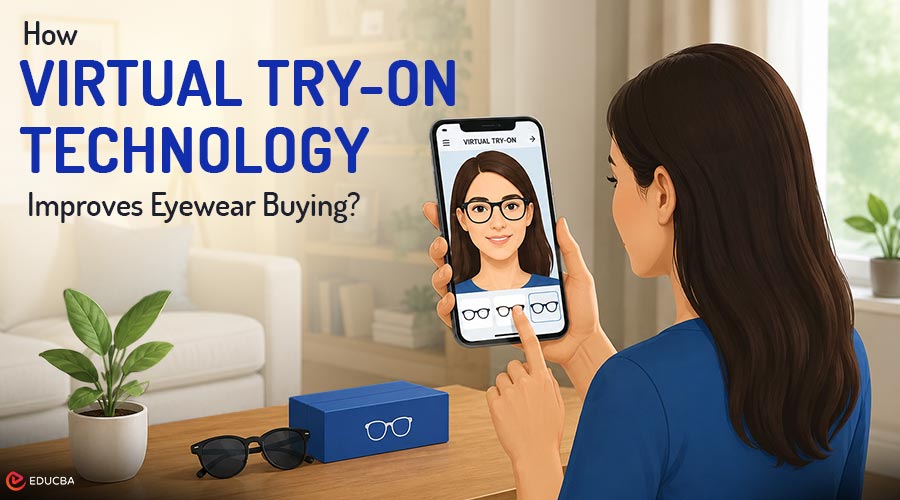
Eyewear retail has historically been one of the hardest product categories to move online. The problem is not logistics or price. It is that glasses sit on your face, and whether a frame works depends on geometry, proportion, and physical fit in a way that a product photo cannot communicate. For years, that constraint kept the majority of eyewear purchases anchored to physical stores. That constraint is now being systematically dismantled by virtual try-on technology, and the speed at which it is happening is worth paying attention to if you work anywhere near e-commerce, computer vision, or retail tech.
The Technical Foundation
Modern virtual try-on systems for glasses online are built on a stack of computer vision and machine learning components working in sequence. The pipeline typically runs as follows. A facial landmark detection model identifies key anatomical reference points across the face, typically around 468 points, depending on the implementation’s precision. These landmarks map the face’s geometry in real time, tracking the positions of the eyes, nose bridge, temples, ears, and jawline across video frames. From this landmark data, a depth estimation model constructs a three-dimensional surface map of the face.
Earlier systems relied on stereo camera input or structured light projection for depth, similar to the approach used in Face ID hardware. Current systems increasingly achieve comparable depth estimation from a standard single RGB camera using learned priors trained on large datasets of face geometry, thereby significantly reducing hardware requirements and making the technology accessible to standard smartphone cameras. The frame model, a high-fidelity 3D asset of the physical glasses, is then rendered onto the face surface using the geometry data.
The rendering engine accounts for the position of the nose bridge relative to the detected bridge point on the face, the temple angle relative to the ear position, and the overall frame width relative to the measured face width. Lens tints, reflective coatings, and material finishes are rendered using physically based rendering techniques that model how light interacts with those materials under different lighting conditions. The result is a frame overlay that moves realistically with the face, maintains consistent scale, and approximates how the physical product would sit.
Where Machine Learning Comes In?
Beyond the core geometry pipeline, machine learning contributes to several layers of the virtual try-on experience that are less visible but significantly affect output quality. Face segmentation models separate the face from the background, hair, and ears, which is necessary for realistic occlusion. When a temple passes behind the ear or hair falls across the frame, the rendered output needs to handle the overlap correctly, or the overlay immediately reads as artificial.
Lighting estimation models infer the direction, intensity, and color temperature of the ambient light in the camera feed and apply that to the frame rendering. A frame rendered with neutral studio lighting, placed onto a face in warm afternoon sunlight, looks wrong in an immediately apparent way, even if the viewer cannot articulate why. Matching the rendering to the inferred ambient light is one of the details that separates credible implementations from superficial ones.
Recommendation engines operating downstream of the try-on layer use facial geometry data extracted during the session to surface frames suited to the measured face proportions. Rather than relying on broad face shape categories, more sophisticated implementations match against specific measurements: interpupillary distance, face width at the widest point, nose bridge height, and cheekbone prominence. These measurements filter the frame catalog before the user sees results, so frames that would sit incorrectly are surfaced less prominently or not at all.
How Accurate is Virtual Try-On Technology for Eyewear?
The honest answer on accuracy is that current systems perform well on proportion and adequately on visual appearance, and have meaningful gaps on physical fit. Proportion accuracy has reached the point where users can reliably determine whether a frame is too wide, too narrow, too deep, or too shallow for their face. This resolves the most common reason online purchases of glasses fail, which is a frame that looks wrong at the buyer’s actual scale.
Physical fit accuracy is a different matter. Nose pad pressure, temple contact pressure, and the angle at which the frame rests on the ear are tactile variables that camera-based geometry cannot assess. A frame that measures correctly against a facial landmark map can still arrive and create pressure points that make it unwearable after an hour. The gap between digital geometry and physical ergonomics remains the clearest unsolved problem in the category.
Some implementations attempt to reduce this gap by incorporating crowdsourced fit feedback into their recommendation logic. The system deprioritizes a high-return-rate frame in recommendations for new users with matching measurements when users with similar facial geometry report temple pressure. It is an imperfect solution, but a practical one given the current constraints.
Integration With Prescription Data
The more technically interesting development over the past two years has been the integration of virtual try-on pipelines with prescription verification and lens calculation systems. When buying glasses online, the prescription has historically been a manual input process with all the risks of transcription errors that entail.
Optical character recognition models trained on prescription document formats now extract prescription data from photographs of written prescriptions with high accuracy. The extracted data feeds directly into the ordering system, reducing the risk of manual-entry errors for values like cylinder axis that are easy to misread or mistype.
At the more advanced end, some platforms are integrating refraction estimation into the device’s camera pipeline, producing a preliminary prescription measurement for an optician to review remotely before sign-off. The clinical robustness of these systems varies, and regulatory frameworks around remote prescribing differ significantly between markets, but the technical capability is further along than most people outside the sector realize.
The Infrastructure Shift Enabled by Virtual Eyewear Technology
The combined effect of accurate virtual try-on, automated prescription capture, and AI-driven recommendations represents a meaningful shift in the eyewear retail value chain. Historically, the physical practice captured the customer at the point of highest value, the fitting and dispensing appointment, and retained them through the friction of changing opticians. That friction is reducing. Customers with a current prescription, accurate PD, and a reliable virtual try-on can buy glasses online without visiting a store.
The optical practices adapting to this are repositioning toward services that genuinely require physical presence and clinical expertise, such as complex fittings, varifocal adjustments, pediatric dispensing, and eye health assessments. The commodity element of the transaction, the frame and standard lens combination, is moving online at a rate that is not slowing.
Final Thoughts
Virtual try-on technology in eyewear is not a gimmick that peaked and plateaued. It is an evolving mix of computer vision, machine learning, and rendering technologies that is narrowing the gap between in-store and online shopping. The remaining gaps are real, physical fit in particular, and honest implementations acknowledge them rather than overselling the capability.
But the trajectory is clear. Buying glasses online is a significantly more reliable experience than it was three years ago, and the technology behind that improvement is still under active development. For anyone working in e-commerce infrastructure, retail tech, or computer vision applications, eyewear is one of the more technically interesting live deployments of these systems at consumer scale.
Recommended Articles
We hope this guide to virtual try-on technology helps you understand its impact on eyewear shopping. Explore these recommended articles for more insights and strategies.


