


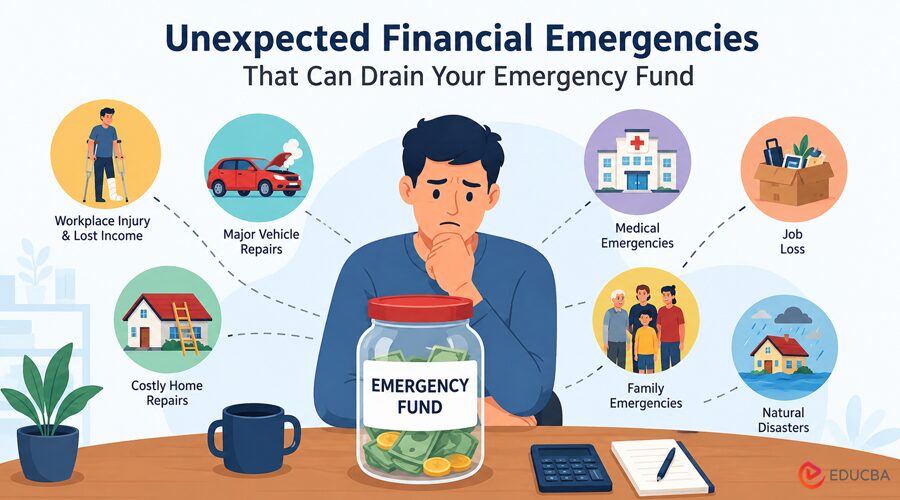
Your emergency savings account is supposed to protect your finances when unexpected expenses arise. While many people expect to use these funds for medical bills or car repairs, a variety of unexpected financial emergencies can quickly deplete even a well-funded emergency account. Being aware of the situations most likely to threaten your savings can help you prepare and reduce the damage if you face an emergency.
7 Unexpected Financial Emergencies That Can Drain Your Savings
Here are seven common unexpected financial emergencies that can put significant pressure on your savings.
1. Lost Income from a Workplace Injury
Getting hurt at work can create financial hardship beyond the cost of medical bills. Even if workers’ compensation approves your claim, you may still lose income while you recover. If you can not work for a few weeks or months, your income will be on hold. Even if you receive partial wage replacement through workers’ compensation or disability benefits, you may still need to use your savings to cover the remaining income gap. If your claim is denied or devalued, you might be able to fight for more benefits with the help of a workers’ comp lawyer. However, you will still only receive a portion of your regular salary. Despite your injury, you will still need to pay your rent or mortgage, utility bills, insurance premiums, and household expenses such as groceries and internet service. If you normally rely on childcare, you will drain your account even faster.
2. Major Vehicle Repairs
If you depend on your car to earn a living or manage your household responsibilities, one big repair can create unexpected financial stress. For example, a failed transmission or serious engine problems require immediate repairs and can cost thousands to fix. Even if you are covered by insurance, your policy deductible might require you to pay substantial out-of-pocket costs first. When your car breaks down, you will need to arrange alternative transportation, such as public transit, Uber, or a rental car. These costs can accumulate quickly.
3. Major Home Repairs
Some home repairs can wait, like fixing a small hole in the wall or repouring a cracked driveway. However, major repairs like roof damage, plumbing issues, and electrical failures cannot wait. If you put off these urgent repairs, you can expect the problem to worsen and potentially cause even more damage. The average American spends around $2,335 every year on home maintenance, but that number rises significantly for major repairs. For example, a major roof repair can cost upwards of $3,000 or more if there is internal damage.
4. Medical Emergencies
Having health insurance does not guarantee that you will avoid major medical bills if you face a serious health issue. Many plans require you to pay a significant deductible before coverage begins, and they do not cover every expense. If you do not have insurance, a single emergency room visit can cost over $2,700, depending on the severity of your condition. If you need to call an ambulance, you can expect to pay around $1,400.
5. Job Loss
Losing a job is one of the most disruptive life events anyone can experience. It causes an immediate loss of income, forcing you to live on savings until you can get another job. It can also cause you to lose your health insurance.
6. Family Emergencies
One unexpected family emergency can create serious financial strain. If an older relative becomes ill or injures themselves, you might need to be a caregiver for a while or provide them with transportation. Last-minute flights and hotels to visit long-distance relatives are expensive, and any disruption in your childcare routine can force you to use costly alternatives.
7. Natural Disasters
If you are not prepared for a natural disaster, you can expect your savings account to disappear fast. All it takes is one storm, flood, earthquake, or fire to displace you from your home and potentially cause serious property damage. If you cannot stay with a friend or family member, you will need to rent a hotel room or find alternative accommodations while your home is being repaired. Although most insurance companies exclude certain disasters, they cover some losses after you pay a high deductible. On top of that, you will need to replace damaged furniture, appliances, and other household items.
Build a Strong Financial Buffer
Many unexpected financial emergencies cost far more than people anticipate. Regularly contributing to your emergency savings can help you manage unexpected expenses with greater confidence while reducing your reliance on debt. Emergencies are part of life, but a well-funded savings account can reduce the financial burden and offer greater peace of mind when unexpected expenses arise.
Recommended Articles
We hope this comprehensive guide to unexpected financial emergencies has provided valuable insights into protecting your finances. Browse these recommended articles for additional strategies to improve your financial preparedness and resilience.


