


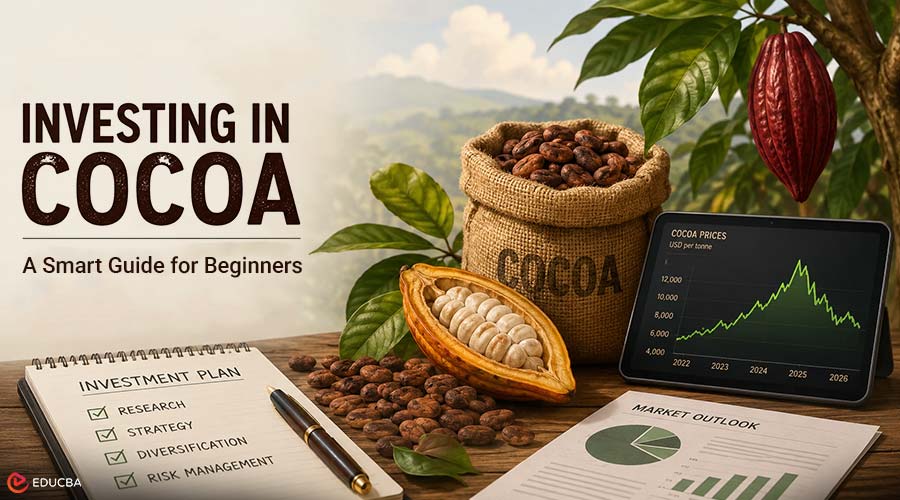
Cocoa has been one of the wildest commodity stories of the decade. Prices more than tripled from 2023 lows to a peak above $12,000 a tonne in late 2024, then gave back over 70% of that move heading into 2026. That kind of volatility scares some people off and pulls others in for exactly the wrong reasons. If you are considering investing in cocoa as part of a diversified commodities portfolio rather than simply following market headlines, understanding the current market landscape is essential. This guide explains the key factors shaping cocoa prices and highlights what every investor should know before getting started.
1. The Price Correction is Significant, but the Market Still Has Support
Cocoa has fallen from above $12,000 a tonne to under $8,000, and some analysts see a medium-term settling point closer to $6,000. That sounds dramatic until you remember $6,000 is still roughly double what cocoa traded at just a few years ago, before the 2023 to 2024 supply crisis began. This is not a return to normal; it is a correction inside a market that remains structurally tight compared to its long-term history. Investors reading the headline price drop as a sign the crisis is over are missing the more important trend underneath it.
2. West Africa Continues to Drive Global Cocoa Supply
Ivory Coast and Ghana together still supply the majority of the world’s cocoa, and both countries’ output is shrinking rather than growing. Ivory Coast’s production has slipped from over 2 million tonnes to around 1.6 million tonnes, while Ghana’s harvest has fallen from more than 1 million tonnes to under 500,000 tonnes, hit by poor weather, aging trees, and disease pressure that has been building for years. Any investor treating the recent price drop as proof of a short-term supply blip is missing the structural story underneath it, and structural problems in agricultural commodities tend to take years, not months, to resolve.
3. Farmgate Prices Are a Leading Indicator Most People Ignore
Ivory Coast cut the price it pays farmers by more than half for the 2026 season, to roughly $2.13 per kilogram. That might look like good news for cost pressure in the short term, but it also removes the incentive for farmers to reinvest in aging farms, replant with disease-resistant varieties, or expand output at all. Lower farmgate prices today are quietly setting up the next supply squeeze rather than preventing it, which is exactly the kind of signal that shows up in farmgate policy long before it shows up in the futures price. Experienced commodity investors watch farmgate pricing decisions in major producing countries as an early signal precisely because they front-run headline supply data by months.
4. The Surplus Narrative is Fragile
Analysts are now forecasting a global cocoa surplus for the first time in several seasons, and that expectation is part of why prices have corrected so hard since late 2024. But in May 2026, farmers in the Ivory Coast reported uneven, below-average rainfall during the critical mid-crop period, a reminder that one bad month of weather in West Africa can flip the entire supply narrative within weeks. Cocoa trees are also highly sensitive to disease outbreaks such as black pod and swollen shoot virus, both of which have disrupted harvests in the past with little warning.
5. Retail Investors Have Multiple Ways to Gain Market Exposure
Buying physical cocoa is not practical for most people, and cocoa futures contracts on exchanges like ICE require accounts and capital that most retail investors lack. This is where cocoa trading through CFDs comes in: it lets you take a position on the direction of cocoa prices, long or short, without needing a futures account, a warehouse, or a shipping contract. It also means you can react quickly to news, such as a rainfall report from the Ivory Coast, without waiting for a broker to execute a physical trade days later.
6. Test Your Strategy Before Investing in Cocoa
Cocoa’s volatility means an untested strategy can look great on paper and fall apart the first week it meets real price action. Before committing capital, running your rules through an mt4 strategy tester lets you see how an entry and exit plan would have performed across real historical cocoa price data, including the exact kind of sharp reversals this market has produced since 2024. Use the every-tick model for the most realistic results, as it captures price gaps cheaper backtesting models miss. Be honest about curve-fitting, too, a strategy that is over-optimized to fit the past rarely survives contact with the future.
7. Keep Position Sizes Appropriate for Cocoa’s Volatility
Cocoa is not a core holding; it is a satellite position. Given the swings this market has shown over the past two years, most investors are better off allocating a small, clearly defined percentage of their portfolio to cocoa exposure and sizing each position to the market’s actual volatility rather than a flat rule borrowed from calmer, more liquid assets like major currency pairs or large-cap indices.
Final Thoughts
Investing in cocoa in 2026 means entering a market in transition, from an acute shortage to a fragile, weather-dependent recovery. That is not a reason to avoid it, but it is a reason to approach it with a tested strategy and a properly sized position rather than a gut feeling based on last year’s headlines. With a clear strategy, proper risk management, and attention to supply conditions, cocoa can strengthen a diversified portfolio.
Frequently Asked Questions (FAQs)
Q1. Is cocoa a good investment in 2026?
Answer: It can be, but only as a small, deliberately sized part of a wider portfolio. Cocoa remains one of the most volatile commodities to trade, and the current surplus narrative could reverse quickly if West African weather turns unfavorable again.
Q2. What’s the biggest risk in cocoa right now?
Answer: The biggest risk is treating the recent price correction as a return to a stable, low-volatility market. The underlying supply problems in the Ivory Coast and Ghana have not been solved, only temporarily eased.
Q3. How is cocoa different from other soft commodities?
Answer: Cocoa production is far more geographically concentrated than that of commodities like coffee or sugar, with West Africa accounting for the vast majority of global supply. That concentration means localized weather or political disruption in just two countries can move global prices far more than it would for a more geographically diverse crop.
Recommended Articles
We hope this comprehensive guide to investing in cocoa has helped you better understand market trends, price drivers, and investment strategies. Check out these recommended articles for more insights into financial markets.

