
What is Employee Morale?
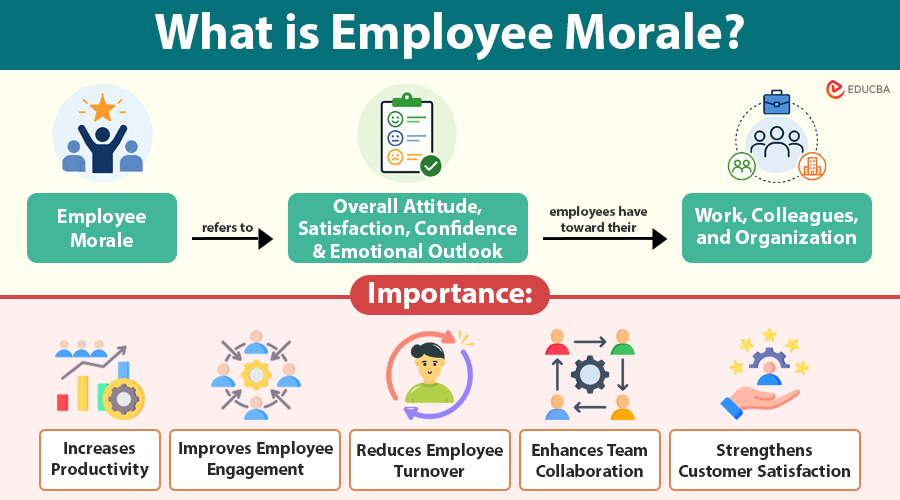
Employee morale refers to the overall attitude, satisfaction, confidence, and emotional outlook employees have toward their work, colleagues, and organization. It reflects how employees feel about their workplace and significantly influences their level of commitment and performance.
High employee morale indicates that employees are motivated, engaged, and willing to contribute positively to organizational objectives. Conversely, low morale suggests dissatisfaction, disengagement, and reduced motivation.
For example, employees working in a supportive environment with recognition, growth opportunities, and effective leadership typically demonstrate high morale.
Table of Contents:
- Meaning
- Importance
- Key Factors
- Signs of High Employee Morale
- Signs of Low Employee Morale
- Common Causes of Low Employee Morale
- Strategies
- How to Measure?
Key Takeaways:
- Employee morale reflects employees’ attitudes, satisfaction, motivation, and commitment toward organizational success.
- High morale enhances productivity, engagement, retention, collaboration, and overall workplace performance.
- Leadership, recognition, culture, compensation, and growth opportunities significantly influence morale.
- Regular assessment and improvement strategies help sustain positive employee morale over the long term.
Why is Employee Morale Important?
Employee morale plays a vital role in organizational success, offering several important benefits, including:
1. Increases Productivity
Employees with positive morale tend to be more focused, energetic, and committed to achieving organizational goals, resulting in higher productivity.
2. Improves Employee Engagement
Innovative ideas and active participation in office activities are more common among employees who feel valued and appreciated.
3. Reduces Employee Turnover
Employee retention is encouraged by high morale, which reduces training and recruitment costs associated with frequent turnover.
4. Enhances Team Collaboration
Positive workplace attitudes promote teamwork, communication, and cooperation among employees.
5. Strengthens Customer Satisfaction
Satisfied employees often deliver better customer service, leading to improved customer experiences and a stronger brand reputation.
Key Factors Affecting Employee Morale
Several internal and external factors influence employee morale.
1. Leadership Style
Effective leaders inspire, support, and guide employees. Poor leadership, favoritism, or lack of communication can negatively impact morale.
2. Recognition and Appreciation
Employees appreciate acknowledgment for their efforts and achievements. Lack of recognition often leads to dissatisfaction.
3. Compensation and Benefits
Competitive salaries, incentives, bonuses, and benefits contribute significantly to employee satisfaction and morale.
4. Work Environment
A safe, inclusive, and positive workplace encourages employees to perform at their best.
5. Career Growth Opportunities
Employees are more motivated when organizations provide learning, development, and advancement opportunities.
6. Work-Life Balance
Employees may maintain a healthy balance between personal and professional obligations with the support of flexible scheduling, remote work choices, and moderate workloads.
7. Organizational Culture
It is positively impacted by a culture that values cooperation, openness, respect, and trust.
Signs of High Employee Morale
Organizations can identify strong morale through various positive indicators.
1. High Productivity Levels
Employees consistently perform efficiently, meet deadlines, and maintain quality standards in their work.
2. Strong Employee Engagement
Employees actively participate in workplace activities, discussions, and organizational initiatives with enthusiasm.
3. Increased Teamwork and Collaboration
Employees cooperate effectively, share knowledge, and support colleagues to achieve common objectives.
4. Low Absenteeism Rates
Motivated workers are more likely to maintain consistent attendance and are less inclined to take needless time off.
5. High Employee Retention
Organizations with strong morale often experience lower turnover as employees choose to stay longer.
6. Positive Workplace Attitudes
Employees demonstrate optimism, enthusiasm, and a constructive approach toward their work and colleagues.
Signs of Low Employee Morale
It often manifests through several warning signs that organizations should monitor closely.
1. Increased Absenteeism and Tardiness
Employees frequently arrive late, take excessive leave, or show inconsistent attendance patterns.
2. Declining Productivity
Employees produce less work, miss deadlines, and exhibit reduced efficiency and overall performance.
3. High Employee Turnover
Dissatisfied employees are more likely to resign, leading to increased recruitment and training costs.
4. Frequent Workplace Conflicts
Low morale often results in misunderstandings, disagreements, and strained relationships among colleagues.
5. Reduced Enthusiasm and Motivation
Employees may appear disengaged, uninterested, and unwilling to contribute beyond basic job requirements.
6. Increased Complaints and Negativity
Persistent complaints, pessimistic attitudes, and negative discussions can indicate declining workplace morale.
Common Causes of Low Employee Morale
Understanding reasons behind the decline is essential for implementing effective corrective measures.
1. Poor Communication
Lack of clear and transparent communication creates confusion, uncertainty, misunderstandings, and mistrust among employees.
2. Excessive Workload
Consistently overwhelming employees with unrealistic expectations and tight deadlines can lead to stress and burnout.
3. Lack of Recognition
Workers frequently become disengaged and demotivated when they believe their contributions are not valued or acknowledged.
4. Limited Growth Opportunities
The absence of career advancement, training, or skill development opportunities may cause frustration and dissatisfaction.
5. Inadequate Compensation
Uncompetitive salaries, insufficient benefits, and unfair reward systems can negatively impact employee satisfaction and morale.
6. Toxic Workplace Culture
Bullying, discrimination, favoritism, harassment, and frequent conflicts create an unhealthy environment that lowers morale.
Strategies to Improve Employee Morale
Organizations can adopt several initiatives to boost employee morale.
1. Recognize and Reward Employees
Acknowledging achievements through awards, bonuses, appreciation programs, or public recognition motivates employees and reinforces positive behavior.
2. Encourage Open Communication
Create channels where employees can express opinions, provide feedback, and share concerns without fear.
3. Provide Career Development Opportunities
Offer training programs, mentorship, workshops, and career advancement opportunities to support employee growth.
4. Foster Work-Life Balance
Implement flexible work arrangements, wellness programs, and reasonable workloads to reduce stress.
5. Build a Positive Workplace Culture
Promote inclusivity, respect, collaboration, and transparency throughout the organization.
6. Empower Employees
Give workers autonomy in their jobs and let them take part in decision-making processes.
How to Measure Employee Morale?
Organizations can evaluate it using various methods to identify concerns and improve workplace satisfaction.
1. Employee Satisfaction Surveys
Anonymous surveys provide valuable insights into employees’ perceptions, concerns, engagement, and overall satisfaction levels.
2. One-on-One Meetings
Regular discussions between managers and employees help identify morale-related issues, challenges, and opportunities for improvement.
3. Exit Interviews
Feedback from departing employees can uncover underlying organizational problems that may be affecting employee morale.
4. Employee Turnover Rates
High turnover rates often indicate dissatisfaction, disengagement, or broader morale concerns within the organization.
5. Absenteeism Data
Frequent absences, tardiness, or increased leave usage may suggest declining morale or employee dissatisfaction.
Final Thoughts
Employee morale significantly influences organizational success by affecting productivity, engagement, collaboration, and retention. High morale creates a positive, motivated workforce, while low morale hinders performance. Organizations that prioritize employee well-being, recognition, communication, and development can foster a supportive workplace and achieve sustainable long-term business goals.
Frequently Asked Questions (FAQs)
Q1. How can managers identify declining employee morale early?
Answer: Managers can monitor absenteeism, productivity, engagement, and employee behavior for early warning signs.
Q2. Can employee morale impact organizational profitability?
Answer: Yes, high morale boosts productivity and profitability, while low morale increases costs and inefficiency.
Q3. How often should organizations assess employee morale?
Answer: Organizations should assess employee morale regularly, ideally every quarter or twice a year.
Q4. What role does organizational culture play in the employee morale?
Answer: A positive organizational culture promotes trust, satisfaction, and stronger employee morale.
Recommended Articles
We hope that this EDUCBA information on “Employee Morale” was beneficial to you. You can view EDUCBA’s recommended articles for more information.


